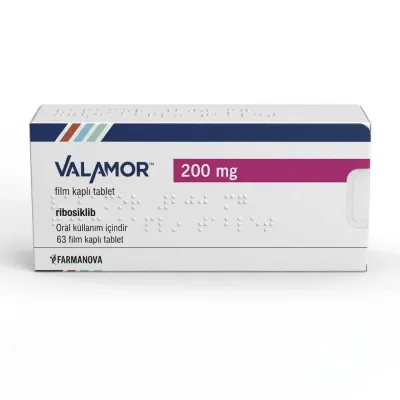
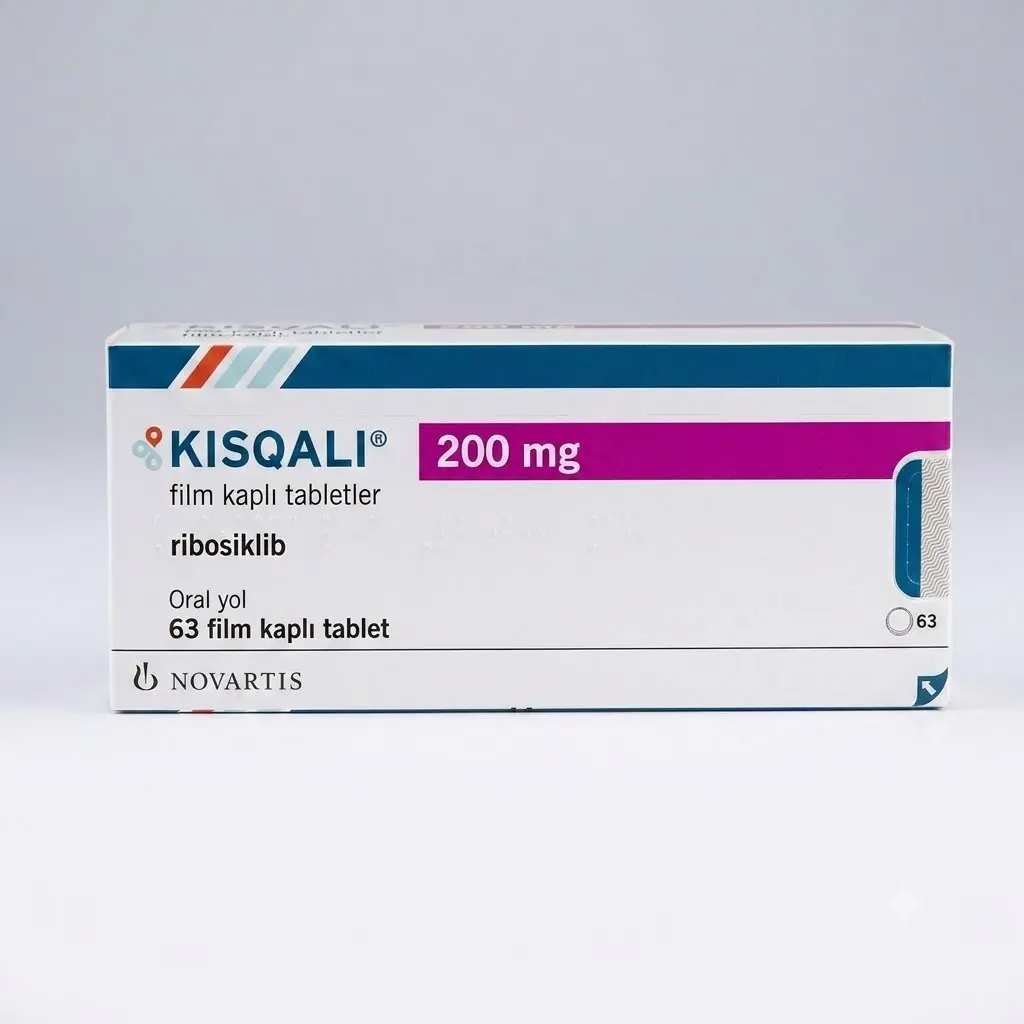
Kisqali — Ribociclib 200 mg, 63 pcs, Novartis
100% original product

Kisqali — Ribociclib, 63 Tablets

47900 51000 -6% On order · from 7 days

Kisqali is an innovative, highly targeted antineoplastic medication classified as a selective cyclin-dependent kinase 4 and 6 (CDK4/6) inhibitor. The active substance, ribociclib, effectively blocks specific proteins that drive rapid cell division and tumor growth. Administered in combination with endocrine-based therapies, Kisqali has demonstrated outstanding clinical efficacy in patients with hormone receptor-positive (HR+), human epidermal growth factor receptor 2-negative (HER2-) advanced or metastatic breast cancers, significantly prolonging progression-free survival.

Manufacturer: Novartis Pharmaceuticals, Switzerland. Novartis is one of the world's most distinguished global healthcare leaders in precision medicine and oncology care. Manufactured across state-of-the-art facilities certified under strict international GMP, US FDA, and EMA guidelines, Novartis ensures absolute chemical purity of the active compounds, verified drug bioavailability, and rigid quality testing parameters for every commercial batch.

Key Advantages:

  • Highly Targeted Efficacy: Selectively halts the activity of CDK4/6 enzymes, arresting tumor cells in the G1 phase and stopping cell proliferation.
  • Proven Survival Benefits: Combining Kisqali with an aromatase inhibitor or fulvestrant significantly delays disease progression and improves overall survival outcomes.
  • Swiss Quality Standards: Direct manufacturing by Novartis guarantees the highest standard of component purification and meticulous compliance with patented production technologies.

Kisqali is supplied as film-coated tablets optimized for oral administration. The chemical composition includes:

  • Active Substance (per 1 tablet): Ribociclib succinate — equivalent to 200 mg of pure ribociclib.
  • Core Excipients: Microcrystalline cellulose, crospovidone, colloidal silicon dioxide, magnesium stearate, and lactose monohydrate.
  • Film Coating: Specialized coating (Opadry) containing polyvinyl alcohol, titanium dioxide, talc, red iron oxide, and black iron oxide (providing the tablet's distinct hue).

Pharmacodynamics: Ribociclib acts as a highly selective inhibitor of CDK4 and CDK6. These proteins, when paired with cyclin D, stimulate a pathway leading to the phosphorylation of the Retinoblastoma protein (pRb), driving the cell cycle forward. By blocking CDK4/6 activity, ribociclib limits pRb phosphorylation, inducing G1-phase cell cycle arrest and suppressing the growth of breast cancer cell lines.

Pharmacokinetics: Following oral intake, ribociclib is rapidly absorbed, reaching maximum plasma concentration (Cmax) within 1 to 4 hours. Exposure parameters are unaffected by food. Plasma protein binding is approximately 70%. Metabolism is heavily mediated by the liver, primarily via the CYP3A4 pathway. The average terminal elimination half-life (T1/2) at steady-state is between 30 to 55 hours. Excretion occurs primarily through the feces (over 60%) and the renal system (about 23%), mainly as metabolized compounds.

Kisqali 200 mg tablets are indicated in women for the management of hormone receptor-positive (HR+), human epidermal growth factor receptor 2-negative (HER2-) locally advanced or metastatic breast cancers:

  • 🔹 First-Line Setting: In combination with an aromatase inhibitor (e.g., letrozole) as initial endocrine-based therapy.
  • 🔹 Subsequent Lines of Therapy: In combination with fulvestrant for patients who have experienced disease progression on prior hormonal treatments.
  • 🔹 Premenopausal Patients: In pre- or perimenopausal women, the endocrine therapy must be combined with a luteinizing hormone-releasing hormone (LHRH) agonist.

Kisqali dosage profiles and therapeutic cycles must be closely monitored and managed by a specialized oncologist:

  • Administration Method: Tablets must be swallowed whole with water (not chewed, crushed, or split) once daily at approximately the same time (preferably in the morning), with or without food.
  • Dosing Regimen: The recommended initial dose is 600 mg once daily (administered as three 200 mg tablets) for 21 consecutive days, followed by a 7-day treatment break (complete 28-day cycle).
  • Dose Adjustments: To manage specific adverse events (such as neutropenia or hepatic toxicity), the dose can be systematically reduced to 400 mg (two tablets) or 200 mg (one tablet) once daily.

The clinical administration of Kisqali is contraindicated or requires extreme caution under the following parameters:

  • Hypersensitivity: Known severe hypersensitivity to ribociclib, soya lecithin (peanuts), or any accompanying core excipient.
  • Pregnancy and Breastfeeding: Due to potential fetal toxicity and teratogenicity, Kisqali is contraindicated in pregnant women. Breastfeeding must be avoided during therapy.
  • QT Interval Prolongation: Baseline QTc interval > 450 ms, long QT syndrome, or concurrent administration of medications known to prolong the QTc interval.
  • ⚠️ With Caution: Administered carefully to patients with moderate-to-severe hepatic or renal impairment, or significant serum electrolyte imbalances (potassium, magnesium, calcium).

Ribociclib possesses a highly sensitive drug interaction profile governed by hepatic clearance pathways:

  • Strong CYP3A4 Inhibitors: Co-administration with agents like ketoconazole, itraconazole, clarithromycin, or grapefruit juice significantly raises ribociclib plasma levels, elevating toxicity risks.
  • Strong CYP3A4 Inducers: Concomitant use with rifampicin, carbamazepine, phenytoin, or St. John's wort accelerates ribociclib clearance, severely compromising its therapeutic anti-tumor efficacy.
  • QT-Prolonging Drugs: Avoid combining Kisqali with antiarrhythmics (amiodarone), certain antibiotics (erythromycin), or antipsychotics due to cumulative cardiac risks.

Reproductive considerations and pregnancy prevention protocols during Kisqali therapy:

  • Pregnancy: Ribociclib can cause serious harm to a developing fetus. Female patients of childbearing potential must verify a negative pregnancy test prior to starting therapy and implement highly effective contraception during treatment and for at least 21 days following the last dose.
  • Lactation: Breastfeeding is strictly prohibited during Kisqali therapy and for at least 21 days after the final dose, as partitioning into breast milk remains uncharacterized.
  • Fertility: Animal studies and clinical data suggest that Kisqali can reduce male fertility parameters, which may be temporary or permanent.

Kisqali therapy can cause notable adverse reactions requiring consistent clinical and laboratory monitoring:

  • 🟢 Hematological (Very Common): Neutropenia (the most frequent side effect, requiring routine CBC checks), leukopenia, anemia, lymphopenia, and thrombocytopenia.
  • 🟡 Hepatobiliary Toxicity: Elevations in liver transaminases (ALT, AST) and bilirubin levels, requiring periodic blood chemistry monitoring.
  • 🟠 Gastrointestinal Tract: Nausea, diarrhea, vomiting, constipation, stomatitis (mucosal inflammation), and decreased appetite.
  • 🔵 Cardiovascular: Prolongation of the QT interval on ECG, which requires electrocardiographic monitoring before starting and during treatment.
  • ⚠️ Other Common Reactions: Fatigue, alopecia (hair thinning), skin rashes, pruritus, pyrexia, cough, and urinary tract infections.

Symptomatology and emergency management protocols for Kisqali overdose:

  • Symptoms: An overdose may cause critical marrow suppression (extreme neutropenia and infection risks), severe liver damage, and excessive QT prolongation leading to life-threatening cardiac arrhythmias.
  • Treatment: There is no specific antidote. Treatment consists of gastric lavage (if caught early) and the use of oral sorbents. The patient must be hospitalized immediately for continuous ECG monitoring, hematological testing, hepatic function checks, and supportive care.

Storage requirements to ensure the physical stability and chemical safety of Kisqali tablets:

  • 🌡️ Temperature Controls: Store in a dry environment shielded from direct moisture and sunlight at a temperature not exceeding 30 °C.
  • 👶 Safety Warnings: Keep securely out of the reach and sight of children and pets. As a cytotoxic compound, any unused tablets must be disposed of via local hazardous medical waste protocols.
  • Shelf Life: 3 years in original blister packaging. Do not ingest past the expiration date.

Because Kisqali by Novartis is a premium, high-value original oncology medication, verifying its authenticity is critical to patient safety. Always inspect the following key packaging and physical parameters:

  • 🇹🇷 Turkish ITS System Verification (İlaç Takip Sistemi): This medication is officially registered for sale in Turkey, which implements a rigid state-run pharmaceutical serialization program. To verify your pack, download the official mobile app ITS Mobil (available on the App Store and Google Play). Scan the square 2D DataMatrix code printed on the box using the app. The system will instantly retrieve the real-time status of the pack directly from Turkey's Ministry of Health database, confirming whether this specific serial number is genuine, active, or if the box has already been marked as sold to another patient.
  • 🛡️ Anti-Tampering Seals (Control of Opening): Every authentic Novartis Kisqali carton is sealed with dedicated, clear plastic adhesive stickers on the opening flaps. If these seals are peeled off, they will tear or leave a visible mark on the cardboard, making it impossible to open or reseal the box without noticeable damage.
  • 📱 2D DataMatrix Code & Serialization: The side or end flap of the packaging features a printed 2D DataMatrix code (a square barcode, not to be confused with a linear barcode). Directly adjacent to it, you must see the human-readable serialization details: the Global Trade Item Number (GTIN/Barkod), unique Serial Number (SN/Sıra No), Batch/Lot Number (Batch/Parti No/Lot), and Expiration Date (EXP/Son Kul. Ta.). No two authentic boxes globally share the exact same Serial Number (SN).
  • 🔍 Tactile Details and Printing Quality: The Braille text for visually impaired patients and the Novartis logo on the packaging are embossed (raised) and easily felt by running your fingers over them. The product name "KISQALI" and the "200 mg" strength must be printed with absolute precision, without any blurred letters, grammatical mistakes, or variations in colors.
  • 💊 Tablet Appearance: Genuine Kisqali 200 mg tablets are light greyish-violet, round, biconvex with beveled edges. On one side of the tablet, the letters "RIC" must be debossed (engraved), and the letters "NVR" must be debossed on the opposite side. Any uneven coloring, cracks, chipping, or missing engraving is a strong indicator of a counterfeit product.
  • ✉️ Direct Verification Request via Novartis: If you have any doubts about the medicine's authenticity, you can take high-quality photos of the product packaging (focusing on the GTIN, SN, LOT, and EXP codes) and email them to the official manufacturer support team at novartis.email@novartis.com. Novartis representatives can run these numbers against their manufacturing database to verify if that specific unit is genuine.

Notice. The information on this page is for reference only and does not replace medical consultation. Always consult a healthcare professional and read the manufacturer's instructions before using any medicine. Self-medication may be dangerous. Information updated: 15.07.2026

Active ingredient
Dosage form Film-coated tablets
Tablets per pack 63
Packaging Blisters in a box
On order · from 7 days
100% original product
Delivery across Ukraine
1
Alternatives

Similar products

Customer reviews

What Customers Say

No reviews yet

Your review can be the first!

Unifarm

Unifarm app

Safari → Share → Add to Home Screen Firefox: menu ⋮ → Install or Add to Home screen. If missing, open the site in Chrome. Chrome: menu ⋮ → Install app or Add to Home screen.

Contact us

Choose a convenient way to contact

We work daily from 9:00 to 20:00