
Bendamustine – Targeted Therapy

Bendamustine is a unique antitumor agent that combines the properties of alkylating compounds and antimetabolites (purine analogs). The drug is intended for systemic chemotherapy of various types of malignant neoplasms of lymphoid and hematopoietic tissues.

The mechanism of action of bendamustine is based on the formation of strong cross-links between the DNA strands of cancer cells. This causes multiple breaks in the genetic material, making further cell division and repair impossible. Due to its hybrid structure, bendamustine remains active even in cases where the tumor shows resistance to classic alkylating agents (e.g., cyclophosphamide). The drug induces programmed cell death (apoptosis) and effectively targets slowly dividing cells.

Bendamustine is administered by intravenous infusion and is often used in combination with monoclonal antibodies or other chemotherapeutic agents, demonstrating high efficacy with a low level of nervous system side effects.

Wikipedia page
Bendamustine

Indications

Bendamustine is used in hematology and oncology for the treatment of the following conditions:

  • Chronic Lymphocytic Leukemia (CLL): first-line therapy for patients for whom fludarabine combination therapy is not appropriate.
  • Indolent Non-Hodgkin Lymphomas: used as monotherapy in patients who have progressed during or following treatment with rituximab.
  • Multiple Myeloma: used in combination with prednisone for patients older than 65 who are not candidates for stem cell transplantation.
  • Mantle Cell Lymphoma: as part of combination regimens to achieve long-term remission.

Dosage and administration

The bendamustine dosing regimen is established individually based on body surface area and the type of disease.

  • Standard Dose: typically ranges from 70 mg/m² to 120 mg/m² of the patient's body surface area.
  • Administration Method: the drug is administered as an intravenous infusion over 30–60 minutes.
  • Cycling: therapy is administered in cycles (e.g., on Days 1 and 2 of a 28-day cycle). The number of cycles is determined by the treating physician.
  • Preparation: before administration, the powder must be fully dissolved and diluted in saline to the required concentration.
  • Dose Adjustment: if hematologic toxicity develops (decrease in white blood cells or platelets), the next cycle may be delayed or the dose reduced.

The use of bendamustine is restricted in the presence of the following factors:

  • Hypersensitivity: allergy to bendamustine or excipients (e.g., mannitol).
  • Hepatic Impairment: moderate or severe impairment of liver function.
  • Renal Impairment: severe impairment (creatinine clearance < 10 mL/min).
  • Infections: presence of severe infectious diseases or significant bone marrow suppression.
  • Pregnancy and Lactation: the drug has teratogenic effects; breastfeeding should be discontinued during therapy.
  • Jaundice: significant hyperbilirubinemia.

Bendamustine therapy requires regular blood monitoring due to possible reactions:

  • Hematologic: leukopenia (low white blood cell count), thrombocytopenia, and anemia (the most common reactions).
  • Digestive System: nausea, vomiting (usually mild), diarrhea or constipation, and stomatitis.
  • General Symptoms: fever, chills, fatigue, and shortness of breath.
  • Skin Reactions: skin rash, itching, and in rare cases, serious bullous lesions.
  • Cardiovascular System: heart rhythm disturbances (arrhythmia) and changes in blood pressure.

Frequently Asked Questions

Bendamustine is an antineoplastic agent that combines the properties of alkylating agents and antimetabolites. It is used to treat chronic lymphocytic leukemia (CLL), indolent B-cell non-Hodgkin lymphoma (NHL), and multiple myeloma. The drug works by damaging the DNA of cancer cells, leading to their death.
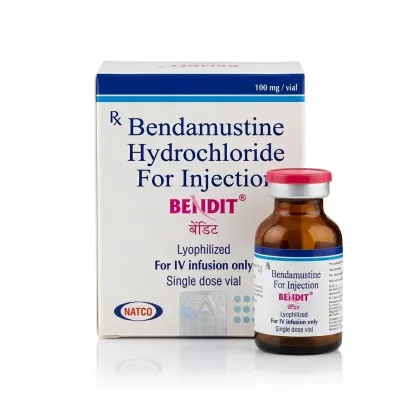
Original drugs (such as Levact or Treanda) are quite expensive. Indian generics (e.g., Bendit by Natco or Cytomustine) available on Unifarm contain the same active ingredient in 25 mg or 100 mg dosages. They undergo strict quality control and provide the same therapeutic effect at a much lower cost.
The drug comes as a powder for concentrate for solution for infusion. It is administered intravenously (IV) in a hospital or clinic setting under the supervision of a hematologist-oncologist. An infusion typically lasts 30–60 minutes. The treatment schedule (cycles) is determined individually by the doctor.
Common side effects include nausea, vomiting, fever, and fatigue. A significant side effect is myelosuppression (decreased levels of white blood cells, red blood cells, and platelets); therefore, complete blood counts must be monitored between treatment cycles.
Bendamustine is often prescribed in combination with rituximab (the BR regimen). However, it can interact with certain other medications. Before starting treatment, be sure to inform your doctor about all medicines you are taking, including supplements and herbal remedies.
The cost of Indian bendamustine on Unifarm is significantly lower than that of European brands. The price depends on the vial dosage (25 mg or 100 mg) and the manufacturer. We only offer certified generics with valid shelf lives.
You can place an order on the Unifarm website. We ensure the careful transportation of medications, including cold chain compliance where required. Delivery is available across Ukraine. For any questions regarding the choice of manufacturer, please contact our consultants.

List of medicines by active substance

-15%
Bendit 100 mg Natco
View
Natco
100 mg 1 vial
3820₴ 4494₴
✅ All products loaded (1)

Contact us

Choose a convenient way to contact

We work daily from 9:00 to 20:00