
Gefitinib – Targeted Cancer Therapy

Gefitinib is a targeted anti-cancer medication and was the world's first selective epidermal growth factor receptor (EGFR) tyrosine kinase inhibitor. It represents a highly specific therapeutic option for treating certain genetic subtypes of lung cancer.

The mechanism of action involves the inhibition of EGFR tyrosine kinase, an enzyme involved in the signaling pathways for tumor cell growth and survival. Gefitinib competitively blocks the binding of adenosine triphosphate (ATP) to the active site of the enzyme, thereby halting intracellular signal transduction. This results in the cessation of cancer cell proliferation, induction of apoptosis, and reduction in the production of angiogenic factors. The drug's maximum clinical efficacy is observed in patients with activating mutations in the EGFR tyrosine kinase domain (exons 19 and 21).

Administered orally, gefitinib allows for outpatient management of the disease.

Wikipedia page
Gefitinib

Indications

Gefitinib is indicated for the treatment of adult patients in the following clinical scenarios:

  • EGFR-mutated NSCLC: locally advanced or metastatic non-small cell lung cancer (NSCLC) with activating mutations of EGFR tyrosine kinase.
  • Treatment Lines: used as a first-line therapy or in patients whose disease has progressed after platinum-based chemotherapy.

Dosage and administration

The dosage of gefitinib is standardized; however, mutation testing is mandatory prior to initiating treatment.

  • Standard Dose: 250 mg taken once daily.
  • Administration Rules: can be taken with or without food at the same time each day.
  • Alternative Administration: for patients with swallowing difficulties, the tablet can be dispersed in 50 mL of non-carbonated water (no other liquids should be used) and stirred gently until a suspension is formed.
  • Drug Interactions: avoid co-administration with proton pump inhibitors (PPIs) as decreased gastric acidity significantly reduces gefitinib absorption.

The use of gefitinib is restricted in the following cases:

  • Hypersensitivity: known allergic reactions to gefitinib or any of its excipients.
  • Pregnancy and Lactation: potential risk to the fetus; breastfeeding is strictly prohibited during therapy.
  • Pediatric Use: safety and efficacy have not been established in patients under 18 years of age.
  • Pre-existing Lung Conditions: use with caution in patients with history of interstitial lung disease.

The most common adverse reactions associated with gefitinib include:

  • Dermatologic: pustular rash (acneiform), pruritus, dry skin, paronychia, and nail fragility.
  • Gastrointestinal: diarrhea (usually mild to moderate), nausea, vomiting, stomatitis, and anorexia.
  • Laboratory: elevated liver transaminases (ALT/AST) and increased bilirubin levels.
  • Ocular: conjunctivitis, dry eyes, and rarely, corneal erosion.
  • Respiratory: risk of interstitial lung disease (ILD) (requires immediate permanent discontinuation if suspected).

Frequently Asked Questions

Gefitinib is a selective EGFR (epidermal growth factor receptor) tyrosine kinase inhibitor. It works by blocking a specific protein (receptor) on the surface of cancer cells that sends signals for them to divide and grow. By interrupting these signals, the drug slows down or halts tumor progression.
The substance is most effective against tumors that harbor specific mutations in the EGFR gene. Testing allows the physician to determine if the cancer will be sensitive to gefitinib, ensuring a personalized approach and increasing the chances of successful treatment.
Gefitinib is primarily used to treat locally advanced or metastatic non-small cell lung cancer (NSCLC). It can be administered as a first-line treatment or after other methods, such as chemotherapy, have proven insufficient.
The tablet should be taken once daily at the same time each day, with or without food. For patients with difficulty swallowing, the tablet can be dispersed in half a glass of non-carbonated drinking water (no other liquids should be used) and the dispersion should be swallowed immediately.
Common side effects include skin rash (acne-like), itching, and dry skin. A rare but serious complication is interstitial lung disease. If sudden shortness of breath, cough, or fever occurs, patients must consult their physician immediately.

List of medicines by active substance Gefitinib

-18%
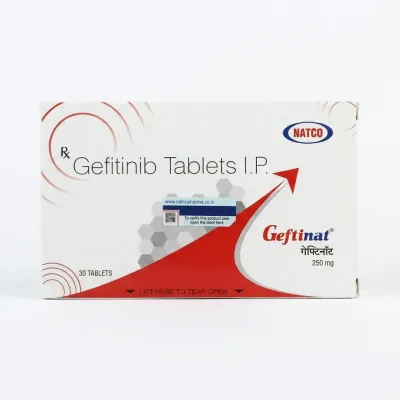
Geftinat 250 mg Natco
View
Natco
250 mg 30 tablets
3955₴ 4834₴
✅ All products loaded (1)

Contact us

Choose a convenient way to contact

We work daily from 9:00 to 20:00