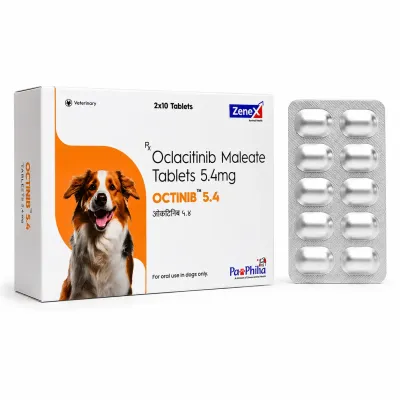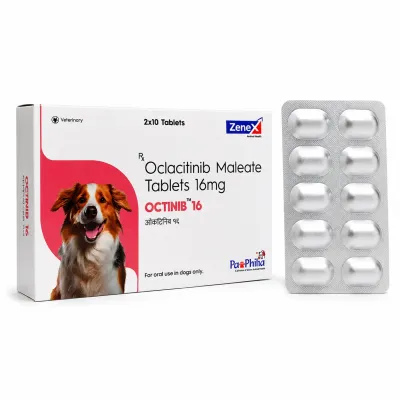
Oclacitinib: Veterinary Guide for Allergic Dermatitis
Known as original brand(s)
Apoquel
Oclacitinib is an innovative veterinary antipruritic and anti-inflammatory agent belonging to the class of selective Janus Kinase (JAK) inhibitors. Administered as oclacitinib maleate, it is specifically developed for dermatological use in veterinary medicine and serves as a highly effective alternative to glucocorticoids and ciclosporin for managing allergic dermatitis in dogs.
The mechanism of action of oclacitinib involves selective inhibition of JAK1 and JAK3 enzyme activity. The drug inhibits the functions of various pro-inflammatory, pro-allergic, and pruritogenic (itch-inducing) cytokines that are dependent on JAK enzyme activity (specifically interleukins IL-31, IL-2, IL-4, IL-6, and IL-13). Rapid suppression of IL-31 interrupts the itch sensation as early as 4 hours after oral administration.
Clinical use of oclacitinib provides rapid relief from itching, reduces cutaneous inflammation, prevents self-trauma caused by scratching, and significantly improves the quality of life for allergic dogs and their owners.

Indications
Oclacitinib is indicated in veterinary dermatology for the following applications:
- Atopic Dermatitis: Control of clinical manifestations of atopic dermatitis in dogs (chronic allergic itch and skin inflammation).
- Allergic Dermatitis: Control of pruritus associated with allergic dermatitis of various etiologies (flea allergy dermatitis, food allergy, contact dermatitis).
- Symptomatic Relief: Rapid reduction of pruritus and associated skin lesions in acute and chronic allergic flare-ups.
Dosage and administration
Oclacitinib is intended strictly for oral administration in dogs. The treatment schedule consists of two phases:
- Recommended Dosage: The initial therapeutic dose is 0.4 to 0.6 mg oclacitinib per kg body weight.
- Dosing Regimen: Administered twice daily (every 12 hours) for the first 14 days of treatment. Thereafter, a maintenance dose of once daily (every 24 hours) is administered.
- Administration Method: Tablets are given orally and may be administered with or without food.
- Duration of Treatment: Duration is determined by the attending veterinarian based on clinical response and disease severity (suitable for long-term maintenance therapy).