
Saroglitazar – Dual PPARα/γ Agonist Therapy

Saroglitazar is an innovative medication and the world's first dual Peroxisome Proliferator-Activated Receptor (PPAR) agonist. Its uniqueness lies in its balanced activation of both alpha (α) and gamma (γ) PPAR isoforms. This allows the drug to simultaneously correct lipid profiles and improve insulin sensitivity, making it essential for managing metabolic disorders associated with diabetes and liver diseases.

The mechanism of action of saroglitazar is based on its ability to modulate the expression of genes involved in glucose and lipid metabolism. PPARα activation reduces plasma triglyceride levels and increases fatty acid oxidation in the liver. Concurrent PPARγ activation enhances glucose uptake by peripheral tissues and reduces insulin resistance. A key feature of the drug is the absence of typical PPARγ agonist side effects, such as significant weight gain or peripheral edema, due to its specific molecular structure.

The drug is designed for oral administration and possesses high bioavailability, providing a stable therapeutic effect with a once-daily dosing regimen.

Wikipedia page
Saroglitazar

Indications

Saroglitazar is indicated for the treatment of adult patients with the following conditions:

  • Diabetic Dyslipidemia: management of triglyceride and cholesterol levels in type 2 diabetes patients not adequately controlled by statins alone.
  • Hypertriglyceridemia: treatment of severe elevations in blood triglycerides to reduce cardiovascular risks.
  • Non-Alcoholic Fatty Liver Disease (NAFLD): therapy for non-alcoholic steatohepatitis (NASH) to reduce inflammation and fat accumulation in liver tissue.
  • Primary Biliary Cholangitis (PBC): as an adjuvant therapy in cases where standard treatment provides insufficient response.

Dosage and administration

The dosage of the drug is determined by the physician based on clinical indicators of lipid and carbohydrate metabolism.

  • Standard Dose: typically 4 mg once daily, administered regardless of food intake.
  • Administration: the tablet should be swallowed whole, preferably at the same time each day to maintain steady blood levels.
  • Duration of Therapy: intended for long-term chronic use under regular medical supervision.
  • Monitoring: periodic monitoring of fasting blood glucose, HbA1c, and lipid profiles is required during treatment.
  • Special Populations: dose adjustment is generally not required for elderly patients, but caution is advised in patients with hepatic impairment.

The use of saroglitazar is restricted in the following conditions:

  • Hypersensitivity: known allergy to saroglitazar or any excipients in the tablet formulation.
  • Pregnancy and Lactation: use is contraindicated due to a lack of sufficient safety data regarding the fetus and infant.
  • Heart Failure: severe forms of heart failure (NYHA Class III-IV).
  • Liver and Kidney Disease: severe hepatic impairment or end-stage renal disease.

Despite being well-tolerated, the following reactions may occur during saroglitazar treatment:

  • General Symptoms: asthenia (weakness), fatigue, and occasional dizziness.
  • Gastrointestinal: epigastric discomfort, mild nausea, flatulence, or gastritis.
  • Laboratory Findings: possible transient increases in serum creatinine and changes in liver function tests.
  • Infections: an increased frequency of upper respiratory tract infections in rare cases.
  • Others: muscle pain (myalgia) and skin pruritus, which usually resolve spontaneously after dose adjustment.

Frequently Asked Questions

Saroglitazar is the world's first dual-acting drug in the glitazar class. It acts as a potent agonist for both PPAR-alpha and PPAR-gamma receptors. This dual action allows it to simultaneously lower "bad" fats (triglycerides) in the blood and improve insulin sensitivity, helping to manage blood sugar levels.
The primary indications include diabetic dyslipidemia (high fat levels in patients with type 2 diabetes) and hypertriglyceridemia that cannot be managed with statins alone. It is also actively used to treat non-alcoholic fatty liver disease (NAFLD) and non-alcoholic steatohepatitis (NASH).
The standard dosage is typically 4 mg once daily, taken with or without food. However, for optimal results, the therapy must be combined with a strict low-fat diet and regular physical exercise. The tablet should be swallowed whole with a glass of water.
Unlike many drugs in the thiazolidinedione group, saroglitazar has shown a lack of significant weight gain or edema in clinical trials. However, as with any metabolic medication, patients are advised to monitor their condition and report any unusual symptoms to their physician.
During therapy, it is necessary to regularly monitor the lipid profile (triglycerides, cholesterol), blood glucose levels, and glycated hemoglobin (HbA1c). It is also important to periodically perform liver function tests (ALT, AST) and monitor creatinine levels to assess kidney function.

List of medicines by active substance

-5%
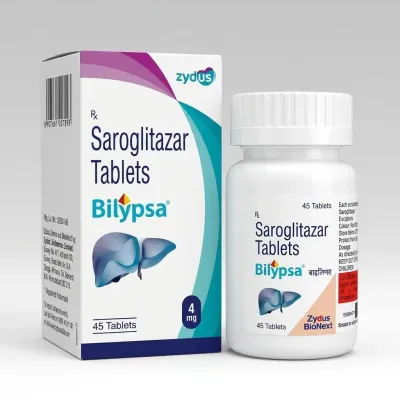
Bilypsa 4 mg Zydus Celexa
View
Zydus Celexa
4 mg 45 tablets
1708₴ 1798₴
✅ All products loaded (2)

Contact us

Choose a convenient way to contact

We work daily from 9:00 to 20:00