
Glycopyrrolate – Anticholinergic Therapy

Glycopyrrolate (Glycopyrronium bromide) is a synthetic quaternary ammonium compound belonging to the class of anticholinergic agents (muscarinic antagonists). It is widely used in various clinical settings, ranging from perioperative care to chronic respiratory disease management.

The mechanism of action involves competitive inhibition of muscarinic acetylcholine receptors (M1, M2, and M3) located in smooth muscles, exocrine glands, and the nervous system. By blocking these receptors, glycopyrrolate significantly reduces salivary, gastric, and bronchial secretions, and induces relaxation of bronchial and gastrointestinal smooth muscles. As a quaternary ammonium derivative, it is highly polar and does not readily cross the blood-brain barrier, which minimizes central nervous system side effects (such as confusion or hallucinations) compared to tertiary amines like atropine.

The drug is available in injectable, oral, and inhaled formulations, catering to both acute and long-term therapeutic needs.

Wikipedia page
Glycopyrrolate

Indications

Glycopyrrolate is indicated for several medical purposes:

  • Anesthesia: reduction of airway secretions preoperatively and protection against vagally-mediated bradycardia during induction.
  • COPD: long-term maintenance bronchodilator treatment for chronic obstructive pulmonary disease.
  • Gastrointestinal Disorders: adjunctive therapy for peptic ulcer disease to reduce gastric acid secretion and hypermotility.
  • Hyperhidrosis: management of excessive sweating (oral or topical use).
  • Sialorrhea: treatment of severe chronic drooling in pediatric and adult patients with neurological conditions (e.g., Cerebral Palsy).

Dosage and administration

The dosage of glycopyrrolate is highly dependent on the route of administration and the condition being treated.

  • Injectable (Premedication): typically 0.004 mg/kg intramuscularly given 30 to 60 minutes before anesthesia.
  • Inhaled (COPD): standard dose is 50 mcg (contents of one capsule) once daily using a specific inhaler device.
  • Oral Tablets: 1 to 2 mg taken two or three times daily for gastrointestinal issues.
  • Important Note: inhalation capsules must not be swallowed; they are intended for use only with the provided inhalation device.
The use of glycopyrrolate is restricted or requires caution in the following scenarios:

  • Glaucoma: specifically narrow-angle glaucoma due to the risk of increased intraocular pressure.
  • Urinary Retention: obstructive uropathy or symptomatic prostatic hypertrophy.
  • GI Obstruction: pyloric stenosis, achalasia, or paralytic ileus.
  • Myasthenia Gravis: anticholinergics may exacerbate muscle weakness.
  • Renal Impairment: requires careful monitoring, especially for the inhaled form in severe cases.

Side effects are primarily related to the drug's systemic anticholinergic activity:

  • Dryness: very common symptoms include dry mouth (xerostomia), dry eyes, and dry skin.
  • Ocular: dilated pupils (mydriasis), blurred vision, and cycloplegia (loss of focus).
  • Cardiovascular: increased heart rate (tachycardia) and palpitations.
  • Gastrointestinal: constipation, nausea, and difficulty swallowing (dysphagia).
  • Urinary: urinary hesitancy or acute urinary retention.

Frequently Asked Questions

Glycopyrrolate is a quaternary ammonium compound with anticholinergic properties. It works by blocking the action of acetylcholine at muscarinic receptors throughout the body. This results in a significant reduction in the secretions of salivary, bronchial, and sweat glands, and decreases the acidity of gastric secretions.
Key applications include anesthesiology (to protect the heart from certain anesthetic effects and reduce secretions in the airways), the treatment of peptic ulcers, and the management of chronic severe drooling (sialorrhea) in children and adults with neurological conditions.
Glycopyrrolate is a polar molecule and does not readily cross the blood-brain barrier. This means it causes significantly fewer central nervous system side effects (such as confusion, hallucinations, or sedation) compared to atropine.
The most common side effects include dry mouth (xerostomia), dry skin, and nasal congestion. Urinary retention, constipation, blurred vision due to pupil dilation, and an increased heart rate may also occur. Patients are advised to maintain adequate fluid intake and oral hygiene.
Yes, glycopyrrolate is strictly contraindicated in patients with narrow-angle glaucoma. Because the substance can increase intraocular pressure, its use could trigger an acute glaucoma attack and lead to vision loss. It is essential to inform your doctor of any ophthalmic issues before starting treatment.

List of medicines by active substance Glycopyrrolate

-15%
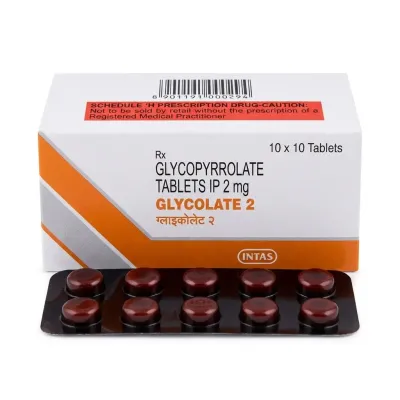
Glycolate 2 2 mg Intas
View
Intas
2 mg 100 tablets
4087₴ 4834₴
-13%
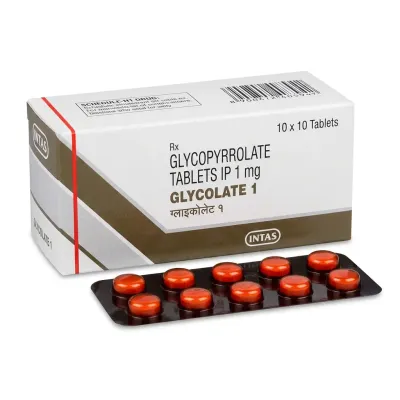
Glycolate 1 1 mg Intas
View
Intas
1 mg 100 tablets
2329₴ 2681₴
✅ All products loaded (2)

Contact us

Choose a convenient way to contact

We work daily from 9:00 to 20:00