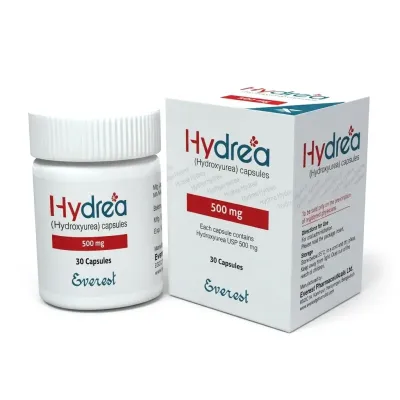
Hydroxyurea – Antimetabolite Therapy for Myeloproliferative Disorders
Hydroxyurea (also termed hydroxycarbamide) is an oral, cytostatic antineoplastic antimetabolite developed for precision tumor and hematologic therapy. The primary mechanism of action involves selective and irreversible inhibition of the enzyme ribonucleoside diphosphate reductase (RNR), which catalyzes the critical rate-limiting step in de novo DNA synthesis: the conversion of ribonucleotides to deoxyribonucleotides. Blockade of this enzyme causes an immediate depletion of intracellular deoxyribonucleoside triphosphate (dNTP) pools, thereby halting DNA replication and repair mechanisms, leading to cell death. Hydroxyurea is cell-cycle phase-specific, acting exclusively during the S-phase and arresting cells at the G1/S transition. Beyond its potent cytoreductive effect, hydroxyurea possesses the unique capacity to increase fetal hemoglobin (HbF) levels in patients with sickle cell anemia, preventing the polymerization of abnormal hemoglobin S and reducing vaso-occlusive crises.
The clinical uniqueness of hydroxyurea lies in its versatility: it is widely utilized for urgent cytoreduction of extreme leukocytosis or thrombocytosis in myeloproliferative disorders, as well as for long-term chronic management. The drug is rapidly and virtually completely absorbed (near 100% bioavailability) from the gastrointestinal tract, reaching peak plasma levels within 1 to 4 hours. It readily crosses the blood-brain barrier and distributes evenly across all body tissues and fluids. Hydroxyurea is partially metabolized by the liver and kidneys to urea and carbon dioxide, but a significant portion of the dose (approximately 50–60%) is excreted unchanged in the urine via active tubular secretion.
The drug is administered orally. Regular monitoring of complete blood counts, including white blood cell and platelet counts, is mandatory during treatment to detect and manage myelosuppression. Periodic renal and hepatic function testing is also required.

Indications
Hydroxyurea is indicated for the palliative and cytoreductive treatment of adult patients with the following hematological and oncological malignancies:
- Chronic Myeloid Leukemia (CML): cytoreductive therapy in the chronic phase for patients with resistance, intolerance, or temporary inaccessibility to targeted tyrosine kinase inhibitors, and for rapid cytoreduction during pre-radiation planning.
- Polycythemia Vera: management of patients at high risk for thromboembolic complications to reduce hematocrit, control plethoric symptoms, and decrease phlebotomy requirements.
- Essential Thrombocythemia: first-line cytoreductive therapy in high-risk patients (aged >60 years or with a history of thrombosis) to maintain platelet counts within a safe range.
- Primary or Secondary Myelofibrosis: symptomatic management of splenomegaly, constitutional symptoms, and profound thrombocytosis or leukocytosis.
- Sickle Cell Anemia: reduction of the frequency of painful vaso-occlusive crises, acute chest syndrome episodes, and the need for blood transfusions in patients with recurrent severe symptoms.
Dosage and administration
The dosing regimen of hydroxyurea must be customized individually based on the patient's body weight, baseline hematological counts, and specific clinical diagnosis.
- Standard Daily Dosing: for continuous management of myeloproliferative diseases, the typical dose ranges from 15 to 30 mg/kg of body weight orally once daily. For emergency cytoreduction in hyperleukocytosis, the dose may be escalated to 40–60 mg/kg daily for a short duration.
- Intermittent Dosing: an alternative regimen of 80 mg/kg administered every third day is occasionally used (e.g., in solid tumors) to allow recovery of the bone marrow during treatment intervals.
- Administration Method: capsules must be swallowed whole with a glass of water, preferably at the same time each morning. For patients unable to swallow, capsules can be emptied into a glass of water and consumed immediately. Proper handling with gloves is recommended when opening capsules.
- Missed Dose: if a dose is missed, a double dose should not be taken the next day. The patient should skip the missed dose and resume their regular schedule, informing their healthcare provider.
- Dose Modification: if the white blood cell count falls below 2.5x10⁹/L or platelets drop below 100x10⁹/L, therapy must be interrupted immediately. Hydroxyurea can be resumed at a lower dose once blood counts recover.