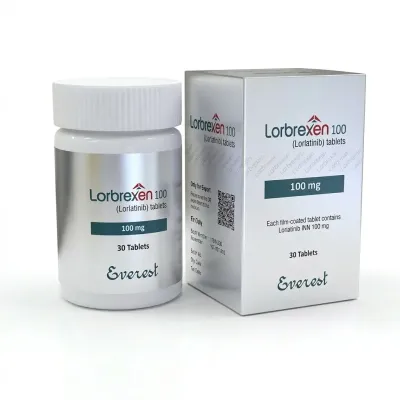
Lorlatinib – Third-Generation ALK and ROS1 Tyrosine Kinase Inhibitor
Known as original brand(s)
Lorbrena
Lorlatinib is an innovative, third-generation selective tyrosine kinase inhibitor (TKI) targeting ALK (anaplastic lymphoma kinase) and ROS1 proteins. The drug was specifically engineered using computer-aided design to address two critical challenges in targeted therapy: overcoming a wide range of resistance mutations that emerge after first- and second-generation treatments, and ensuring maximum permeability across the blood-brain barrier.
The mechanism of action of lorlatinib involves inhibiting the catalytic activity of ALK and ROS1 fusion proteins, thereby blocking key signaling pathways (such as STAT3, PI3K/AKT, and ERK/MAPK) responsible for the survival and proliferation of cancer cells. Due to its compact macrocyclic structure, lorlatinib remains highly effective even against the most aggressive mutations, including the G1202R "gatekeeper mutation," which renders tumors resistant to crizotinib, alectinib, and ceritinib. A standout characteristic of the drug is its ability to achieve high therapeutic concentrations in the cerebrospinal fluid, enabling effective treatment of existing brain metastases and preventing the formation of new ones, significantly extending the lives of patients with metastatic non-small cell lung cancer.
The drug is taken orally once daily. Therapy requires confirmation of ALK-positive or ROS1-positive tumor status and regular monitoring of blood lipid profiles.

Indications
Lorlatinib is indicated as monotherapy for adult patients with the following diagnosis:
- ALK-positive NSCLC (1st line): as first-line systemic therapy for advanced non-small cell lung cancer.
- Progressive ALK-positive NSCLC: treatment of patients whose disease has progressed after alectinib, ceritinib, or crizotinib therapy.
- Brain Metastases: therapy for patients with intracranial spread of the tumor in ALK-positive status.
- ROS1-positive NSCLC: treatment of advanced lung cancer with ROS1 gene rearrangement (in certain regulatory jurisdictions).
Dosage and administration
The lorlatinib dosing regimen aims to achieve stable tumor control while managing metabolic effects.
- Standard Dose: 100 mg once daily.
- Administration Method: the tablet is taken orally whole at the same time every day, regardless of food intake.
- Missed Dose: if a dose is missed by more than 4 hours, wait and take the next dose at the usual time the following day.
- Dose Adjustment: if toxicity develops (especially hyperlipidemia or cognitive impairment), the dose is reduced to 75 mg, then to 50 mg per day.
- Lipid Monitoring: cholesterol and triglyceride levels must be monitored before starting treatment, and at 2, 4, and 8 weeks after therapy initiation.