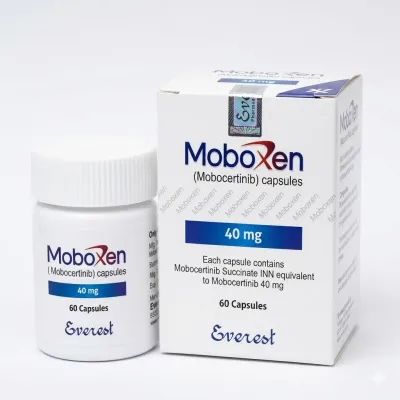
Mobocertinib – Targeted Therapy for EGFR Exon 20 Insertion NSCLC
Known as original brand(s)
Exkivity
Mobocertinib is a small molecule that acts as a highly selective, irreversible oral inhibitor of the epidermal growth factor receptor (EGFR). The drug was specifically developed for the targeted therapy of a rare and aggressive subtype of non-small cell lung cancer (NSCLC) characterized by EGFR exon 20 insertion mutations. Its mechanism of action is based on forming a covalent bond with a cysteine residue in the active site of the EGFR kinase domain, selectively blocking oncogenic signaling through key intracellular pathways (including RAS/RAF/MEK/ERK and PI3K/AKT/mTOR), thereby halting proliferation and inducing apoptosis in tumor cells.
The uniqueness of mobocertinib lies in its ability to bind to the modified receptor during exon 20 insertions, which render the tumor resistant to standard EGFR tyrosine kinase inhibitors (such as osimertinib or erlotinib). The structural flexibility of the molecule allows it to effectively bypass the spatial constraints created by insertions in the catalytic domain while maintaining relative selectivity over wild-type EGFR, which reduces systemic toxicity. The drug received accelerated approval for the treatment of patients whose disease progressed on or after platinum-based chemotherapy. Mobocertinib represents a major milestone in personalized oncology, providing a therapeutic alternative for a patient population that previously faced an extremely poor prognosis.
The drug is taken orally once daily. Prior to initiation, confirmation of the mutation via Next-Generation Sequencing (NGS) or PCR is mandatory.

Indications
Mobocertinib is indicated for the treatment of adult patients with the following diagnosis:
- Metastatic NSCLC: locally advanced or metastatic non-small cell lung cancer with confirmed epidermal growth factor receptor (EGFR) exon 20 insertion mutations.
- Lines of Therapy: used in patients whose disease has progressed on or after prior platinum-based chemotherapy.
Dosage and administration
The dosing regimen of mobocertinib requires strict compliance to maintain stable inhibitor concentrations.
- Standard Dose: 160 mg (four 40 mg capsules) taken orally once daily.
- Administration Method: capsules are swallowed whole at the same time each day, with or without food, accompanied by a full glass of water. Do not open or chew the capsules.
- Missed Dose: if a dose is missed by less than 6 hours, it should be taken immediately. If more than 6 hours have passed, skip the dose and resume the regular schedule.
- Dose Adjustment: in case of severe adverse reactions (e.g., severe diarrhea), the dose is reduced to 120 mg, and then to 80 mg daily. If the 80 mg dose is not tolerated, treatment is discontinued.
- Monitoring: regular monitoring of serum electrolytes (potassium, magnesium) and performing ECGs are required.