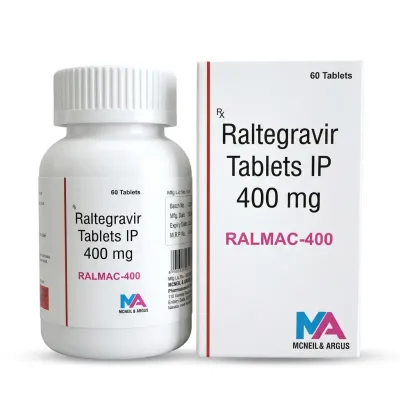
Raltegravir – HIV-1 Integrase Inhibitor Therapy
Known as original brand(s)
Isentress
Raltegravir is a potent antiviral medication and the first representative of the human immunodeficiency virus (HIV-1) integrase strand transfer inhibitor class. The drug revolutionized antiretroviral therapy (ART) by offering a unique viral suppression mechanism that differs from traditional methods.
The mechanism of action involves blocking the catalytic activity of HIV integrase, an enzyme required for viral replication. Integrase is responsible for inserting (integrating) the HIV genetic material into the genome of the host cell (T-lymphocyte). By blocking this process, raltegravir prevents the formation of the integrated provirus, making further production of new viral particles impossible. Consequently, the viral load in the patient's blood rapidly decreases to undetectable levels. The drug is active against HIV strains resistant to other classes of medications, such as protease inhibitors or nucleoside reverse transcriptase inhibitors.
The drug is administered orally and is always used only as part of combination therapy to prevent the development of drug resistance.

Indications
Raltegravir is indicated for the treatment of HIV-1 infection in adults, adolescents, and children in the following clinical scenarios:
- Combination ART: in combination with other antiretroviral medications for the treatment of HIV-1 infection.
- Treatment-naïve Patients: for the treatment of patients who have not previously received antiretroviral therapy.
- Treatment-experienced Patients: for the treatment of patients with prior therapy experience, including those with resistance to other antiviral classes.
Dosage and administration
The raltegravir dosing regimen depends on the formulation and the patient's age.
- Standard Adult Dose: typically 400 mg twice daily or 1200 mg (two 600 mg tablets) once daily (depending on the specific formulation prescribed).
- Administration: tablets are taken orally, with or without food. Tablets must not be chewed, broken, or crushed.
- Pediatric Considerations: the dose is calculated based on the child's body weight; chewable tablets and powder for oral suspension are available.
- Antacid Interaction: avoid taking antacids containing aluminum and magnesium, as they can decrease raltegravir levels in the blood.
- Consistency: to achieve maximum efficacy, it is crucial to adhere to a strict dosing schedule and avoid missing doses.