
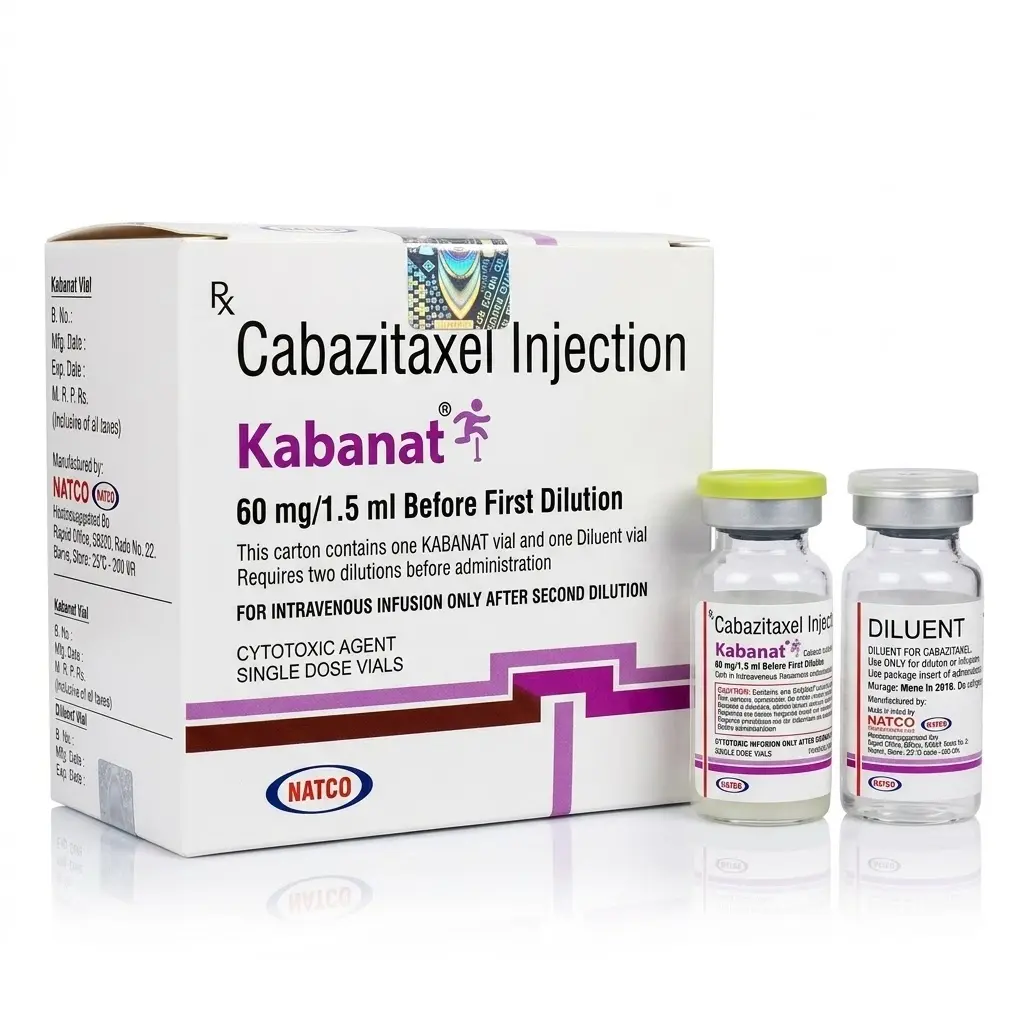
Kabanat — Cabazitaxel 60 mg / 1.5 ml, 1 pcs, Natco
100% original product

Kabanat — Cabazitaxel 60 mg

7640 8539 -11%

Kabanat is a high-tech targeted antineoplastic cytostatic medication developed for the pathogenetic treatment of progressive prostate malignancies. Its active pharmaceutical ingredient, cabazitaxel, belongs to the pharmacological class of taxanes of chemically semi-synthetic origin. The mechanism of action is based on the precise binding of cabazitaxel to beta-tubulin, a key structural protein of the microtubules within the cellular mitotic spindle. Cabazitaxel effectively stabilizes the microtubule structure while simultaneously inhibiting its natural dynamic depolymerization during mitosis. This induces an irreversible disruption of the malignant cell cycle, halting mitotic division at the metaphase stage and triggering apoptosis (programmed cell death) in tumor cells. Due to its unique molecular architecture, Kabanat retains high antineoplastic activity against cancer cell lines resistant to docetaxel and other first-generation taxanes, which is attributed to its exceptionally low affinity for the P-glycoprotein efflux pump responsible for multidrug resistance.

Manufacturer: NATCO Pharma Limited. The medicine is produced in advanced facilities of a leading Indian pharmaceutical corporation in strict compliance with international quality standards and Good Manufacturing Practice (GMP) guidelines. Kabanat is a certified therapeutic analog demonstrating full bioequivalence to the innovator drug and represents a core component of contemporary international uro-oncology treatment protocols.

Key Advantages:

  • Overcoming Resistance: Demonstrates proven efficacy against tumors that have developed resistance to prior docetaxel-based chemotherapy.
  • High Target Affinity: Powerfully halts cancer cell division through irreversible stabilization of the mitotic spindle microtubules.
  • Quality Assurance: Manufactured by the global oncology generic leader NATCO Pharma under rigorous laboratory quality control.

Kabanat is supplied as a concentrate for solution for infusion. The packaging is a combined kit containing:

  • Active Compound (Concentrate Vial): Cabazitaxel — 60 mg in a volume of 1.5 ml (the nominal concentration is 40 mg/ml).
  • Concentrate Excipients: Polysorbate 80, citric acid anhydrous.
  • Solvent (Diluent Vial): The accompanying vial contains a specific solvent (volume of 4.5 ml) used for the initial dilution stage. Solvent composition: ethanol 96%, water for injections. The alcohol concentration in the resulting primary premix solution is 13% w/w.
  • Appearance: Clear, oily solution, colorless to pale yellow. Supplied in a cardboard pack containing 1 vial of concentrate and 1 vial of diluent, complete with an official patient info leaflet.

Pharmacodynamics: Cabazitaxel is an antimitotic antineoplastic agent that binds to tubulin, promotes tubulin assembly into microtubules, and inhibits their disassembly. This stabilizes microtubules, resulting in the inhibition of mitosis and interphase cellular functions, ultimately driving tumor cells to apoptosis.

Pharmacokinetics: Following intravenous administration of cabazitaxel at a dose of 25 mg/m², a three-phase pharmacokinetic profile is characterized by a rapid initial decrease in plasma concentration. Plasma protein binding (including albumin and lipoproteins) is high, at approximately 89–92%, and is non-saturable. The drug undergoes extensive hepatic metabolism, primarily mediated by the CYP3A4/5 isoenzyme (accounting for over 80–90%). Elimination occurs over a prolonged period: approximately 76% of the dose is excreted via feces as metabolites, while only about 3.7% is excreted renally via urine. The mean terminal half-life is approximately 95 hours.

Kabanat 60 mg/1.5 ml is utilized within systemic polychemotherapy regimens as prescribed and monitored by a qualified clinical oncologist for the following conditions:

  • 🔹 Metastatic Castration-Resistant Prostate Cancer (mCRPC): Used as a second-line therapy administered in combination with oral prednisone or prednisolone for the treatment of patients with progressive prostate cancer previously treated with a docetaxel-containing regimen.

Dose calculation, preparation of the infusion solution, and administration of Kabanat must be conducted exclusively within a specialized oncology daycare or inpatient facility:

  • Recommended Dosage: The standard dose is 25 mg per square meter (mg/m²) of the patient's body surface area. The medication is administered as a 1-hour intravenous infusion once every 3 weeks.
  • Concomitant Therapy: Daily oral administration of prednisone (or prednisolone) at a dose of 10 mg is indicated throughout the entire treatment course.
  • Premedication: To minimize the risk of severe hypersensitivity reactions and nausea, premedication with intravenous antihistamines, H2-receptor antagonists, glucocorticosteroids (e.g., dexamethasone), and antiemetics must be administered 30 minutes before every infusion.
  • Solution Preparation: The preparation follows a two-step process. First, the entire volume of the accompanying diluent is carefully injected into the concentrate vial, gently mixing by inversion for 45 seconds until a primary premix solution is obtained (concentration 10 mg/ml). Then, the required dose volume of this premix is withdrawn and further diluted into 250 ml of 0.9% sodium chloride solution or 5% dextrose solution. The prepared solution for infusion must be used within 8 hours when stored at room temperature.
  • Dose Modification: In the event of febrile neutropenia, a neutrophil count drop below 500/mm³, or severe diarrhea (≥ Grade 3), delay administration until recovery. Subsequent doses should be reduced to 20 mg/m². If severe toxicity recurs, discontinue treatment permanently.

The initiation and administration of Kabanat infusions are strictly prohibited in the presence of the following clinical factors:

  • Hypersensitivity: Known severe individual hypersensitivity or intolerance to cabazitaxel, other taxanes, polysorbate 80, or ethanol.
  • Hematological Baseline: Baseline absolute neutrophil count (ANC) in peripheral blood of less than 1,500/mm³.
  • Hepatic Impairment: Severe hepatic impairment characterized by total bilirubin levels > 3 times the upper limit of normal (ULN) or AST/ALT levels > 5 times ULN.
  • Age and Safety Factors: Children and adolescents under 18 years of age (safety and efficacy have not been established), pregnancy, and lactation periods.

Cabazitaxel is extensively metabolized by hepatic enzymes, necessitating caution when administering concomitant therapies:

  • Effects of Strong CYP3A4 Inhibitors: Co-administration with potent CYP3A4 inhibitors (e.g., ketoconazole, itraconazole, clarithromycin, ritonavir) significantly decreases cabazitaxel clearance and increases its plasma exposure. Such combinations should be avoided or managed with extreme caution.
  • Effects of Strong CYP3A4 Inducers: Concomitant use with strong CYP3A4 inducers (e.g., rifampicin, carbamazepine, phenobarbital, St. John's wort) accelerates cabazitaxel elimination, which can critically reduce its antineoplastic efficacy.
  • Interaction with Vaccines: Due to the drug's marked immunosuppressive action, administration of live or attenuated vaccines is strictly contraindicated during therapy and for 6 months following the final dose.

Kabanat is indicated strictly for male patients; however, it exerts direct toxic effects on the reproductive system and embryogenesis:

  • Fetal Risk: Cabazitaxel possesses proven teratogenic, mutagenic, and embryotoxic properties. Accidental exposure to a pregnant woman can cause severe fetal malformations or miscarriage. The drug is contraindicated in women.
  • Contraceptive Measures for Men: Male patients with female partners of childbearing potential must use highly effective barrier contraception methods (condoms) during treatment and for at least 6 months after the final dose of Kabanat. If the partner is pregnant, condom use is mandatory throughout the entire treatment course.
  • Effects on Fertility: Treatment may result in irreversible male infertility. Patients are advised to consider sperm preservation counseling prior to initiating chemotherapy.

The systemic cytostatic effect of cabazitaxel can lead to a range of adverse events requiring regular laboratory and clinical evaluation:

  • 🟢 Hematological Toxicity (Very Common): Severe neutropenia, febrile neutropenia, anemia, leukopenia, thrombocytopenia. Weekly complete blood count monitoring is mandatory.
  • 💡 Gastrointestinal Tract: Severe diarrhea, nausea, vomiting, constipation, abdominal pain, dyspepsia, and dehydration.
  • 🟡 General and Neurological Disorders: Fatigue, asthenia, peripheral neuropathy (numbness, tingling in extremities), dysgeusia (taste alterations), and alopecia.
  • 🟠 Urinary System: Hematuria (blood in the urine), dysuria, and renal impairment or failure.
  • ⚠️ Urgent Medical Attention: If a fever (body temperature above 38°C) develops alongside low white blood cell counts, signs of acute infection occur, severe unmanageable diarrhea develops, or blood appears in the urine, notify the treating oncologist immediately for emergency medical care.

Acute overdose incidents are rare in clinical practice because administration is tightly controlled by clinical staff; however, exceeding therapeutic doses results in critical toxicity:

  • Main Manifestations: Anticipated symptoms of overdose include severe, life-threatening bone marrow suppression (critical drop in neutrophils, platelets, and red blood cells) and severe gastrointestinal toxicities (unmanageable diarrhea, vomiting).
  • First Aid: Immediate discontinuation of the infusion at the first sign or suspicion of dose exceeding.
  • Treatment: There is no known specific antidote for cabazitaxel. Intensive supportive and symptomatic therapy should be provided. Immediate administration of colony-stimulating factors (G-CSF) to stimulate hematopoiesis, broad-spectrum antibiotic therapy if infection risks arise, and intravenous fluid/electrolyte replacement are highly recommended.

Adherence to the proper storage conditions of Kabanat components ensures the maintenance of their chemical stability and purity:

  • 🌡️ Temperature Regimen: Component vials of concentrate and diluent must be stored in a dry place at an ambient temperature between 15°C and 25°C. Do not freeze the vials under any circumstances.
  • 📦 Light Protection: The medicine must be kept inside its original outer cardboard carton to prevent active molecular degradation from exposure to ultraviolet or intense artificial light.
  • 👶 Safety: Given its highly cytotoxic potency, Kabanat must be stored in a secure, designated area completely out of reach of children and unauthorized personnel.
  • Shelf Life: The shelf life is 24 months from the manufacturing date printed by NATCO on the outer carton. Using any component beyond this date is strictly prohibited.

Notice. The information on this page is for reference only and does not replace medical consultation. Always consult a healthcare professional and read the manufacturer's instructions before using any medicine. Self-medication may be dangerous. Information updated: 24.05.2026

Active ingredient
Manufacturer
Natco
Dosage
60 mg / 1.5 ml
Dosage form Concentrate for solution for infusion
Vials per pack 1
100% original product
Delivery across Ukraine
Customer reviews

What Customers Say

No reviews yet

Your review can be the first!

Contact us

Choose a convenient way to contact

We work daily from 9:00 to 20:00