
Cabazitaxel – Prostate Cancer Treatment

Cabazitaxel is a semi-synthetic second-generation antineoplastic agent belonging to the taxane group. The drug is a potent inhibitor of microtubule function, specifically developed to overcome tumor resistance to prior docetaxel therapy. Cabazitaxel possesses the unique ability to maintain activity in cells with low accumulation levels of other taxanes.

The mechanism of action of cabazitaxel is based on its ability to bind to tubulin and promote microtubule assembly while simultaneously inhibiting their disassembly. This leads to microtubule stabilization and cell cycle arrest in the G2 and M phases, effectively suppressing mitosis and inducing apoptosis (programmed cell death) in tumor cells. Unlike other taxanes, cabazitaxel has a low affinity for the P-glycoprotein efflux pump, which usually pumps drugs out of the cell, ensuring the drug's efficacy in multi-drug resistant environments.

The drug is administered intravenously and is characterized by wide tissue distribution. Cabazitaxel demonstrates significant antitumor activity against hormone-refractory forms of prostate cancer, slowing tumor growth and improving overall patient survival.

Wikipedia page
Cabazitaxel

Indications

Cabazitaxel is used in onco-urological practice as part of combination therapy for specific conditions:

  • Castration-Resistant Prostate Cancer (CRPC): treatment of patients with metastatic disease who have progressed during or after docetaxel therapy.
  • Combination Therapy with Prednisolone: the drug is always prescribed in conjunction with oral glucocorticoids (prednisolone or prednisone) to enhance effect and reduce side effects.
  • Second-Line Chemotherapy: used in cases where hormonal therapy and first-line cytostatics have proven ineffective.
  • The drug is indicated for adult patients with a confirmed metastatic process.

Dosage and administration

Cabazitaxel therapy is conducted exclusively in specialized oncology centers under the supervision of qualified medical personnel.

  • Standard Dosage: the recommended dose is 20 mg/m² or 25 mg/m² of body surface area, administered as a one-hour intravenous infusion every 3 weeks.
  • Concomitant Therapy: daily oral intake of prednisolone (10 mg) is mandatory throughout the entire course of cabazitaxel treatment.
  • Premedication: 30 minutes prior to infusion, the patient must receive antihistamines, H2-receptor antagonists, and corticosteroids to prevent allergic reactions.
  • Complication Prophylaxis: due to the high risk of neutropenia, the administration of G-CSF (granulocyte colony-stimulating factor) may be required.
  • Dose Adjustment: if severe side effects occur (grade 4 neutropenia, severe diarrhea), the dose is reduced to 20 mg/m² or treatment is temporarily suspended.

The use of cabazitaxel is prohibited or strictly limited under the following clinical conditions:

  • Severe Neutropenia: baseline neutrophil count in peripheral blood less than 1500/mm³ (high risk of septic complications).
  • Hepatic Impairment: significant liver function disorders (bilirubin level > 1.5 ULN or AST/ALT > 2.5 ULN).
  • Hypersensitivity: allergy to cabazitaxel, other taxanes, or polysorbate 80 (an excipient).
  • Vaccination: simultaneous administration of live attenuated vaccines during immunosuppression.
  • Pediatric Use: safety and efficacy of cabazitaxel in children under 18 years of age have not been established.

The safety of cabazitaxel requires careful monitoring due to the risk of serious systemic reactions:

  • Hematologic Toxicity: neutropenia (the most frequent and dangerous complication), anemia, leukopenia, and thrombocytopenia.
  • Gastrointestinal Tract: severe diarrhea (requiring rehydration), nausea, vomiting, constipation, and abdominal pain.
  • General Disorders: increased fatigue (asthenia), fever, back pain, and joint pain.
  • Urinary System: hematuria (blood in urine), dysuria, and the risk of renal failure associated with dehydration.
  • Respiratory Reactions: dyspnea, cough, and rare cases of interstitial pneumonia.

Frequently Asked Questions

Cabazitaxel is an antineoplastic agent belonging to the taxane class. It inhibits cancer cell division by stabilizing microtubules within the cell, preventing them from functioning correctly during mitosis. The unique feature of cabazitaxel is its effectiveness against tumors that have already developed resistance to other taxanes (such as docetaxel).
The primary indication is metastatic castration-resistant prostate cancer (mCRPC). Cabazitaxel is typically prescribed for patients whose disease continues to progress during or after a treatment regimen that included docetaxel. It is used in combination with prednisone or dexamethasone.
One of the most serious side effects of the substance is neutropenia (a significant drop in white blood cell count), which drastically increases the risk of severe infections. Physicians must regularly perform complete blood counts. In some cases, additional medications (G-CSF) may be prescribed to stimulate white blood cell production.
Like other taxanes, cabazitaxel can cause allergic reactions during infusion (rash, shortness of breath, drop in blood pressure). To prevent this, patients receive premedication with antihistamines and glucocorticoids before each dose. The infusion is carried out only under the supervision of qualified medical staff.
Therapy with this substance is often associated with diarrhea, which can be severe and lead to dehydration. Patients are advised to inform their doctor at the first sign of bowel changes to promptly start anti-diarrheal medication and replenish fluids and electrolytes.

List of medicines by active substance Cabazitaxel

-11%
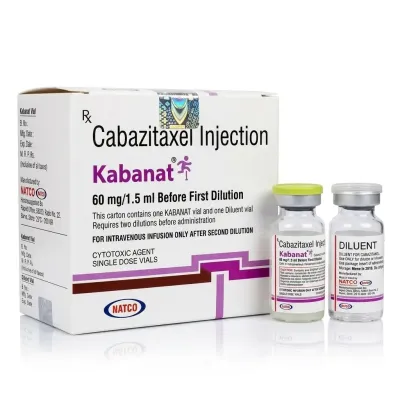
Kabanat 60 mg / 1.5 ml Natco
View
Natco
60 mg / 1.5 ml 1 vial
7471₴ 8350₴
✅ All products loaded (1)

Contact us

Choose a convenient way to contact

We work daily from 9:00 to 20:00