
Apremilast – Treatment for Psoriasis

Apremilast is a modern oral small-molecule compound that functions as a selective inhibitor of the phosphodiesterase-4 (PDE4) enzyme. The drug belongs to the class of non-biological anti-inflammatory agents and is used for the systemic therapy of chronic immune-mediated inflammatory diseases of the skin and joints.

The mechanism of action of apremilast involves blocking PDE4, which is the dominant enzyme in immune system cells. Inhibition of this enzyme leads to increased levels of intracellular cyclic adenosine monophosphate (cAMP). High concentrations of cAMP, in turn, suppress the production of numerous pro-inflammatory mediators (such as TNF-α, interleukin IL-17, and IL-23) while simultaneously stimulating the synthesis of the anti-inflammatory mediator IL-10. This allows for fine-tuning of the immune response, reducing inflammation without global immunosuppression.

The drug is notable for its convenient tablet form and does not require the continuous laboratory monitoring typically associated with traditional cytostatics or biological agents.

Wikipedia page
Apremilast

Indications

Apremilast is used in dermatology and rheumatology for the treatment of the following conditions:

  • Psoriasis: treatment of adult patients with moderate to severe plaque psoriasis who are candidates for systemic therapy or phototherapy.
  • Psoriatic Arthritis: use as monotherapy or in combination with other disease-modifying antirheumatic drugs (DMARDs) in adult patients with active arthritis.
  • Behçet's Disease: treatment of oral mucosal ulcers in adult patients with this systemic vasculitis.
  • Scalp Psoriasis: therapy for specific disease localizations that are difficult to manage with topical treatments.

Dosage and administration

The apremilast dosing regimen includes a mandatory gradual dose escalation (titration) phase to improve tolerability.

  • Treatment Initiation: the dose is gradually increased from 10 mg on Day 1 to the target dose of 30 mg by Day 6.
  • Maintenance Dose: 30 mg twice daily (morning and evening), approximately 12 hours apart.
  • Administration Rules: tablets are taken orally with or without food and should be swallowed whole, without breaking or chewing.
  • Renal Impairment Adjustment: for patients with severe renal impairment (creatinine clearance < 30 mL/min), the dose is reduced to 30 mg once daily.
  • Weight Monitoring: regular weight checks are recommended during therapy, as the drug may cause a decrease in body mass.

The use of apremilast is contraindicated or restricted in the following situations:

  • Pregnancy and Lactation: apremilast is contraindicated during pregnancy; women of childbearing potential must use effective contraception.
  • Hypersensitivity: allergic reactions to apremilast or excipients (e.g., lactose).
  • Lactase Deficiency: the drug is not recommended for patients with rare hereditary galactose intolerance.
  • Pediatric Use: safety and efficacy in children under 18 years of age have not yet been established.
  • Psychiatric Disorders: caution should be exercised in patients with a history of depression or suicidal ideation.

Most side effects of apremilast occur within the first weeks of treatment and usually resolve over time:

  • Gastrointestinal: most commonly — diarrhea and nausea (usually mild to moderate).
  • Infections: increased risk of upper respiratory tract infections and nasopharyngitis.
  • Nervous System: headache, tension headache, and possible insomnia.
  • Psychiatric: depression, depressed mood, and in rare cases, suicidal behavior.
  • Metabolism: decreased appetite and significant weight loss in some patients.

Frequently Asked Questions

Apremilast is a selective phosphodiesterase-4 (PDE4) inhibitor. It helps control inflammatory processes within the body. The medication is used to treat moderate-to-severe plaque psoriasis and active psoriatic arthritis in adult patients.
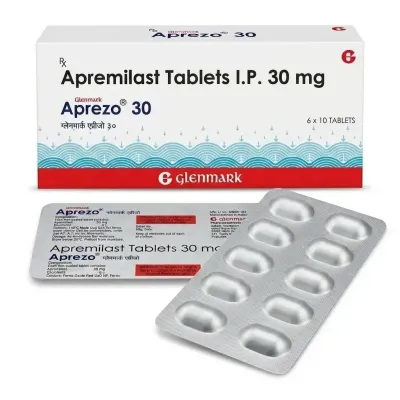
Otezla is the original drug by Amgen. Indian generics (e.g., Aprezo by Glenmark or Mpyla by Mylan) available on Unifarm contain the same active ingredient in a 30 mg dosage. They offer the same efficacy but are significantly more affordable, making modern therapy accessible.
Treatment usually starts with a gradual dose increase over the first week (titration) to help the body adjust. The maintenance dose is 30 mg twice daily (morning and evening). Tablets are taken orally, with or without food, and should be swallowed whole.
Most commonly, during the first weeks of treatment, patients may experience diarrhea, nausea, headache, and upper respiratory tract infections. These symptoms are usually mild and tend to resolve as therapy continues.
Unlike many other systemic medications for psoriasis, apremilast typically does not require regular laboratory monitoring of liver or kidney functions. However, it is important to monitor body weight, as some patients may experience weight loss.
The price for Indian apremilast generics on our website is significantly lower than the cost of the original Otezla. We offer medications directly from reliable manufacturers. Current pricing is listed on the product page and depends on the brand.
You can place an order online at the Unifarm website. Delivery is available across Ukraine via postal services. If you need help with your order or have questions about availability, please contact us by phone or through messaging apps.

List of medicines by active substance Apremilast

-31%
Aprezo 30 mg Glenmark
View
Glenmark
30 mg 60 tablets
2420₴ 3520₴
✅ All products loaded (1)

Contact us

Choose a convenient way to contact

We work daily from 9:00 to 20:00