
Binimetinib – Highly Selective Oral MEK1/2 Kinase Inhibitor

Binimetinib is an oral, highly selective, reversible small-molecule allosteric inhibitor of mitogen-activated protein kinase 1 and 2 (MEK1 and MEK2), engineered for the systemic targeted therapy of solid tumors. The mechanism of action of binimetinib involves binding to a unique allosteric site on MEK1/2 adjacent to the ATP-binding pocket. This selectively prevents MEK activation and completely blocks the catalytic phosphorylation of downstream target proteins ERK1 and ERK2. Disruption of the MAPK/ERK signaling cascade effectively arrests cell proliferation, impairs cell survival, and induces apoptosis in tumor cells harboring activating mutations within the BRAF or NRAS genes. The core pharmacological feature of binimetinib is its exceptional specificity, minimizing off-target interaction with other protein kinases, and its profound synergy when combined with BRAF inhibitors (specifically encorafenib), which enables dual vertical blockade of the pathway and significantly delays the emergence of resistance.

The clinical uniqueness of binimetinib lies in its ability, when utilized within a combination regimen, to dramatically improve progression-free survival outcomes in patients with metastatic melanoma compared to BRAF inhibitor monotherapy. The drug demonstrates high oral bioavailability; its absorption is rapid and is not clinically altered by concurrent food intake. Peak plasma exposure is achieved within a median of 1 to 2 hours post-dose. Binimetinib is moderately bound to human plasma proteins (approximately 97%). The primary metabolic pathway is initial glucuronidation mediated via the UGT1A1 isoenzyme, alongside minor oxidative metabolism via CYP1A2 and CYP2C19. The mean elimination half-life is relatively short, ranging from approximately 3 to 5 hours, necessitating a twice-daily dosing schedule to maintain therapeutic exposure. Systemic clearance occurs equally via the intestines in the feces and through the kidneys in the urine.

The drug is administered orally. Initiating therapy mandates prior molecular-genetic confirmation of the presence of a BRAF V600E or V600K mutation. Ongoing treatment requires regular cardiac function assessments (left ventricular ejection fraction), ophthalmologic monitoring, serum creative phosphokinase measurements, and hepatic function panels.

Wikipedia page
Binimetinib

Indications

Binimetinib is indicated for the systemic targeted therapy of adult patients presenting with the following malignant neoplasm:

  • Melanoma: treatment of adult patients with unresectable or metastatic melanoma harboring a BRAF V600E or V600K mutation, administered in combination with encorafenib.

Dosage and administration

The dosing regimen of binimetinib requires strict adherence to dosing intervals and individual dose adjustments based on the development of class-specific toxicities.

  • Standard Therapeutic Dose: the recommended therapeutic dose is 45 mg taken orally twice daily (amounting to a total daily dose of 90 mg). The drug must be taken daily, approximately 12 hours apart.
  • Food Co-administration: the drug can be administered with or without food, as food intake does not exert any clinically significant impact on the systemic exposure of the active substance.
  • Administration Method: tablets are taken orally, must be swallowed whole, and washed down with a sufficient volume of water. Breaking, crushing, crumbling, or chewing the tablets during handling is strictly prohibited.
  • Missed Dose: if a scheduled dose is delayed by less than 6 hours, the patient must take the missed dose immediately. If the delay exceeds 6 hours, that dose must be skipped entirely, and the patient returns to the planned schedule (taking the next dose at the regular time). Taking a double dose to compensate for a missed one is strictly prohibited. If vomiting occurs after taking a dose, a repeat tablet must not be administered on that day.
  • Dose Modification for Toxicity: if severe adverse reactions develop (such as a drop in left ventricular ejection fraction, serous retinal detachment, prominent creatine phosphokinase elevation, or severe hepatotoxicity), therapy must be temporarily withheld. Upon clinical resolution of symptoms, treatment is resumed at a reduced dose of 30 mg twice daily. If a patient cannot tolerate 30 mg twice daily, the drug must be permanently discontinued.

The use of binimetinib is restricted by severe risks of cardiotoxicity, ophthalmologic disturbances, vascular events, and embryofetal harm, and is contraindicated in the following conditions:

  • Hypersensitivity: documented history of anaphylaxis, angioedema, or individual hypersensitivity to binimetinib or any inactive formulation excipients inside the dosage form.
  • Thromboembolic Events: active or historical episodes of pulmonary embolism or deep vein thrombosis, due to the high risk of recurrence and disease exacerbation.
  • Ophthalmologic Pathology: history or presence of retinal vein occlusion (RVO), presence of predisposing factors for RVO, or severe baseline visual impairment.
  • Pregnancy and Lactation: based on its mechanism of action, the drug poses a high risk to the fetus, demonstrating clear teratogenic and embryotoxic potential. Use in pregnant women is contraindicated. Women of childbearing potential must utilize highly effective contraception methods during treatment and for at least 30 days following the final dose. Breastfeeding is prohibited during therapy and for 3 days after the last dose.
  • Pediatric Population: the safety, tolerability, and clinical efficacy profiles of binimetinib in children and adolescents under the age of 18 have not been established; use within this age cohort is contraindicated.

The side effects of binimetinib are predominantly driven by its class-specific toxic impacts on the cardiovascular system, visual apparatus, muscular tissue, and cutaneous structures:

  • Ophthalmologic Toxicity: development of chorioretinopathy, serous retinal detachment (retinal pigment epithelial detachment), blurred vision, decreased visual acuity, and periorbital edema.
  • Musculoskeletal Toxicity: marked asymptomatic or clinically manifest elevations in serum creatine phosphokinase (CPK) levels, myalgia, muscle spasms, muscle weakness, and a potential risk of rhabdomyolysis.
  • Cardiotoxicity: asymptomatic reductions in left ventricular ejection fraction (LVEF) or development of symptomatic congestive heart failure.
  • Vascular Disorders: development of arterial hypertension, venous thromboembolism (including deep vein thrombosis and pulmonary embolism), and hemorrhagic events.
  • Dermatological Toxicity: acneiform dermatitis, rash, dry skin, pruritus, hyperkeratosis, and alopecia.
  • Gastrointestinal and Hepatic Toxicity: diarrhea, nausea, vomiting, abdominal pain, alongside transient elevations in liver transaminases (ALT, AST) and alkaline phosphatase levels.

Frequently Asked Questions

Binimetinib is an oral, small-molecule targeted therapy that acts as a potent and reversible inhibitor of mitogen-activated protein kinase kinase 1 and 2 (MEK1 and MEK2). The MEK1/2 kinases are crucial components of the MAPK (RAS/RAF/MEK/ERK) signaling cascade, which regulates cellular proliferation, differentiation, and survival. In tumors harboring specific upstream mutations (such as BRAF mutations), this pathway is constitutively hyperactivated. Binimetinib directly binds to and blocks MEK activity, thereby disrupting downstream growth signals and inducing tumor cell apoptosis.
Binimetinib is indicated for the treatment of adult patients with unresectable or metastatic melanoma harboring a confirmed BRAF V600 mutation. The medication must be administered strictly in combination with encorafenib (a BRAF inhibitor). Dual inhibition targeting two distinct nodes within the same signaling pathway (BRAF and MEK) significantly enhances anti-tumor efficacy, delays the emergence of acquired tumor resistance, and reduces the incidence of specific toxicities associated with BRAF inhibitor monotherapy.
The standard recommended dosage of binimetinib is 45 mg administered orally twice daily (morning and evening, approximately 12 hours apart). The tablets can be taken with or without food and must be swallowed strictly whole with water. If a patient vomits after taking a dose, an additional or repeat dose must not be administered that day. The patient should simply resume therapy by taking the next regularly scheduled dose according to their established calendar.
Binimetinib is associated with a risk of serious ocular toxicities, including serous retinopathy (retinal pigment epithelial detachment) and retinal vein occlusion (RVO). Patients may present with symptoms such as blurred vision, distorted vision, flashes of light, floaters, or sudden partial or complete vision loss. Comprehensive ophthalmological examinations are mandatory at baseline and immediately upon the development of any new visual disturbances. If RVO or significant retinal detachment is diagnosed, binimetinib must be withheld, dose-reduced, or permanently discontinued.
Binimetinib therapy can induce cardiomyopathy and asymptomatic reductions in left ventricular ejection fraction (LVEF). Cardiac function must be evaluated via an echocardiogram (ECHO) or MUGA scan prior to treatment initiation and monitored every 2 to 3 months thereafter. Additionally, the drug frequently causes significant elevations in serum creatine phosphokinase (CPK), indicating potential skeletal muscle toxicity (myopathy). CPK levels must be measured regularly via blood chemistry; patients must immediately report any unexplained muscle pain, tenderness, cramps, generalized weakness, or dark-colored urine.

List of medicines by active substance

-11%
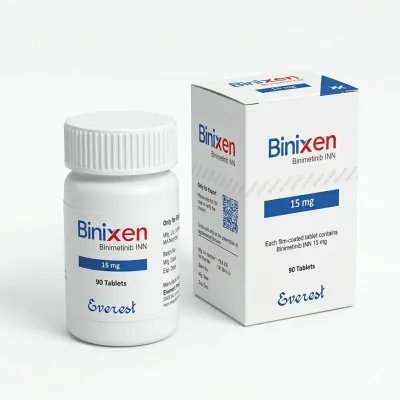
Binixen 15 mg Everest
View
Everest
15 mg 90 tablets
53933₴ 60674₴
✅ All products loaded (1)

Contact us

Choose a convenient way to contact

We work daily from 9:00 to 20:00