
Brigatinib – Targeted Cancer Therapy

Brigatinib is an innovative targeted anti-cancer medication and a potent, selective next-generation inhibitor of Anaplastic Lymphoma Kinase (ALK). It was specifically engineered to overcome resistance mechanisms that develop during treatment with first-generation ALK inhibitors.

The mechanism of action involves inhibiting the autophosphorylation of ALK and the ALK-mediated phosphorylation of downstream signaling proteins. Brigatinib exhibits activity against a wide range of ALK mutations, including the G1202R mutation, which frequently confers resistance to crizotinib. Additionally, brigatinib inhibits the epidermal growth factor receptor (EGFR) and possesses high blood-brain barrier permeability, making it exceptionally effective in managing brain metastases.

The drug is administered orally and features a convenient once-daily dosing schedule.

Wikipedia page
Brigatinib

Indications

Brigatinib is indicated for the treatment of adult patients in the following scenarios:

  • ALK-positive NSCLC: as first-line therapy for advanced or metastatic non-small cell lung cancer.
  • Resistant NSCLC: treatment of patients with metastatic ALK-positive NSCLC whose disease has progressed on or who are intolerant to crizotinib.

Dosage and administration

The brigatinib dosing regimen includes a mandatory lead-in period to monitor patient tolerability.

  • Initial Dose: 90 mg once daily for the first 7 days (lead-in period).
  • Maintenance Dose: if the initial dose is well-tolerated, increase to 180 mg once daily after the first 7 days.
  • Administration Rules: tablets should be swallowed whole, with or without food, at the same time each day.
  • Interactions: avoid grapefruit, grapefruit juice, and strong CYP3A inducers (such as St. John’s wort).
  • Missed Dose: if a dose is missed by more than 12 hours, skip the dose and take the next one at the scheduled time.

The use of brigatinib is restricted in the following cases:

  • Hypersensitivity: known allergic reactions to brigatinib or any of its excipients.
  • Pregnancy and Lactation: potential risk to the fetus; effective contraception is required during and for 4 months after the final dose.
  • Pediatric Use: safety and efficacy have not been established in patients under 18 years of age.
  • Severe Renal Impairment: use with caution in patients with a creatinine clearance less than 30 mL/min.

Brigatinib therapy may be associated with the following adverse reactions:

  • Respiratory: risk of early-onset pulmonary events (e.g., pneumonitis, dyspnea), typically occurring within the first week of treatment.
  • Cardiovascular: hypertension and bradycardia.
  • Gastrointestinal: nausea, vomiting, diarrhea, and abdominal pain.
  • Laboratory: increased creatine phosphokinase (CPK), amylase, and lipase levels; hyperglycemia.
  • General: fatigue, headache, and myalgia (muscle pain).

Frequently Asked Questions

Brigatinib is a potent and selective next-generation tyrosine kinase inhibitor. It blocks the ALK (anaplastic lymphoma kinase) protein and mutant forms of EGFR. Brigatinib is designed to suppress the growth of cancer cells even when the tumor has developed resistance to first-generation inhibitors (such as crizotinib).
Brigatinib is used to treat adult patients with metastatic non-small cell lung cancer (NSCLC) that is anaplastic lymphoma kinase (ALK)-positive. It can be used as a first-line treatment or for patients whose disease has progressed while on crizotinib.
Brigatinib can cause early-onset pulmonary side effects (pneumonitis). To reduce this risk, a 7-day lead-in period is required: the patient starts with 90 mg once daily, and if well-tolerated, the dose is increased to 180 mg. This allows the body to adjust to the medication.
Yes, brigatinib is capable of crossing the blood-brain barrier. This makes it effective for treating patients whose lung cancer has spread to the brain, which is a common complication in ALK-positive NSCLC.
During therapy, it is essential to monitor blood pressure, blood glucose levels (as the substance can cause hyperglycemia), pancreatic enzymes (amylase and lipase), and liver function tests. Regular monitoring ensures that any side effects are identified early and managed appropriately.

List of medicines by active substance Brigatinib

-6%
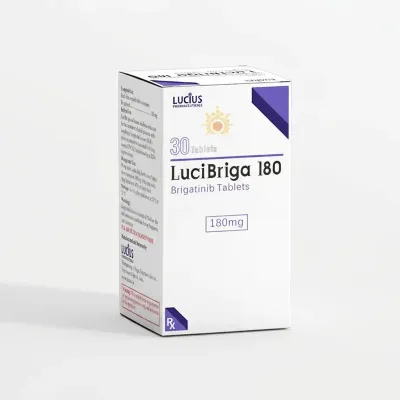
LuciBriga 180 mg Lucius
View
Lucius
180 mg 30 tablets
25490₴ 27248₴
✅ All products loaded (1)

Contact us

Choose a convenient way to contact

We work daily from 9:00 to 20:00