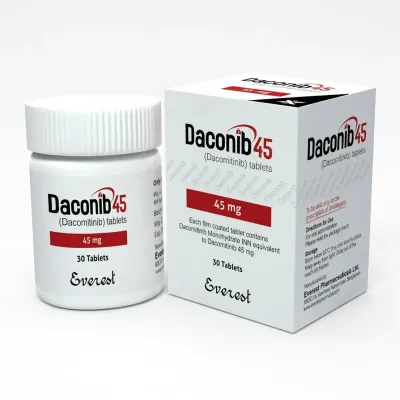
Dacomitinib – Irreversible Pan-HER/EGFR Tyrosine Kinase Inhibitor
Dacomitinib is an oral, highly selective, second-generation small-molecule tyrosine kinase inhibitor engineered for the precision oncology therapy of non-small cell lung cancer (NSCLC). Unlike first-generation reversible inhibitors, dacomitinib delivers irreversible and pan-ERBB pathways blockade. The drug forms covalent bonds with the ATP-binding domains of three distinct active members of the epidermal growth factor receptor family: EGFR (HER1), HER2 (ERBB2), and HER4 (ERBB4). Its mechanism of action involves potent inhibition of receptor autophosphorylation, effectively shutting down downstream oncogenic signaling cascades, including the MAPK/ERK and PI3K/AKT/mTOR pathways. This results in an immediate cell cycle arrest in the G1 phase and triggers programmed cell death (apoptosis) in tumor cells. Dacomitinib demonstrates high efficacy against the most common somatic activating EGFR mutations—exon 19 deletions and exon 21 L858R substitution mutations.
The clinical uniqueness of dacomitinib lies in its ability to significantly prolong progression-free survival in patients with metastatic NSCLC compared to first-generation inhibitors, achieved via continuous and profound receptor blockade. The drug is well absorbed within the gastrointestinal tract following oral administration, reaching steady-state plasma concentrations within 14 days. Dacomitinib is characterized by a prolonged elimination half-life (approximately 70 hours). The primary metabolic pathway occurs in the liver via the CYP2D6 isoenzyme and to a lesser extent CYP3A4. Excretion is carried out predominantly through the intestines in the feces and partially via the kidneys in the urine.
The drug is administered orally. Prior to initiating treatment, documentation of a positive EGFR mutation status (either an exon 19 deletion or an exon 21 L858R substitution) using a validated molecular-genetic assay on tumor tissue or circulating tumor DNA is mandatory. Strict clinical monitoring of skin condition and gastrointestinal function is required throughout therapy.

Indications
Dacomitinib is indicated as a precision targeted monotherapy for adult patients with the following malignant oncological condition:
- EGFR-Mutated Non-Small Cell Lung Cancer (NSCLC): first-line systemic treatment of adult patients with locally advanced or metastatic non-small cell lung cancer harboring confirmed activating epidermal growth factor receptor (EGFR) mutations, specifically exon 19 deletions or exon 21 L858R substitution mutations.
Dosage and administration
The dosing regimen of dacomitinib is continuous and structured for long-term daily administration, with mandatory step-down modifications in the event of severe dermatological or gastrointestinal toxicities.
- Standard Dose: the recommended therapeutic dose is 45 mg (one tablet) taken orally once daily.
- Schedule and Duration: the drug is taken daily without planned interruptions. Therapy should be maintained as long as the patient derives clinical benefit or until unacceptable systemic toxicity occurs.
- Administration Method: tablets must be swallowed whole at approximately the same time each day, with or without food. Tablets must not be broken, crushed, or chewed, and should be administered with a sufficient volume of water.
- Missed Dose: if a dose is missed by more than 12 hours, that missed dose should not be taken. The patient must skip the missed dose and resume their regular schedule the next day at the planned time. Taking a double dose is strictly prohibited.
- Dose Modification for Toxicity: if severe diarrhea or skin rash develops, therapy must be temporarily withheld until symptoms resolve to Grade 1. Treatment is then resumed with sequential dose reductions: the first step down is to 30 mg once daily, and the second step (for recurrent toxicity) is to 15 mg once daily.