Entecavir – Chronic Hepatitis B Therapy

Entecavir is a potent antiviral medication belonging to the nucleoside (guanine) analog class. It is specifically designed to inhibit the replication of the hepatitis B virus (HBV) and is recognized as a first-line therapy choice due to its high potency and low genetic barrier to resistance.

The mechanism of action involves the inhibition of HBV DNA polymerase. Entecavir effectively blocks three functional stages of the viral life cycle: HBV polymerase priming, reverse transcription of the negative strand from pregenomic mRNA, and synthesis of the positive strand of HBV DNA. Inside the cell, entecavir is phosphorylated to its active triphosphate form, which competes with the natural substrate (deoxyguanosine triphosphate) to be incorporated into viral DNA, thereby terminating DNA synthesis.

The drug is intended for long-term use and significantly reduces viral load, helping to slow the progression of liver fibrosis and cirrhosis.

Wikipedia page
Entecavir

Indications

Entecavir is indicated for the treatment of chronic hepatitis B virus (HBV) infection in adults and pediatric patients (aged 2 years and older):

  • Active Viral Replication: evidence of detectable virus in the blood and elevated liver enzyme levels (ALT/AST).
  • Histological Evidence: presence of active inflammation or liver fibrosis confirmed by biopsy or non-invasive methods.
  • Decompensated Liver Disease: used in treatment protocols for severe liver damage under close clinical supervision.

Dosage and administration

Entecavir must be taken at a consistent time to ensure maximum therapeutic efficacy.

  • Standard Adult Dose: 0.5 mg once daily.
  • Lamivudine-Refractory Patients: the dose is increased to 1 mg once daily.
  • Administration Rules: must be taken on an empty stomach (at least 2 hours before or 2 hours after a meal).
  • Renal Impairment: dosage adjustment or interval modification is mandatory for patients with a creatinine clearance below 50 mL/min.

The use of entecavir is restricted in the following cases:

  • Hypersensitivity: known allergic reactions to entecavir or any of its excipients.
  • Pregnancy and Lactation: safety is not established; use only if the potential benefit justifies the risk (breastfeeding is not recommended).
  • Pediatric Use: safety and efficacy in children under 2 years of age have not been established for this dosage form.
  • Lactose Intolerance: tablets may contain lactose, which should be considered by patients with lactase deficiency.

Entecavir is generally well-tolerated, though the following reactions may occur:

  • General: headache, fatigue, and dizziness.
  • Gastrointestinal: nausea, dyspepsia, vomiting, and diarrhea.
  • Hepatic: potential transient exacerbations of hepatitis after starting therapy or upon abrupt discontinuation.
  • Metabolic: rare cases of lactic acidosis, particularly in patients with decompensated cirrhosis.
  • Laboratory: increased ALT levels and rare occurrences of hematuria.

Frequently Asked Questions

Entecavir is a potent guanosine nucleoside analogue with selective activity against the hepatitis B virus (HBV). It inhibits the viral DNA polymerase at all three functional stages: priming, reverse transcription, and synthesis of the positive-strand DNA. This effectively halts viral replication within liver cells.
In treatment-naïve patients, the risk of developing viral resistance to entecavir is exceptionally low (less than 1% over five years of treatment). This is because the virus requires multiple specific mutations to bypass the drug's effect. However, the risk of resistance is significantly higher in patients with a history of lamivudine treatment.
Entecavir should be taken once daily strictly on an empty stomach (at least 2 hours before or 2 hours after a meal). Food intake significantly reduces the absorption and plasma concentration of the active substance, which may decrease its effectiveness against the virus.
No, spontaneous discontinuation of therapy can lead to severe, life-threatening exacerbations of hepatitis B. If treatment is stopped for medical reasons, the patient must be closely monitored by a physician with regular liver function tests for several months following discontinuation.
Yes, entecavir is primarily excreted by the kidneys. In patients with impaired renal function (creatinine clearance less than 50 mL/min), the active substance may accumulate. In these cases, the physician must adjust the daily dose or increase the dosing interval.

List of medicines by active substance Entecavir

-15%
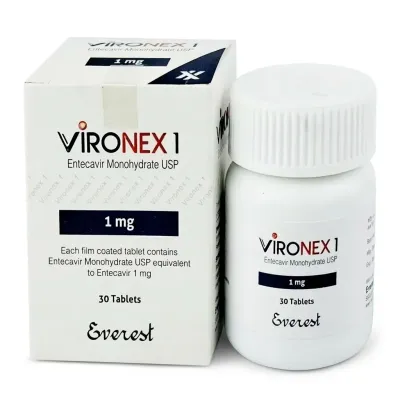
Vironex 1 1 mg Everest
View
Everest
1 mg 30 tablets
2417₴ 2857₴
-11%
Vironex 0.5 mg Everest
View
Everest
0.5 mg 30 tablets
1758₴ 1978₴
-12%
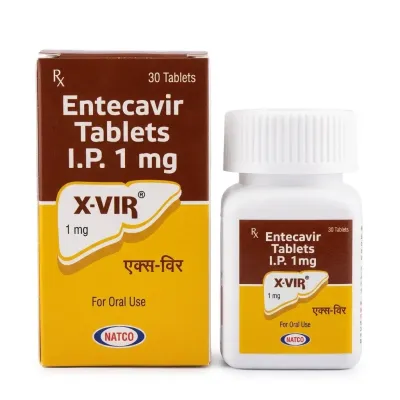
X-Vir 1  1 mg Natco
View
Natco
1 mg 30 tablets
2154₴ 2461₴
-11%
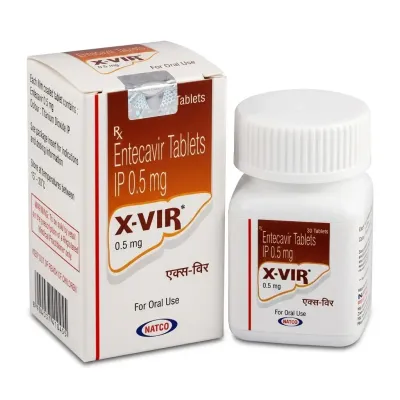
X-Vir 0.5 0.5 mg Natco
View
Natco
0.5 mg 30 tablets
1362₴ 1538₴
✅ All products loaded (4)

Contact us

Choose a convenient way to contact

We work daily from 9:00 to 20:00