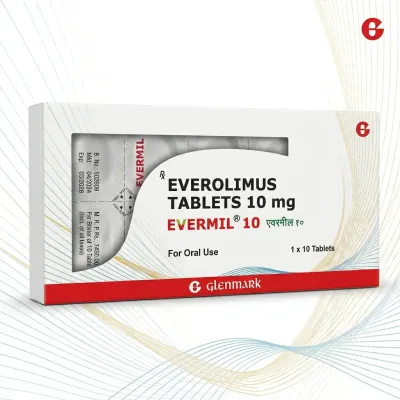
Everolimus – mTOR Inhibitor Therapy
Known as original brand(s)
Afinitor
Everolimus is a potent selective inhibitor of the mammalian target of rapamycin (mTOR), possessing significant anti-tumor and immunosuppressive properties. The drug blocks the specific mTORC1 protein, which acts as a central regulator of cell division and metabolism.
The mechanism of action involves binding to the intracellular protein FKBP-12. The resulting complex inhibits the activity of the mTOR kinase, leading to cell cycle arrest in the G1 phase. This blocks the proliferation of tumor cells, suppresses angiogenesis (the formation of new blood vessels), and reduces glucose uptake by cancer cells. In transplantation, the drug inhibits T-lymphocyte activation, thereby preventing organ rejection.
Everolimus is administered orally once daily, ensuring a stable concentration of the active substance in the systemic circulation.

Indications
Everolimus is used in both oncology and transplantation settings:
- Breast Cancer: treatment of advanced HR-positive, HER2-negative breast cancer in postmenopausal women (in combination with exemestane).
- Neuroendocrine Tumors (NET): treatment of progressive NET of pancreatic, gastrointestinal, or lung origin.
- Renal Cell Carcinoma (RCC): therapy for advanced RCC after failure of VEGF-targeted therapy.
- Tuberous Sclerosis Complex (TSC): treatment of renal angiomyolipoma and subependymal giant cell astrocytoma (SEGA).
- Transplantation: prophylaxis of organ rejection in kidney or heart transplant recipients.
Dosage and administration
Everolimus dosing depends on the medical indication and requires regular monitoring of organ function.
- Standard Oncology Dose: typically 10 mg taken once daily.
- Administration: should be taken at the same time each day, either consistently with or without food.
- Restrictions: avoid grapefruit juice and St. John’s wort, as they significantly affect drug metabolism.
- Monitoring: in transplantation, therapeutic drug monitoring (TDM) of whole blood levels is required.
- Adjustments: the dose should be reduced in patients with moderate hepatic impairment.