Fulvestrant: Targeted Hormone Therapy for Breast Cancer
Fulvestrant is an antineoplastic hormonal agent belonging to the class of Selective Estrogen Receptor Degraders (SERDs). It is widely used in gynecologic oncology to treat hormone receptor-positive breast cancer in postmenopausal women. Unlike traditional antiestrogens (such as tamoxifen), fulvestrant lacks any partial estrogen-like (agonist) activity.
The mechanism of action of fulvestrant involves competitive binding to estrogen receptors (ER) with high affinity comparable to natural estradiol. Upon binding, the drug blocks the trophic action of estrogens, alters receptor conformation, and triggers its accelerated intracellular degradation. This leads to complete downregulation of the estrogen signaling pathway and halts the growth of estrogen-sensitive tumor cells.
Clinical trials have confirmed that fulvestrant effectively suppresses disease progression, increases progression-free survival, and maintains a high quality of life for patients.

Indications
Fulvestrant is indicated in oncological practice for the following uses:
- Breast Cancer: Locally advanced or metastatic estrogen receptor-positive (ER+) breast cancer in postmenopausal women.
- First-line Therapy: Treatment for patients not previously treated with endocrine therapy, or in case of relapse during or after completion of adjuvant antiestrogen therapy.
- Combination Therapy: Used in combination with CDK4/6 inhibitors (palbociclib, abemaciclib) or other targeted drugs (alpelisib) upon disease progression.
Dosage and administration
Fulvestrant is administered strictly via intramuscular injection as a slow administration. The dosing regimen is standardized:
- Recommended Dosage: 500 mg once monthly, with an additional 500 mg dose administered 2 weeks after the initial dose to achieve steady-state plasma concentrations rapidly.
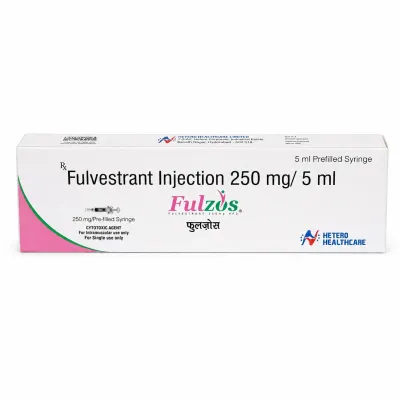
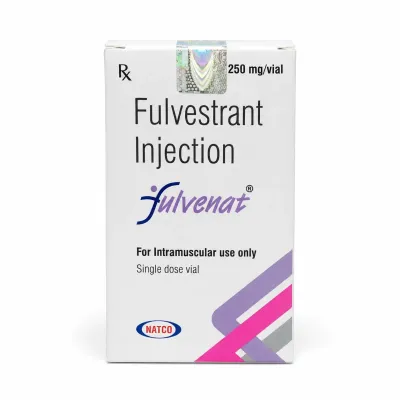
- Administration Method: The 500 mg dose is administered as two consecutive 250 mg (5 mL) slow intramuscular injections, one into each gluteal muscle.
- Duration of Treatment: Treatment should be continued for as long as clinical benefit is observed or until unacceptable toxicity occurs.
- Special Instructions: Due to the oily nature of the solution, injections must be administered with caution to avoid accidental intravascular entry and strictly following intramuscular injection guidelines.