
Ganciclovir – Antiviral Therapy

Ganciclovir is a potent antiviral agent that is a synthetic nucleoside analog of 2'-deoxyguanosine. The drug possesses specific activity against herpes viruses; however, its primary feature is exceptional efficacy against cytomegalovirus (HCV). Ganciclovir is considered the "gold standard" for treating severe CMV infections in immunocompromised patients.

The mechanism of action of ganciclovir involves the inhibition of viral DNA replication. In CMV-infected cells, the drug is first phosphorylated by a viral protein kinase to a monophosphate, and then by cellular enzymes to an active triphosphate. Ganciclovir triphosphate is incorporated into the viral DNA in place of natural deoxyguanosine, causing immediate chain termination and blocking viral reproduction. The selectivity of the drug is due to its activation in infected cells occurring dozens of times faster than in healthy ones.

The drug is available in formulations for intravenous administration and topical use (eye gels). Due to low bioavailability, oral forms have been almost entirely replaced by its prodrug, valganciclovir.

Wikipedia page
Ganciclovir

Indications

Ganciclovir is used for the treatment and prevention of severe viral diseases:

  • CMV Retinitis: treatment of life-threatening retinal infection in patients with AIDS and other immunodeficiencies.
  • Transplant Prophylaxis: prevention of CMV infection in patients following organ or bone marrow transplantation.
  • Severe CMV Manifestations: treatment of pneumonia, colitis, or esophagitis caused by cytomegalovirus.
  • Herpetic Infections: treatment of lesions caused by herpes simplex viruses types 1 and 2 (in cases of acyclovir resistance).
  • Topical Use: acute superficial keratitis caused by the herpes simplex virus.

Dosage and administration

The ganciclovir dosing regimen depends on the severity of the infection and the patient's renal function.

  • Intravenous Infusion: the standard initial dose is 5 mg/kg every 12 hours for 14–21 days.
  • Maintenance Therapy: following the induction course, 5 mg/kg once daily or 6 mg/kg 5 times a week is prescribed.
  • Infusion Rate: the infusion must be administered slowly (at least 60 minutes), as rapid injection increases toxicity.
  • Dose Adjustment: the drug is excreted by the kidneys, so a significant dose reduction or increased intervals are required if creatinine levels rise.
  • Hydration: an adequate fluid intake must be maintained during treatment to prevent kidney damage.

The use of ganciclovir is restricted due to its impact on hematopoiesis and potential toxicity:

  • Hematologic Abnormalities: severe neutropenia (less than 500/µL) or thrombocytopenia (less than 25,000/µL).
  • Hypersensitivity: allergy to ganciclovir, valganciclovir, acyclovir, or valacyclovir.
  • Pregnancy and Lactation: the drug has teratogenic and mutagenic effects; breastfeeding is prohibited.
  • Reproductive Function: men and women must use reliable contraception during therapy and for 90 days thereafter.
  • Pediatric Use: use is only possible when the potential benefit outweighs the risk (due to possible carcinogenicity).

Ganciclovir has a serious side effect profile requiring constant monitoring:

  • Myelosuppression: most commonly — decreased white blood cell count (neutropenia) and anemia (usually reversible after discontinuation).
  • Gastrointestinal Tract: diarrhea, nausea, vomiting, and abdominal pain.
  • Nervous System: confusion, seizures, hallucinations, and headache.
  • Local Reactions: inflammation of the veins (phlebitis) at the infusion site due to the high pH of the solution.
  • Renal System: increase in serum creatinine levels.

Frequently Asked Questions

Ganciclovir is an antiviral agent and a synthetic analogue of the nucleoside guanine. It exhibits high activity against the herpes virus family but is most effective against cytomegalovirus (CMV). Inside infected cells, ganciclovir is converted into an active form that inhibits viral DNA synthesis, effectively halting viral replication.
Ganciclovir is used to treat life- or sight-threatening CMV infections in immunocompromised individuals (including those with HIV) and for CMV prevention in organ transplant recipients. A major application is the treatment of CMV retinitis (inflammation of the retina), which can lead to blindness if left untreated.
The most common and serious side effect of ganciclovir is bone marrow suppression, leading to neutropenia (low white blood cell count) and thrombocytopenia (low platelet count). Because this increases the risk of severe infections and bleeding, regular—sometimes daily—blood monitoring is required during the treatment course, especially with IV administration.
Yes, ganciclovir is primarily excreted unchanged by the kidneys. In patients with impaired renal function, the substance can accumulate to toxic levels. In these cases, the physician must adjust the dosage or increase the intervals between doses based on creatinine clearance levels.
Ganciclovir is potentially teratogenic and mutagenic and may cause temporary or permanent inhibition of spermatogenesis and oogenesis. Women of childbearing potential must use effective contraception during and for 30 days after treatment; men must use barrier contraception during and for 90 days after completing therapy.

List of medicines by active substance Ganciclovir

-11%
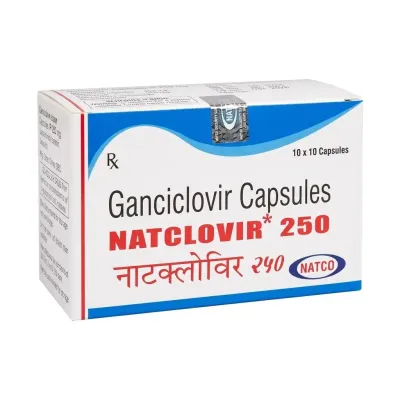
Natclovir 250 mg Natco
View
Natco
250 mg 30 capsules
3120₴ 3516₴
✅ All products loaded (1)

Contact us

Choose a convenient way to contact

We work daily from 9:00 to 20:00