
Imatinib – First-Line Tyrosine Kinase Inhibitor Therapy

Imatinib is an oral, first-in-class, small-molecule targeted protein tyrosine kinase inhibitor that revolutionized the management of hematologic malignancies. The drug was developed to highly selectively block the activity of the BCR-ABL tyrosine kinase, which is formed as a result of a reciprocal translocation between chromosomes 9 and 22 (the Philadelphia chromosome, Ph+). The mechanism of action of imatinib involves competitive binding to the ATP-binding pocket of the BCR-ABL kinase domain, preventing phosphate group transfer to substrates, disrupting downstream signaling cascades, and inducing apoptosis in Ph-positive tumor cells. In addition to BCR-ABL, imatinib effectively inhibits receptor tyrosine kinases for stem cell factor (c-KIT / CD117), platelet-derived growth factor receptors (PDGFR-alpha and PDGFR-beta), and macrophage colony-stimulating factor (CSF-1R).

The clinical uniqueness of imatinib lies in its capacity to transform a once-fatal disease like chronic myeloid leukemia into a manageable, chronic somatic condition with long-term patient survival. The drug also demonstrated exceptional efficacy in gastrointestinal stromal tumors (GIST), where activating mutations in the c-KIT gene serve as the primary oncogenic driver of interstitial cells of Cajal. Imatinib displays high oral bioavailability (approximately 98%), reaching peak plasma concentrations within 2 to 4 hours. It is primarily metabolized in the liver by the CYP3A4 isoenzyme to form its active N-demethylated metabolite and is excreted predominantly in the feces as metabolites.

The drug is administered orally. Prior to initiating treatment, cytogenetic or molecular-genetic confirmation of the Philadelphia chromosome or c-KIT expression is mandatory. Regular monitoring of peripheral blood counts and hepatic function is required throughout therapy.

Wikipedia page
Imatinib

Indications

Imatinib is indicated for the targeted treatment of adult and pediatric patients with the following oncological and hematological conditions:

  • Chronic Myeloid Leukemia (CML): treatment of newly diagnosed Ph-positive chronic myeloid leukemia in adult and pediatric patients, as well as CML in accelerated phase or blast crisis after failure or intolerance of prior interferon-alpha therapy.
  • Acute Lymphoblastic Leukemia (ALL): integrated with chemotherapy for adult and pediatric patients with newly diagnosed Ph-positive ALL, or as monotherapy for relapsed or refractory Ph-positive ALL.
  • Gastrointestinal Stromal Tumors (GIST): treatment of adult patients with KIT-positive (CD117) unresectable and/or metastatic gastrointestinal stromal tumors, and adjuvant therapy of adult patients following radical resection of GIST at high risk of recurrence.
  • Other Rare Pathologies: treatment of adult patients with dermatofibrosarcoma protuberans (DFSP), hypereosinophilic syndrome (HES) and/or chronic eosinophilic leukemia (CEL), and myelodysplastic/myeloproliferative diseases associated with PDGFR gene rearrangements.

Dosage and administration

The dosing regimen of imatinib is continuous and determined by the specific disease entity, clinical phase, and the patient's body weight.

  • Standard Doses: for CML in chronic phase and GIST, the recommended adult dose is 400 mg orally once daily. For accelerated phase or blast crisis of CML, the dose is increased to 600 mg or 800 mg daily (the 800 mg dose is split into two 400 mg administrations, morning and evening).
  • Pediatric Dosing: for CML and ALL, pediatric dosing is calculated based on body surface area, with a standard dose of 340 mg/m² daily (not to exceed the maximum adult daily dose).
  • Administration Method: tablets or capsules should be taken orally with a meal and a large glass of water to minimize the risk of gastrointestinal irritation. Tablets must not be chewed, but for patients with dysphagia, they can be dispersed in water or apple juice.
  • Missed Dose: if a dose is missed, the patient should skip the missed dose and resume the regular schedule the following day; a double dose should never be taken to compensate.
  • Dose Modification: in the event of severe hematological toxicity (neutropenia <1.0x10⁹/L, thrombocytopenia <50x10⁹/L), therapy should be withheld until recovery, followed by a potential dose reduction (e.g., from 400 mg to 300 mg).

The use of imatinib is restricted by specific risk factors and comorbidities and is contraindicated in the following conditions:

  • Hypersensitivity: confirmed allergic reaction, angioedema, or individual hypersensitivity to imatinib or any of the inactive excipients.
  • Pregnancy and Lactation: the drug possesses documented embryotoxic and teratogenic properties, leading to severe fetal malformations. Women of childbearing potential must use highly effective contraception. Breastfeeding during treatment and for 15 days following the final dose is strictly contraindicated.
  • Severe Organ Impairment: caution must be exercised in patients with severe hepatic or renal impairment, requiring reduced initial starting doses.
  • Drug Interactions: concomitant use of strong CYP3A4 inducers (such as St. John's wort or rifampin) is contraindicated, as they critically lower imatinib plasma concentrations. Co-administration with grapefruit juice is also prohibited.

Side effects of imatinib are mostly dose-dependent, usually manifest during the early stages of treatment, and are manageable with appropriate supportive care:

  • Fluid Retention and Edema: periorbital edema (puffiness around the eyes), lower extremity edema, and less frequently, pleural effusion, ascites, and anasarca.
  • Hematologic Toxicities: neutropenia, thrombocytopenia, and anemia, necessitating frequent complete blood counts, especially during the initial months of therapy.
  • Gastrointestinal Tract: nausea, vomiting, diarrhea, dyspepsia, abdominal pain, decreased appetite, and transient elevations in liver transaminases (ALT, AST).
  • Dermatological Reactions: skin rash, erythema, dry skin, pruritus, and rarely, severe exfoliative dermatitis or Stevens-Johnson syndrome.
  • Musculoskeletal System: muscle cramps (spasms), myalgia, arthralgia, and bone pain, which frequently worsen at night.
  • General Symptoms: fatigue, asthenia, headache, dizziness, and taste disturbances.

Frequently Asked Questions

Imatinib is a pioneering, first-in-class oral targeted therapy that functions as a selective protein tyrosine kinase inhibitor. It operates at the molecular level by specifically binding to and inhibiting designated enzymes, including the abnormal BCR-ABL tyrosine kinase, c-Kit, and PDGFR. By shutting down these pathways, imatinib halts the signaling loops that drive malignant cells to divide uncontrollably, thereby arresting tumor growth and inducing apoptosis.
Imatinib is indicated for the treatment of Philadelphia chromosome-positive ($Ph+$) chronic myeloid leukemia (CML) across various phases, as well as $Ph+$-positive acute lymphoblastic leukemia (ALL). In solid tumor oncology, it serves as the gold standard for treating c-Kit-positive gastrointestinal stromal tumors (GIST) in both adjuvant and metastatic settings, alongside several other rare myeloproliferative disorders.
Imatinib tablets or capsules must be taken strictly with a meal and accompanied by a large glass of water (at least 200 mL). This protocol is essential because the substance exerts a significant local irritant effect on the gastric mucosa; taking it on an empty stomach can provoke severe nausea, vomiting, or abdominal pain. For patients unable to swallow the tablets whole, they may be dissolved in a glass of water or apple juice immediately before administration.
Fluid retention is one of the most frequent adverse reactions associated with imatinib. It most commonly manifests as swelling around the eyes (periorbital edema) and swelling of the lower extremities (ankles and feet). Patients are advised to monitor their body weight regularly. Any sudden, rapid weight gain (exceeding 2–3 kg within a week), onset of shortness of breath, or severe leg swelling must be reported immediately, as these signs suggest severe fluid accumulation and may require diuretic therapy or dose modifications.
Ongoing laboratory surveillance is mandatory throughout imatinib therapy. Complete blood counts must be performed frequently (weekly during the first month, then monthly thereafter) due to the risk of myelosuppression, including neutropenia, thrombocytopenia, and anemia. Periodic liver function tests (bilirubin, AST, and ALT transaminases) and renal function profiles are also required, as the substance can induce hepatic and renal toxicities.

List of medicines by active substance

-19%
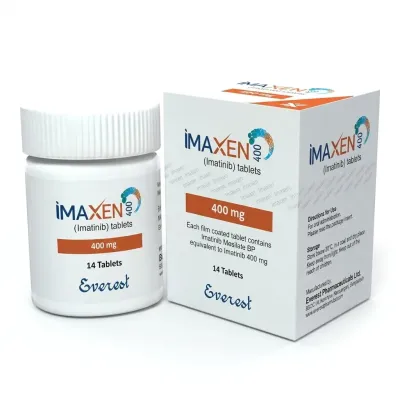
Imaxen 400
View
Everest
400 mg 14 tablets
3800₴ 4694₴
✅ All products loaded (1)
Unifarm

Unifarm app

Safari → Share → Add to Home Screen Firefox: menu ⋮ → Install or Add to Home screen. If missing, open the site in Chrome. Chrome: menu ⋮ → Install app or Add to Home screen.

Contact us

Choose a convenient way to contact

We work daily from 9:00 to 20:00