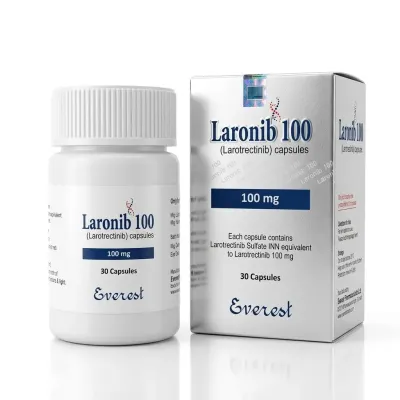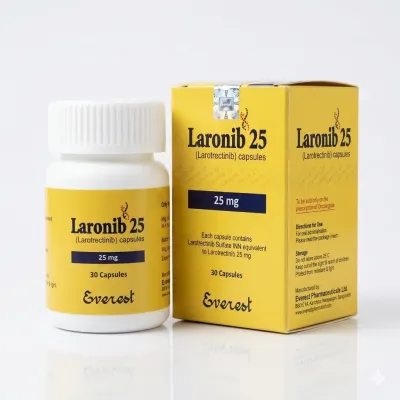
Larotrectinib – Selective TRK Inhibitor for Targeted Cancer Therapy
Known as original brand(s)
Vitrakvi
Larotrectinib is a first-of-its-kind, highly selective oral inhibitor of tropomyosin receptor kinases (TRK). The drug is a unique representative of "agnostic" targeted therapy: its effectiveness does not depend on the type of organ or tissue where the tumor originated, but is determined solely by the presence of a specific genetic defect — an NTRK (Neurotrophic Tyrosine Receptor Kinase) gene fusion. Larotrectinib blocks the activity of chimeric TRK proteins produced as a result of this fusion, which serve as the primary driver for the uncontrolled growth and survival of cancer cells.
The mechanism of action of larotrectinib involves the competitive inhibition of the ATP-binding domain of TRKA, TRKB, and TRKC receptors. When an NTRK gene fusion occurs, these receptors enter a state of constant activation, triggering powerful signaling cascades for proliferation. Larotrectinib effectively "switches off" these signals, leading to rapid tumor regression. NTRK genetic rearrangements are found in a wide spectrum of neoplasms, including rare forms of pediatric cancer (infantile fibrosarcoma) and common adult tumors (lung, thyroid, and colon cancer). The drug demonstrates an unprecedentedly high frequency and duration of response across various age groups, including newborns. A critical characteristic of the substance is its ability to penetrate the central nervous system, allowing it to control both primary brain tumors and metastases.
The drug is available in capsule and oral solution forms. Therapy is only possible after confirmation of an NTRK gene fusion using high-precision genetic testing (NGS).

Indications
Larotrectinib is indicated for the treatment of adult and pediatric patients with the following disease characteristics:
- NTRK-positive Solid Tumors: presence of a confirmed NTRK gene fusion without a known acquired resistance mutation.
- Advanced Disease: treatment of locally advanced or metastatic tumors where surgical resection is likely to result in severe morbidity.
- Lack of Alternatives: situations where the disease has progressed following standard treatment or where no satisfactory alternative standard therapies are available.
Dosage and administration
The dose of larotrectinib is calculated based on the patient's age and body surface area.
- Adults and Pediatrics (weight 50 kg or more): the standard dose is 100 mg twice daily.
- Pediatrics (weight less than 50 kg): the dosage is calculated as 100 mg per square meter of body surface area twice daily.
- Administration Method: capsules or solution are taken orally twice daily, regardless of food intake. Capsules must not be opened or chewed.
- Dose Adjustment: if side effects occur, the dose is sequentially reduced in three stages; if the patient cannot tolerate the minimum dose, treatment is discontinued.
- Missed Dose: if there are more than 6 hours until the next dose, the missed dose should be taken. If vomiting occurs after taking a dose, an additional portion is not taken.