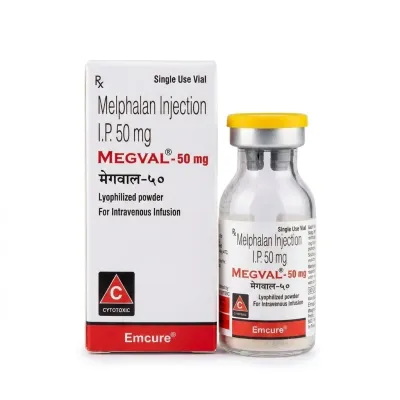
Melphalan – Alkylating Antineoplastic Agent
Known as original brand(s)
Alkeran
Melphalan is a classic antineoplastic medication belonging to the class of alkylating agents, specifically a derivative of nitrogen mustard. It remains a cornerstone treatment for multiple myeloma and various other systemic hematologic malignancies.
The mechanism of action involves the formation of strong covalent bonds with DNA molecules. Melphalan transfers alkyl groups to guanine bases, leading to the formation of interstrand and intrastrand cross-links. These structural damages inhibit DNA replication and transcription processes, causing irreversible cellular dysfunction and triggering apoptosis (programmed cell death). Melphalan is active against both rapidly dividing and resting tumor cells.
The drug is available in both oral and intravenous formulations, allowing for flexibility in diverse chemotherapy protocols.

Indications
Melphalan is indicated for the management of several oncological and hematological conditions:
- Multiple Myeloma: as a first-line therapy or part of combination regimens.
- Ovarian Adenocarcinoma: advanced stages of the disease.
- Breast Cancer: utilized as palliative treatment.
- Polycythemia Vera: for the treatment of specific clinical forms.
- Conditioning Regimen: high-dose therapy prior to hematopoietic stem cell transplantation.
Dosage and administration
Melphalan dosage is strictly individualized, based on the patient's body surface area and renal function.
- Oral (Myeloma): a typical dose is 0.15 mg/kg body weight daily for 4 consecutive days every 6 weeks.
- Intravenous: administered as a short infusion in doses specified by the particular chemotherapy protocol.
- Renal Impairment: significant dose reduction is necessary in patients with moderate to severe renal failure.
- Administration Rules: tablets should be taken on an empty stomach (1 hour before or 2 hours after meals) to ensure consistent absorption.