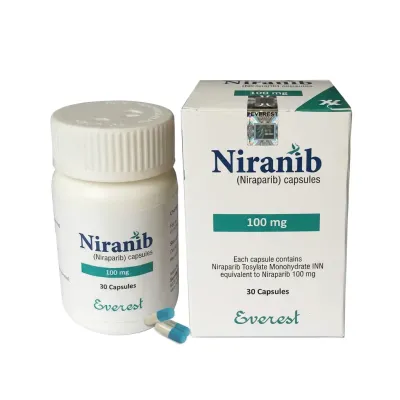
Niraparib – PARP Inhibitor Therapy
Niraparib is a highly selective and potent targeted anti-cancer medication belonging to the class of poly(ADP-ribose) polymerase (PARP-1 and PARP-2) inhibitors. These enzymes play a critical role in the repair of DNA damage within human cells. Niraparib is designed for use as a maintenance therapy in certain types of gynecological cancers, significantly extending the period of progression-free survival.
The mechanism of action is based on the principle of "synthetic lethality." The drug blocks PARP enzymes, which are responsible for repairing single-strand DNA breaks. When PARP activity is inhibited, double-strand DNA breaks accumulate in the cells. In healthy cells, these breaks are repaired via homologous recombination. However, in tumor cells with homologous recombination deficiency (e.g., BRCA1/2 mutations or HRD-positive status), these repair mechanisms are absent, leading to catastrophic genomic destruction and cancer cell death. A key feature of niraparib is its ability to effectively cross the blood-brain barrier and exert cytotoxic effects regardless of BRCA mutation status in some patients.
The medication is intended for oral administration once daily, ensuring a stable therapeutic concentration in the bloodstream.

Indications
Niraparib is used as monotherapy for the treatment of adult patients in the following clinical scenarios:
- First-line Maintenance Therapy: for patients with advanced high-grade epithelial ovarian, fallopian tube, or primary peritoneal cancer who have responded to first-line platinum-based chemotherapy.
- Recurrent Maintenance Therapy: for patients with recurrent (platinum-sensitive) ovarian cancer who are in complete or partial response to current platinum-based chemotherapy.
- Late-stage Treatment: for the treatment of advanced ovarian cancer in patients who have received three or more prior chemotherapy lines and whose tumors exhibit specific genetic defects (HRD-positive status).
Dosage and administration
The niraparib dosing regimen is individualized based on the patient's tolerability and physical indicators.
- Standard Starting Dose: 300 mg (three 100 mg capsules or tablets) taken once daily.
- Individualized Approach: for patients weighing less than 77 kg or with a platelet count below 150,000/μL, the recommended starting dose is 200 mg per day.
- Administration Rules: the drug should be taken at approximately the same time each day, with or without food. Taking the dose at bedtime is recommended to minimize potential nausea.
- Missed Dose: if a dose is missed or if vomiting occurs, an extra dose should not be taken; the next dose should be taken at the scheduled time.
- Dose Adjustment: in cases of hematologic toxicity (decreased white blood cells or platelets), treatment is suspended and subsequently resumed at a reduced dose of 200 mg or 100 mg.