
Plerixafor – Targeted Therapy

Plerixafor is an innovative hematopoietic stem cell mobilization stimulator, functioning as a selective CXCR4 receptor antagonist. The drug belongs to the bicyclam class and is used in transplantology to increase the egress of stem cells from the bone marrow into the systemic circulation for subsequent collection.

The mechanism of action of plerixafor involves blocking the binding of the chemokine SDF-1α (also known as CXCL12) to its receptor CXCR4. Normally, the interaction between SDF-1α and CXCR4 tethers hematopoietic stem cells within the bone marrow microenvironment. Plerixafor disrupts this bond, leading to the rapid release (mobilization) of stem cells into the peripheral blood. Peak cell concentrations in the blood are typically reached 10–14 hours after administration.

The drug is administered subcutaneously and acts with high speed. Plerixafor significantly increases the likelihood of successfully collecting the required number of CD34+ cells, particularly in patients who previously responded poorly to standard growth factor mobilization.

Wikipedia page
Plerixafor

Indications

Plerixafor is used in hematological practice for preparation for autologous transplantation:

  • Multiple Myeloma: mobilization of hematopoietic stem cells into peripheral blood for collection and transplantation in adult patients.
  • Lymphomas (Hodgkin’s and Non-Hodgkin’s): stimulation of cell egress in lymphoma patients to ensure sufficient graft volume.
  • Combination Therapy: the drug is always used in conjunction with granulocyte colony-stimulating factor (G-CSF).
  • Pediatric Hematological Diseases: mobilization of cells in children with lymphomas or solid tumors when autologous transplantation is required.

Dosage and administration

The plerixafor administration regimen is strictly timed to the apheresis schedule (the cell collection procedure).

  • Standard Dose: 240 mcg per kg of body weight (for weight ≤83 kg, a fixed dose of 20 mg may be used).
  • Route of Administration: the drug is administered subcutaneously approximately 11 hours before the start of the apheresis session.
  • Course of Treatment: injections are given daily for up to 4 consecutive days until the target number of stem cells is collected.
  • Dose Adjustment: for patients with moderate or severe renal impairment, the dose is reduced to 160 mcg/kg.
  • Concomitant Preparation: plerixafor is prescribed after a 4-day course of G-CSF, with G-CSF injections continuing on the days of plerixafor administration.
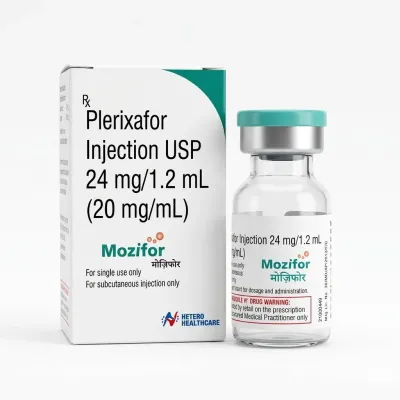

The use of plerixafor is restricted under the following conditions and risk factors:

  • Hypersensitivity: known allergy to plerixafor or other components of the solution.
  • Leukemias: the drug is not recommended for cell mobilization in leukemia patients due to the risk of mobilizing tumor cells into the blood.
  • Pregnancy and Lactation: plerixafor has potential teratogenicity; reliable contraception must be used during therapy and for one week after completion.
  • Severe Renal Impairment: (requires strict medical supervision and dose reduction).
  • Acute Infections: presence of an active infectious process at the injection site or systemically.

Plerixafor is generally well-tolerated; most side effects are short-lived and mild:

  • Local Reactions: redness, swelling, and itching at the subcutaneous injection site.
  • Digestive System: diarrhea (most common), nausea, vomiting, and abdominal bloating.
  • Neurological Symptoms: dizziness, headache, and paresthesia (tingling sensation).
  • Musculoskeletal System: joint pain (arthralgia) and muscle pain.
  • Splenomegaly Risk: rare cases of splenic enlargement or rupture have been reported (monitoring is required for pain in the upper left abdomen).

Frequently Asked Questions

Plerixafor is a selective CXCR4 receptor antagonist. It works by blocking the interaction between the CXCR4 receptor on the surface of stem cells and the SDF-1α protein in the bone marrow. By breaking this "anchor," the stem cells are released from the bone marrow into the peripheral blood, where they can be collected for transplantation.
Plerixafor is used in patients with lymphoma or multiple myeloma to enhance the mobilization of stem cells before collection (apheresis). It is typically prescribed when standard stimulation with growth factors (G-CSF) alone fails to produce a sufficient number of cells for autologous transplantation.
The substance is administered as a subcutaneous injection. It is usually given in the evening, approximately 11 hours before the start of the apheresis (cell collection) procedure. Treatment may continue for up to 4 consecutive days until the target number of stem cells has been collected.
The most common reactions include injection site reactions (redness, swelling) and transient gastrointestinal issues such as diarrhea, nausea, and bloating. In rare cases, dizziness or allergic reactions may occur; therefore, the patient should be monitored by medical staff following the injection.
Yes, the mechanism of plerixafor inevitably leads to an increase in circulating white blood cells (leukocytosis), as they are released from the bone marrow alongside stem cells. This is an expected effect. Physicians may also monitor platelet counts, as some patients may experience a temporary decrease (thrombocytopenia).

List of medicines by active substance Plerixafor

-9%
Mozifor 24 mg / 1.2 ml Hetero
View
Hetero
24 mg / 1.2 ml 1 vial
18019₴ 19777₴
✅ All products loaded (1)

Contact us

Choose a convenient way to contact

We work daily from 9:00 to 20:00