
Pomalidomide – Targeted Therapy

Pomalidomide is a third-generation antitumor immunomodulator belonging to the IMiDs group (thalidomide derivatives). The drug possesses potent direct cytotoxic and mediated immune effects, making it highly effective in treating refractory forms of hematological malignancies.

The mechanism of action of pomalidomide is linked to its binding to the cereblon protein (CRBN), which is part of the E3 ubiquitin ligase enzymatic complex. This leads to the selective degradation of specific proteins (Ikaros and Aiolos) required for the survival of malignant B-cells. Consequently, tumor growth is inhibited, apoptosis is induced, and the activity of T-cells and natural killer (NK) cells is enhanced, allowing them to attack cancer cells more effectively. The drug also blocks the production of pro-inflammatory cytokines and suppresses angiogenesis within the bone marrow.

The drug is intended for oral administration and is typically used in cases where other therapies, including lenalidomide and bortezomib, have failed.

Wikipedia page
Pomalidomide

Indications

Pomalidomide is used in hemato-oncology for the therapy of the following conditions:

  • Relapsed and Refractory Multiple Myeloma: in combination with dexamethasone for adult patients who have received at least two prior treatment lines.
  • Kaposi Sarcoma: in patients with HIV infection when highly active antiretroviral therapy (HAART) is ineffective, or in HIV-negative patients with advanced disease.

Dosage and administration

The pomalidomide dosing regimen is established by a physician based on the patient's condition and blood counts.

  • Standard Dose: typically 4 mg once daily.
  • Cycling: the drug is taken for 21 days, followed by a 7-day break (28-day cycle).
  • Administration Rules: capsules are taken orally at the same time each day, without chewing or opening, regardless of food intake.
  • Monitoring: complete blood count monitoring is required before the start of each cycle (neutrophil count must be ≥ 1,000/mm³).
  • Dose Adjustment: if neutropenia or thrombocytopenia develops, the dosage may be reduced to 3 mg, 2 mg, or 1 mg.
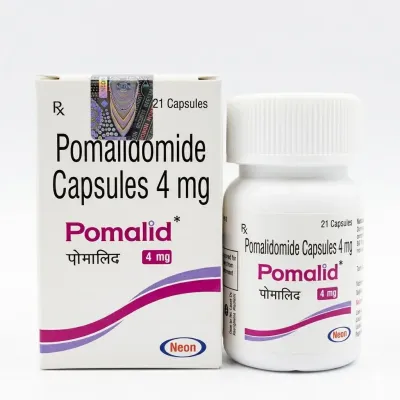

The use of pomalidomide is associated with strict restrictions due to its biological activity:

  • Pregnancy: the drug has extremely high teratogenic potential (risk of severe birth defects).
  • Lactation: breastfeeding is contraindicated during treatment.
  • Hypersensitivity: allergic reactions to pomalidomide or capsule components.
  • Age: safety for children and adolescents under 18 years of age has not been established.
  • Thromboembolism: high predisposition to thrombosis without proper prophylaxis.

Pomalidomide therapy may cause the following systemic reactions:

  • Hematologic: neutropenia (most common), anemia, and thrombocytopenia.
  • Infections: increased risk of pneumonia and other infectious complications due to immunosuppression.
  • Thrombosis: risk of deep vein thrombosis and pulmonary embolism (anticoagulant therapy is required).
  • General Symptoms: fatigue, shortness of breath, constipation, diarrhea, or extremity edema.
  • Nervous System: confusion, dizziness, and less frequently, peripheral neuropathy.

Frequently Asked Questions

Pomalidomide is an antineoplastic immunomodulatory agent from the IMiD class, a derivative of thalidomide. It works through a multi-faceted approach: inhibiting the growth of tumor cells, blocking their blood supply, and stimulating the body's immune system (T-cells and NK-cells) to specifically target and destroy myeloma cells.
Pomalidomide is indicated for the treatment of adult patients with relapsed and refractory multiple myeloma. It is typically used in combination with dexamethasone for patients who have received at least two prior treatment regimens, including lenalidomide and bortezomib, and whose disease has progressed.
Capsules should be taken once daily at the same time each day, with or without food. They must be swallowed whole—do not open, break, or chew them. If powder from a damaged capsule contacts the skin, wash the area immediately with soap and water. Healthcare providers and caregivers are advised to wear gloves when handling the medication.
Similar to other drugs in its class, pomalidomide significantly increases the risk of venous thromboembolism (blood clots in the legs or lungs). All patients receiving this substance must be prescribed antithrombotic prophylaxis (such as aspirin or heparin) based on an assessment of their individual risk factors.
Pomalidomide is highly teratogenic; even a single dose can cause severe birth defects or fetal death. Use of the drug is strictly controlled through a pregnancy prevention program. Both female and male patients must adhere to rigorous contraception requirements and undergo regular pregnancy testing during therapy.

List of medicines by active substance Pomalidomide

-14%
Pomalid 4 mg Natco
View
Natco
4 mg 21 capsule
7911₴ 9229₴
✅ All products loaded (1)

Contact us

Choose a convenient way to contact

We work daily from 9:00 to 20:00