
Remdesivir – Antiviral Therapy

Remdesivir is a direct-acting antiviral medication and a nucleotide analog. Originally developed to target the Ebola virus, it gained global prominence as the first drug formally approved for the treatment of severe COVID-19 infections.

The mechanism of action involves the inhibition of viral RNA-dependent RNA polymerase. Functioning as a "false" building block (an analog of adenosine triphosphate), the drug is incorporated into the growing viral RNA strand. This leads to premature termination of RNA synthesis (delayed chain termination), effectively blocking viral replication within the host cells. Remdesivir exhibits broad-spectrum activity against various RNA viruses, including members of the Coronaviridae and Filoviridae families.

The drug is strictly intended for hospital use and is administered via intravenous infusion.

Wikipedia page
Remdesivir

Indications

Remdesivir is indicated for the treatment of viral infections in adults and pediatric patients (weighing at least 3.5 kg):

  • COVID-19: treatment of moderate to severe coronavirus disease in hospitalized patients requiring supplemental oxygen.
  • High-Risk Patients: therapy for non-hospitalized individuals with confirmed COVID-19 who are at high risk of progressing to severe disease.

Dosage and administration

Remdesivir treatment courses typically last for 5 to 10 days, depending on the patient's clinical progression.

  • Adults and Pediatrics (over 40 kg): a single loading dose of 200 mg on Day 1, followed by maintenance doses of 100 mg once daily.
  • Pediatrics (3.5 kg to 40 kg): a loading dose of 5 mg/kg on Day 1, followed by maintenance doses of 2.5 mg/kg once daily.
  • Administration: exclusively via intravenous infusion over a period of 30 to 120 minutes.
  • Monitoring: renal and hepatic function tests (ALT, AST) must be performed before and during treatment.

The use of remdesivir is restricted in the following scenarios:

  • Hypersensitivity: known allergic reactions to remdesivir or any of its excipients.
  • Renal Impairment: generally not recommended for patients with an eGFR less than 30 mL/min due to the accumulation of the vehicle SBECD.
  • Hepatic Dysfunction: significant elevation of liver transaminases (ALT ≥ 5 times the upper limit of normal).
  • Drug Interactions: co-administration with chloroquine or hydroxychloroquine is not recommended as they may reduce the antiviral activity of remdesivir.

Common adverse reactions associated with remdesivir therapy include:

  • Hepatic: increased levels of liver enzymes (transaminases), which may necessitate discontinuation of the drug.
  • General: nausea, headache, and skin rash.
  • Infusion-Related: hypotension, chills, diaphoresis, and shortness of breath during administration.
  • Hematologic: prolonged prothrombin time (affecting blood clotting).
  • Gastrointestinal: dyspepsia and abdominal discomfort.

Frequently Asked Questions

Remdesivir is an antiviral medication that acts as a nucleotide analogue. It mimics the building blocks of viral RNA. When the virus attempts to copy its genetic material, it mistakenly incorporates remdesivir into its RNA strand. This leads to premature termination of RNA synthesis, effectively preventing the virus from replicating.
Originally developed for the treatment of Ebola virus disease, remdesivir gained widespread use for treating severe COVID-19. It is indicated for patients with coronavirus infection who require supplemental oxygen or are at a high risk of progressing to severe disease.
Remdesivir is administered only via intravenous infusion. Due to the need for medical supervision and the delivery method, the medication is used strictly in a hospital or clinical setting. It is not available in tablet form for home use.
Before and during treatment with remdesivir, healthcare providers must monitor liver function (ALT and AST enzyme levels) and kidney function (creatinine clearance). If liver enzyme levels become significantly elevated, therapy may be interrupted to prevent hepatotoxicity.
Remdesivir can be used in both adults and pediatric patients, but the dosage is strictly calculated based on the patient's weight. Generally, it is approved for use in children aged at least 28 days and weighing at least 3 kg. Specific administration protocols exist for different age and weight categories.

List of medicines by active substance Remdesivir

-20%
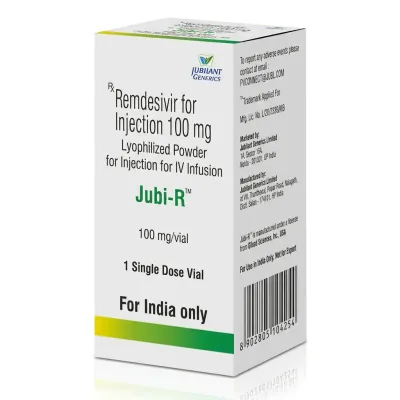
Jubi-R 100 mg Jubilant Generics
View
Jubilant Generics
100 mg 1 vial
879₴ 1099₴
✅ All products loaded (1)

Contact us

Choose a convenient way to contact

We work daily from 9:00 to 20:00