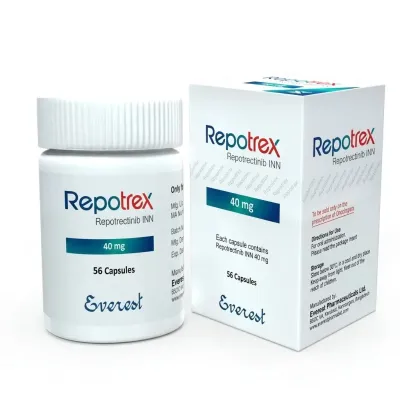
Repotrectinib – Next-Generation ROS1 and NTRK Tyrosine Kinase Inhibitor
Known as original brand(s)
Augtyro
Repotrectinib is a low-molecular-weight, highly potent, next-generation tyrosine kinase inhibitor designed for the targeted therapy of malignant neoplasms. The drug possesses combined activity against oncogenic fusions of ROS1 (proto-oncogene tyrosine-protein kinase ROS) and the TRK family (tropomyosin receptor kinases TRKA, TRKB, and TRKC). Its mechanism of action is based on competitive binding to the ATP-binding pocket of the kinase domain, which suppresses autophosphorylation and blocks downstream mitogenic signaling cascades that control the survival, division, and migration of cancer cells.
A unique structural feature of repotrectinib is its small three-dimensional size and macrocyclic configuration. This structure allows the molecule to penetrate deeply into the catalytic center of the receptor, bypassing the spatial steric hindrances created by acquired resistance mutations. The drug is highly effective against gatekeeper mutations and particularly against the challenging ROS1 G2032R solvent-front mutation, which causes tumor resistance to first-generation inhibitors (such as crizotinib). Furthermore, repotrectinib exhibits an exceptional ability to cross the blood-brain barrier and accumulate in the central nervous system, providing pronounced, long-term control over intracranial metastases. This therapeutic agent represents an advanced tool in precision oncology for treating genetically selected patient populations.
The drug is taken orally once daily for the first two weeks, followed by a transition to twice-daily dosing. Mandatory verification of ROS1 or NTRK translocations is required prior to prescription.

Indications
Repotrectinib is indicated for the treatment of adult and pediatric patients with the following tumor types:
- ROS1-positive NSCLC: locally advanced or metastatic non-small cell lung cancer in adult patients, regardless of prior treatment with ROS1 inhibitors.
- NTRK-fusion Solid Tumors: advanced solid tumors in adult and pediatric patients aged 2 years and older with confirmed NTRK1/2/3 gene fusions, when no alternative treatment is available or when standard therapy has failed.
- CNS Metastases: treatment of brain tumor lesions caused by ROS1-positive or NTRK-positive cancer.
Dosage and administration
The dosing regimen of repotrectinib includes a dose-escalation phase to allow for patient adaptation and to minimize neurological toxicity.
- Initial Dose (Days 1–14): 160 mg taken orally once daily.
- Maintenance Dose (From Day 15 onward): 160 mg taken orally twice daily (totaling 320 mg per day), provided the drug is well tolerated.
- Administration Method: capsules are swallowed whole, with or without food. Opening, breaking, or chewing the capsules is strictly prohibited.
- Missed Dose: if more than 6 hours remain until the next scheduled dose, the missed dose should be taken immediately. Otherwise, skip the missed dose and resume the regular schedule.
- Dose Modification: in case of Grade 3 or 4 adverse reactions, the dose is reduced stepwise (to 120 mg twice daily, then to 160 mg once daily).