
Talazoparib – Potent PARP Inhibitor for BRCA-Mutated Cancer

Talazoparib is a highly potent, innovative oral inhibitor of poly(ADP-ribose) polymerase (PARP) enzymes, specifically PARP-1 and PARP-2. The drug was developed for the targeted therapy of malignancies characterized by DNA repair defects, particularly locally advanced or metastatic breast cancer harboring germline (inherited) BRCA1 or BRCA2 mutations. The mechanism of action of talazoparib is dual: it not only selectively blocks the catalytic activity of PARP enzymes, preventing the repair of single-strand DNA breaks, but also possesses a unique capacity to robustly trap the PARP protein on damaged chromatin sites (the "PARP-trapping" phenomenon). This leads to the irreversible stalling of replication forks, the formation of lethal double-strand DNA breaks, and the subsequent induction of tumor cell apoptosis.

The primary clinical advantage of talazoparib lies in exploiting the principle of "synthetic lethality." In healthy somatic cells, where homologous recombination repair mechanisms are intact, DNA damage is successfully repaired, whereas in BRCA-mutated tumor cells, alternative repair pathways are absent, leading to selective cell death. Among all available PARP inhibitors, talazoparib exhibits the highest efficiency in trapping the PARP enzyme on DNA, which accounts for its potent antitumor activity at substantially lower therapeutic doses. The drug is rapidly absorbed following oral administration, exhibits linear pharmacokinetics, undergoes minimal hepatic metabolism, and is excreted predominantly unchanged by the kidneys.

The drug is administered orally. Prior to initiating therapy, confirmation of a deleterious germline BRCA mutation using a validated test is mandatory, and regular complete blood count monitoring is required throughout the course.

Wikipedia page
Talazoparib

Indications

Talazoparib is indicated for the targeted treatment of adult patients with the following oncological conditions:

  • Breast Cancer (BC): monotherapy for locally advanced or metastatic HER2-negative breast cancer in patients with confirmed inherited (germline) BRCA1 or BRCA2 mutations.
  • Prostate Cancer (PC): in combination with enzalutamide for the treatment of adult patients with metastatic castration-resistant prostate cancer (mCRPC) harboring homologous recombination repair (HRR) gene defects.

Dosage and administration

The dosing regimen of talazoparib is selected based on clinical indications, renal function, and hematological tolerability.

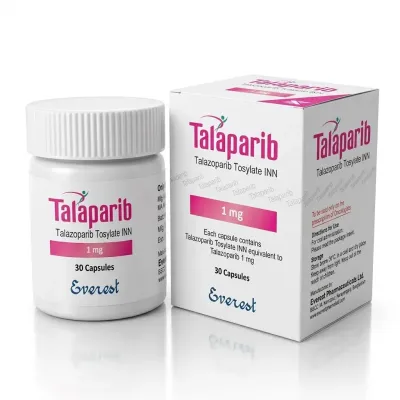
  • In Breast Cancer (Monotherapy): the recommended therapeutic dose is 1 mg orally once daily.
  • In Prostate Cancer (Combination Therapy): the recommended dose is 0.5 mg orally once daily, administered in combination with daily enzalutamide.
  • Administration Method: capsules are swallowed whole with a glass of water at approximately the same time each day, with or without food. Do not open, crush, or chew the capsules.
  • Duration of Treatment: therapy should be continued until disease progression or unacceptable systemic toxicity occurs.
  • Dose Modification for Toxicity: in the event of hematological cytopenias (neutrophils, platelets, hemoglobin), treatment should be withheld. Upon recovery, restart at a reduced dose (e.g., from 1 mg to 0.75 mg, then to 0.5 mg/day).
  • Renal Impairment: in patients with moderate renal impairment (creatinine clearance 30–59 mL/min), the daily dose is reduced to 0.75 mg (for monotherapy) or 0.35 mg (for combination therapy).

The use of talazoparib is restricted by the following contraindications and requires strict adherence to safety guidelines:

  • Hypersensitivity: known allergy or individual hypersensitivity to talazoparib or any of the inactive capsule components.
  • Renal Impairment: severe renal impairment (creatinine clearance less than 30 mL/min) or patients requiring hemodialysis.
  • Lactation: due to the potential for serious adverse reactions in the infant, breastfeeding should be discontinued during treatment and for at least 1 month after the final dose.
  • Pregnancy: the drug has a documented teratogenic and genotoxic potential and can cause fetal harm. Females of reproductive potential and their male partners must utilize highly effective contraception during therapy.

The side effects of talazoparib are predominantly related to bone marrow suppression and gastrointestinal toxicities:

  • Hematologic Toxicity: anemia (the most frequent severe reaction, frequently requiring blood transfusions), neutropenia, thrombocytopenia, and leukopenia.
  • Digestive System: nausea, vomiting, diarrhea, abdominal pain, stomatitis, and significantly decreased appetite.
  • Nervous System: headache, dizziness, dysgeusia (taste alterations), and peripheral neuropathy.
  • General Manifestations: fatigue, chronic asthenia, alopecia (hair loss), and mild elevations in liver enzymes.

Frequently Asked Questions

Talazoparib is a targeted therapy belonging to the class of poly (ADP-ribose) polymerase (PARP) inhibitors. Beyond merely blocking PARP enzymes involved in DNA repair, it possesses a highly potent ability to clear and trap these proteins on damaged DNA strands (PARP trapping). This dual action makes talazoparib one of the most effective PARP inhibitors, successfully driving malignant cell death.
Talazoparib is indicated for the treatment of locally advanced or metastatic HER2-negative breast cancer in patients with confirmed deleterious or suspected deleterious germline BRCA1 or BRCA2 mutations. It is also utilized in combination with enzalutamide for the treatment of specific types of metastatic castration-resistant prostate cancer (mCRPC) harboring DNA repair gene defects.
The capsules are taken orally once daily, at approximately the same time each day, with or without food. They must be swallowed whole and should not be opened or chewed. If a dose is missed or if vomiting occurs, do not take an additional or double dose; simply take the next scheduled capsule the following day at your regular time.
The most significant adverse reactions to talazoparib involve bone marrow suppression, leading to anemia, neutropenia, and thrombocytopenia. Complete blood counts must be performed prior to initiating therapy and monitored monthly thereafter. Patients should immediately contact their doctor if they experience unusual paleness, extreme fatigue, shortness of breath, unexplained bruising, or signs of infection (such as a fever).
Yes, talazoparib is primarily eliminated through renal clearance. For patients with moderate or severe renal impairment (kidney insufficiency), a reduction in the starting dose is mandatory to prevent drug accumulation in the body and minimize the risk of severe treatment-related toxicities. Your physician will assess renal function via blood work prior to treatment initiation.

List of medicines by active substance

-8%
Talaparib 1 mg Everest
View
Everest
1 mg 30 capsules
26527₴ 28737₴
✅ All products loaded (1)

Contact us

Choose a convenient way to contact

We work daily from 9:00 to 20:00