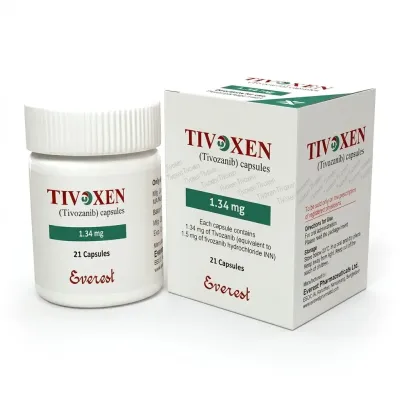
Tivozanib – Potent Selective VEGFR Tyrosine Kinase Inhibitor
Tivozanib is an oral, potent, and highly selective vascular endothelial growth factor receptor (VEGFR)-1, -2, and -3 tyrosine kinase inhibitor. The drug was developed for the targeted therapy of advanced stages of oncological diseases, specifically advanced renal cell carcinoma (RCC) in adult patients. The primary mechanism of action of tivozanib involves blocking the autophosphorylation of VEGFR receptors, which leads to powerful suppression of angiogenesis signaling pathways. This effectively halts endothelial cell proliferation, prevents the formation of new blood vessels within the tumor, deprives the neoplasm of essential nutrients and oxygen, thereby slowing down tumor progression.
The uniqueness of tivozanib lies in its unprecedentedly high selectivity for all three VEGFR receptor types with minimal activity against off-target kinases (such as c-Kit, PDGFR, or FLT3). This property favorably distinguishes it from previous generations of multikinase inhibitors, as it allows for deep therapeutic suppression of angiogenesis at a significantly lower level of systemic toxicity and with better treatment tolerability. The drug possesses a long half-life (approximately 4–5 days), ensuring a stable concentration of the active substance in blood plasma throughout the entire therapeutic cycle. Tivozanib is rapidly and almost completely absorbed in the gastrointestinal tract and is metabolized predominantly in the liver with the involvement of cytochrome P450 system isoenzymes.
The drug is administered orally. Treatment is given in repeating cycles and requires regular monitoring of blood pressure and liver function throughout the entire course of therapy.

Indications
Tivozanib is indicated for the treatment of adult patients with the following oncological conditions:
- Renal Cell Carcinoma (RCC): first-line therapy for patients with advanced, metastatic, or recurrent clear cell renal cell carcinoma.
- Refractory RCC: treatment of patients with progressive renal cell carcinoma following the failure of two or more prior systemic therapies (including immune checkpoint inhibitors or other TKIs).
Dosage and administration
The tivozanib dosing regimen is based on a cyclic schedule to optimize efficacy and manage patient tolerability.
- Standard Dose: the recommended therapeutic dose is 1.34 mg (equivalent to 1.5 mg of tivozanib hydrochloride) taken orally once daily.
- Cycle Schedule: the drug is taken daily for 21 days (3 weeks), followed by a 7-day rest period (1 week) without treatment. A full cycle constitutes 28 days.
- Administration Method: capsules are swallowed whole with a glass of water at approximately the same time each day, with or without food. Do not open or chew the capsules.
- Missed Dose: if a dose is missed, the patient should take the next dose the following day at the regularly scheduled time. Do not take a double dose to make up for a missed one.
- Dose Modification: in case of severe adverse reactions (Grade 3 or 4 toxicities), the dose may be temporarily reduced to 0.89 mg daily, or treatment may be withheld until the condition stabilizes.