
Ulinastatin – Urinary Trypsin Inhibitor Therapy

Ulinastatin is a multi-functional, broad-spectrum protease inhibitor that occurs naturally in human urine. It is a glycoprotein produced by the liver, possessing potent anti-inflammatory, immunomodulatory, and cytoprotective properties. The drug is widely used in intensive care units to manage severe systemic inflammatory responses and to protect vital organs from injury.

The mechanism of action involves the suppression of various protease enzymes, including trypsin, chymotrypsin, neutrophil elastase, hyaluronidase, and plasmin. During acute inflammation or sepsis, these enzymes can uncontrollably degrade body tissues; ulinastatin blocks this process, preventing cell membrane damage. Additionally, it effectively inhibits the release of pro-inflammatory cytokines (such as IL-6, IL-8, and TNF-alpha), helping to mitigate the "cytokine storm" and preventing multiple organ dysfunction syndrome (MODS). The drug also improves microcirculation and reduces capillary permeability, protecting the lungs, kidneys, and pancreas from ischemic and toxic damage.

Ulinastatin is administered intravenously, ensuring rapid systemic control over the inflammatory cascade in critical clinical conditions.

Wikipedia page
Ulinastatin

Indications

Ulinastatin is prescribed as part of comprehensive therapy for the following conditions:

  • Acute Pancreatitis: treatment of acute pancreatitis of various etiologies and prevention of chronic pancreatitis relapses.
  • Sepsis and Septic Shock: suppression of systemic inflammatory response and protection of target organs in critically ill patients.
  • Surgical Interventions: prevention of postoperative complications following abdominal or cardiovascular surgeries.
  • Acute Respiratory Distress Syndrome (ARDS): complex therapy for acute lung injuries to reduce edema and inflammation.
  • Traumatic Shock: stabilization of patients with severe combined trauma and extensive burns.

Dosage and administration

The dosage and duration of treatment are determined by the severity of the clinical condition and the patient's body weight.

  • Standard Dose: typically ranges from 100,000 to 300,000 units (U) per administration.
  • Frequency: the drug is administered via intravenous infusion 1–3 times daily, depending on the intensity of the inflammatory process.
  • Acute Pancreatitis: in severe cases, the dose may be increased under strict monitoring of laboratory amylase levels.
  • Preparation: the powder should be dissolved in 100–500 ml of isotonic sodium chloride solution or 5% glucose solution.
  • Duration of Therapy: treatment usually lasts between 3 to 7 days, until vital functions are stabilized.

The use of ulinastatin is restricted in the following scenarios:

  • Hypersensitivity: known history of allergy to ulinastatin or any excipients in the formulation.
  • Allergic Status: extreme caution is required for patients with a history of drug allergies to other protein-based medications.
  • Pregnancy and Lactation: due to limited clinical data, use is recommended only when the benefits to the mother outweigh the potential risks to the fetus.
  • Pediatric Use: the safety of use in newborns and infants has not been sufficiently established.

The drug is generally well-tolerated, but the following adverse reactions may occur:

  • Allergic Reactions: skin rash, itching, urticaria; in rare cases, anaphylactic shock may occur.
  • Local Reactions: redness or soreness at the injection site (phlebitis).
  • Laboratory Changes: temporary elevation of liver enzymes (ALT, AST) or leukopenia.
  • Digestive System: nausea, vomiting, diarrhea, or epigastric discomfort.
  • General Symptoms: chills, fever, or headache following the start of infusion.

Frequently Asked Questions

Ulinastatin is a biologically active glycoprotein purified from human urine that acts as a potent broad-spectrum protease inhibitor. It blocks the activity of various enzymes, including trypsin, chymotrypsin, elastase, hyaluronidase, and plasmin. The substance suppresses the excessive release of inflammatory mediators, protecting tissues and organs from damage during acute pathological processes.
The primary indications for ulinastatin are acute pancreatitis (including acute exacerbations of chronic pancreatitis), as well as hemorrhagic, traumatic, and septic shock. Due to its anti-inflammatory properties, it is also utilized to prevent complications following abdominal surgeries.
Ulinastatin is administered via intravenous infusion or slow injection. The dosage and duration of therapy are determined by a physician based on the severity of the patient's condition, age, and clinical response. In cases of acute pancreatitis, administration typically lasts from 3 to 7 days until clinical stabilization is achieved.
As ulinastatin is a protein-based drug of human origin, there is a risk of hypersensitivity reactions. Side effects may include rash, itching, or, in rare cases, anaphylactic shock. Patients must be monitored by medical staff during and after administration to promptly manage any potential allergic manifestations.
During ulinastatin therapy, it is crucial to monitor renal function (creatinine and blood urea nitrogen levels) and liver function tests (ALT, AST). Additionally, for the treatment of pancreatitis, regular checks of serum and urinary amylase levels are necessary to evaluate the efficacy of the therapy.

List of medicines by active substance

-20%
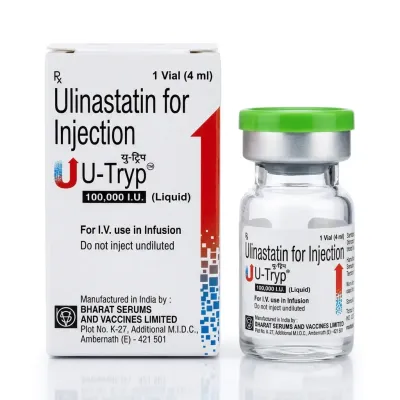
U-Tryp 100,000 I.U. / 4 ml Bharat Serums
View
Bharat Serums
100,000 I.U. / 4 ml 1 vial
1798₴ 2247₴
✅ All products loaded (1)

Contact us

Choose a convenient way to contact

We work daily from 9:00 to 20:00