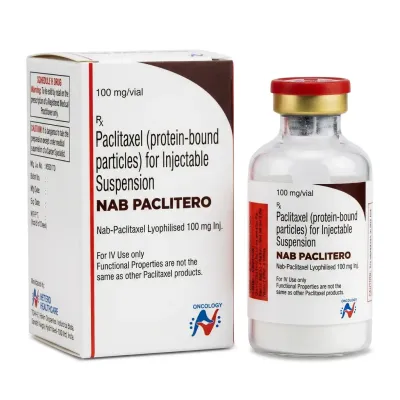
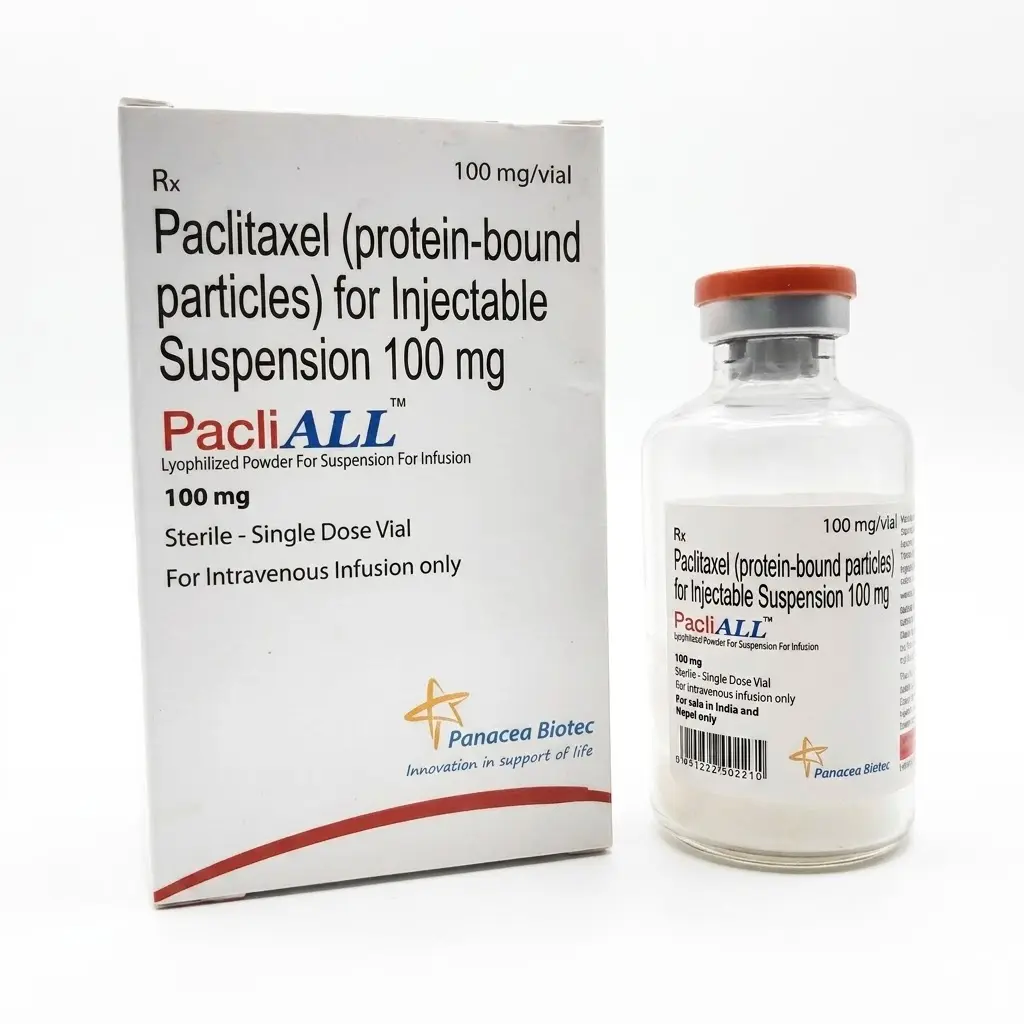
PacliALL — Nab-paclitaxel 100 mg, 1 pcs, Panacea Biotec
100% original product

PacliALL — Paclitaxel (protein-bound particles) 100 mg

4917 5200 -5%

PacliALL 100 mg is an advanced antineoplastic, chemotherapeutic medicinal product designed as a protein-bound (albumin-bound) paclitaxel nanoparticle formulation. This innovative drug platform (nanoparticle albumin-bound paclitaxel) is engineered to enhance anti-tumor efficacy while mitigating systemic tissue toxicity. The albumin shell exploits endogenous endothelial cell transport pathways to actively transport the active compound across vascular walls directly into malignant environments, leading to selective biological accumulation at the disease site.

Manufacturer: Panacea Biotec, India. Panacea Biotec is an established global innovative biopharmaceutical corporation specializing in pioneering oncology portfolios, advanced biological compounds, and therapeutic vaccines. Their manufacturing lines adhere structurally to international GMP frameworks, which guarantees ultra-pure compound crystallization, uniform nanoparticle stability, and maximum safety margins across complex oncological cycles.

Key Advantages:

  • Enhanced Interstitial Target Delivery: The albumin nanoparticle complex actively engages with tumor-specific protein receptors to facilitate deep, rapid intralesional penetration.
  • Solvent-Free Chemical Profile: Formulated completely without Cremophor EL or ethanol, drastically reducing incidences of acute hypersensitivity or anaphylactoid events and rendering steroid premedication optional.
  • Advanced Safety Margins: High-precision manufacturing controls by Panacea Biotec ensure minimized damage to healthy cell lineages relative to conventional solvent-based paclitaxel therapies.

PacliALL is delivered as a sterile, lyophilized powder for injectable suspension. The formula consists of:

  • Active Substance (per 1 vial): Paclitaxel (stabilized as protein-bound / albumin-bound nanoparticles) — 100 mg.
  • Excipients: Human serum albumin (functioning as both a physical nanoparticle stabilizer and a molecular vehicle). The formulation is entirely free from synthetic surfactants.
  • Dosage Form: Sterile, white to pale-yellow lyophilized powder enclosed within a clear glass single-dose vial for intravenous reconstitution.

Pharmacodynamics: Paclitaxel belongs to the antimicrotubule class of plant-derived taxane chemotherapeutic agents. It binds specifically to tubulin dimers, promoting microtubule assembly while preventing disassembly. This stabilization disrupts the dynamic reorganization of the microtubule architecture necessary for mitotic cellular replication during interphase, blocking the cell cycle at the G2/M phase and triggering apoptosis in rapidly dividing malignant cells. The albumin-bound nano-delivery framework specifically interacts with the gp60 receptor located on endothelial surfaces, thereby accelerating transcytosis across tumor vascular beds.

Pharmacokinetics: Following intravenous infusion, the reconstituted suspension rapidly diffuses throughout bodily tissues. Plasma protein binding of circulating paclitaxel exceeds 99%. Hepatic clearance is driven primarily by cytochrome P450 isoenzymes (principally CYP2C8 and CYP3A4), yielding hydroxylated metabolites. The terminal elimination half-life (T1/2) is multiphasic, averaging approximately 27 hours. Elimination occurs predominantly through biliary-fecal vectors (with around 20% excreted as unchanged drug), while renal elimination remains minimal (approx. 1–7%).

PacliALL 100 mg is indicated for administration as monotherapy or within combined antineoplastic schedules for managing the following malignancies:

  • 🔹 Breast Cancer: Treatment of metastatic or advanced breast cancer in patients experiencing failure of standard combination chemotherapy, or relapsing within 6 months of anthracycline-based adjuvant intervention.
  • 🔹 Non-Small Cell Lung Cancer (NSCLC): First-line intervention for locally advanced or metastatic NSCLC (in combination with carboplatin) in patients who are not candidates for potentially curative surgical resection or radiation therapy.
  • 🔹 Adenocarcinoma of the Pancreas: First-line management of metastatic adenocarcinoma of the pancreas, administered in combination with gemcitabine.

The dosing profile and structural administration cycle of PacliALL must be strictly calculated by a certified oncologist, determined by body surface area (m²), diagnostic criteria, and hematological baseline parameters:

  • Method of Administration: For intravenous infusion only. Under strict aseptic standards, the lyophilized cake is reconstituted using 0.9% sodium chloride injection solution to yield a homogeneous suspension. The resulting solution is infused intravenously over a 30-minute period.
  • Standard Dosing Guidelines: For metastatic breast cancer, the recommended dose is 260 mg/м² administered intravenously every 3 weeks. For NSCLC, the standard regimen is 100 mg/м² given on days 1, 8, and 15 of each 21-day cycle (concurrently with carboplatin). For metastatic pancreatic adenocarcinoma, the dosage is 125 mg/м² on days 1, 8, and 15 of every 28-day cycle.
  • Pre-infusion Constraints: Prior to initiating any treatment cycle, patients must demonstrate an absolute neutrophil count (ANC) of ≥ 1,500 cells/mm³ and a platelet count of ≥ 100,000 cells/mm³. In events of severe neutropenia or peripheral sensory neuropathy, subsequent doses must be stepped down.

The therapeutic use of PacliALL is contraindicated in the presence of the following physiological or clinical contexts:

  • Hypersensitivity: Known systemic allergic reactions or severe intolerance to paclitaxel, human albumin, or any underlying formula component.
  • Baseline Cytopenia: Baseline absolute neutrophil counts (ANC) of less than 1,500 cells/mm³ monitored prior to initial cycle deployment.
  • Pregnancy and Lactation: The active compound possesses heavy embryotoxic and teratogenic properties; therefore, it is strictly contraindicated for pregnant or nursing individuals.
  • Severe Hepatic Impairment: Advanced liver dysfunction, as reduced clearance cascades significantly escalate systemic exposure risks and toxic side effects.
  • ⚠️ With Caution: Exercise strict clinical caution in patients presenting with pre-existing peripheral neuropathy, underlying cardiac conditions (arrhythmias, severe ischemia), active systemic infections, or severe renal impairment.

Clearance pathways of paclitaxel must be monitored to rule out severe drug-to-drug cross-reactivity risks:

  • CYP2C8 and CYP3A4 Inhibitors: Concomitant administration of strong inhibitors (such as ketoconazole, erythromycin, ritonavir, or grapefruit juice) can impair paclitaxel metabolism, sharply increasing blood plasma exposure and intensifying toxic reactions.
  • CYP2C8 and CYP3A4 Inducers: Agents that induce these enzymes (such as rifampicin, carbamazepine, phenobarbital, or St. John's wort) accelerate clearance, reducing anti-tumor efficiency.
  • Platinum Compounds (Cisplatin, Carboplatin): In combined chemotherapeutic sequences, PacliALL must be administered PRIOR to platinum compound delivery to avoid reductions in paclitaxel clearance and subsequent severe myelosuppression.

Reproductive boundaries and safety thresholds for PacliALL regimens:

  • Pregnancy: Use during pregnancy is contraindicated due to severe fetal risks. Male and female patients of reproductive capacity must employ highly effective contraceptive options throughout the entire active treatment timeline and for at least 6 months following final dose completion.
  • Lactation: It is unverified if paclitaxel partitions into human breast milk. To rule out potential toxic reactions in the nursing infant, breastfeeding must be completely suspended for the duration of therapy.
  • Fertility: The compound can induce reversible or irreversible changes to reproductive capabilities; male patients are strongly advised to seek advice regarding sperm cryopreservation prior to starting therapy.

Antineoplastic courses involving PacliALL routinely prompt adverse reactions that require close medical surveillance:

  • 🟢 Hematological Toxicity (Very Common): Severe myelosuppression manifesting as neutropenia, leukopenia, anemia, and thrombocytopenia. Frequent complete blood counts are mandatory.
  • 🟡 Neurological Manifestations: Dose-dependent peripheral sensory neuropathy, characterized by localized numbness, tingling sensations, and paresthesia within extremities.
  • 🟠 Dermatological and Musculoskeletal Signs: Pronounced alopecia (hair loss occurring in over 80% of patient cohorts), arthralgia, myalgia (muscle and joint pain), chronic fatigue, and asthenia.
  • 🔵 Gastrointestinal Tract: Nausea, vomiting, diarrhea, stomatitis, mucositis (inflammation of mucosal linings), and reduced appetite.
  • ⚠️ Cardiovascular Events: Infrequent occurrences of bradycardia, transient hypotension or hypertension, and cardiac conduction anomalies.

Clinical presentation and emergency intervention protocols for instances of dose escalation:

  • Symptomatology: Clinical indicators of a severe overdose align directly with the drug's primary toxicological markers. Anticipated outcomes include critical myelosuppression (profound leukocyte and platelet depletion), advanced peripheral neurotoxicity, and extensive inflammation of the gastrointestinal mucosal linings (severe stomatitis and mucositis).
  • Management: There is no specific antidote for paclitaxel toxicity. In events of accidental overdose, terminate the infusion immediately. Initiate intensive supportive and symptomatic clinical lines. Monitor peripheral hematological profiles continuously; administer granulocyte colony-stimulating factors (G-CSF), execute blood component transfusions, and deploy broad-spectrum antibiotic therapies to combat secondary infections. Hemodialysis does not accelerate drug clearance.

Storage criteria for the lyophilized powder and reconstituted infusion suspension:

  • 🌡️ Vial Storage: Store in the original cardboard outer box to protect from light exposure at a temperature not exceeding 25 °C. Do not freeze.
  • 👶 Safety Precautions: Store in a secure location out of the reach and sight of children. Handling, preparation, and disposal must be executed exclusively by trained healthcare personnel following standard cytotoxic safety protocols.
  • Suspension Stability: Reconstituted suspensions should ideally be administered immediately. If necessary, the mixture may be stored within its original glass vial under refrigeration (2–8 °C) for up to 8 hours, provided it is shielded from light. The shelf life of the sealed lyophilized vial is 3 years.

Notice. The information on this page is for reference only and does not replace medical consultation. Always consult a healthcare professional and read the manufacturer's instructions before using any medicine. Self-medication may be dangerous. Information updated: 13.07.2026

Active ingredient
Dosage form Lyophilisate for infusion
Vials per pack 1
Packaging Glass vial in a box
100% original product
Delivery across Ukraine
1
Customer reviews

What Customers Say

No reviews yet

Your review can be the first!

Unifarm

Unifarm app

Safari → Share → Add to Home Screen Firefox: menu ⋮ → Install or Add to Home screen. If missing, open the site in Chrome. Chrome: menu ⋮ → Install app or Add to Home screen.

Contact us

Choose a convenient way to contact

We work daily from 9:00 to 20:00