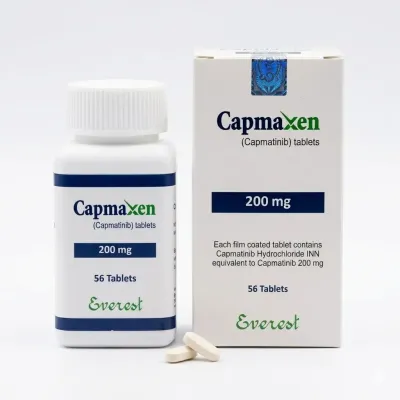
Capmatinib – Selective MET Tyrosine Kinase Inhibitor
Known as original brand(s)
Tabrecta
Capmatinib is a highly selective and potent oral inhibitor of the MET receptor tyrosine kinase (hepatocyte growth factor receptor). The drug was specifically developed for the targeted therapy of non-small cell lung cancer (NSCLC) associated with genetic alterations in the MET signaling pathway. Its primary mechanism of action involves blocking MET phosphorylation, which prevents the activation of downstream signaling pathways (such as MAPK, PI3K/AKT, and STAT3) responsible for abnormal growth, survival, and metastasis of tumor cells.
Capmatinib holds particular significance for patients with a MET exon 14 skipping mutation (METex14). This mutation leads to the loss of a regulatory domain in the protein, causing its constant activation and uncontrolled cell proliferation. Capmatinib effectively suppresses this process, demonstrating high antitumor activity even in patients previously treated with chemotherapy or immunotherapy. Clinical studies also confirm its ability to cross the blood-brain barrier, allowing for the control of brain metastases. The drug represents a breakthrough in precision oncology, enabling an aggressive form of lung cancer to be managed as a controlled chronic condition.
The drug is taken orally twice daily. Therapy requires mandatory molecular-genetic testing of the tumor to confirm the presence of a MET mutation.

Indications
Capmatinib is indicated for the treatment of adult patients with the following diagnosis:
- Metastatic NSCLC: non-small cell lung cancer with a confirmed MET exon 14 skipping mutation (METex14).
- Lines of Therapy: the drug can be used both as first-line therapy (previously untreated patients) and after prior treatment.
- Special Cases: effective in the presence of central nervous system metastatic disease.
Dosage and administration
The capmatinib dosing regimen is designed to maintain constant blockade of MET receptors.
- Standard Dose: 400 mg twice daily (two 200 mg tablets in the morning and evening).
- Administration Method: tablets are taken orally whole, regardless of food. Do not break or chew the tablets.
- Missed Dose: if a dose is missed by more than 8 hours, skip the dose and take the next one as scheduled.
- Dose Adjustment: if intolerable toxicity occurs, the dose is reduced to 300 mg or 200 mg twice daily. If 200 mg is not tolerated, therapy is discontinued.
- Monitoring: regular monitoring of lung function and liver enzymes is required.