
Ledipasvir — Hepatitis C Treatment

Ledipasvir is a potent inhibitor of the hepatitis C virus (HCV) non-structural protein 5A (NS5A). The drug belongs to the class of direct-acting antivirals (DAAs) and plays a critical role in blocking viral replication and virion assembly. Ledipasvir is commonly used in a fixed-dose combination with sofosbuvir, enabling interferon-free therapy.

The mechanism of action of ledipasvir involves high-affinity binding to the NS5A protein, which is essential for the virus to copy its RNA genome and form new viral particles. By inhibiting this protein, the drug causes a rapid decline in viral load and prevents the spread of infection to healthy hepatocytes. Ledipasvir exhibits high potency, especially against the most common genotype 1 of the virus.

The drug is characterized by a long half-life, ensuring stable plasma concentrations with once-daily dosing. Due to its efficacy, ledipasvir significantly contributes to achieving a sustained virologic response (SVR) in the vast majority of patients.

Wikipedia page
Ledipasvir

Indications

Ledipasvir is indicated for the treatment of chronic hepatitis C as part of combination therapy:

  • Chronic Hepatitis C (Genotypes 1, 4, 5, 6): treatment of adult patients and pediatric patients (3 years of age and older).
  • Patients with Cirrhosis: therapy for individuals with compensated cirrhosis, and in combination with ribavirin for patients with decompensated cirrhosis.
  • HIV/HCV Co-infection: treatment of patients with concomitant HIV infection.
  • Post-Transplant Patients: therapy for HCV recurrence after liver transplantation.

Dosage and administration

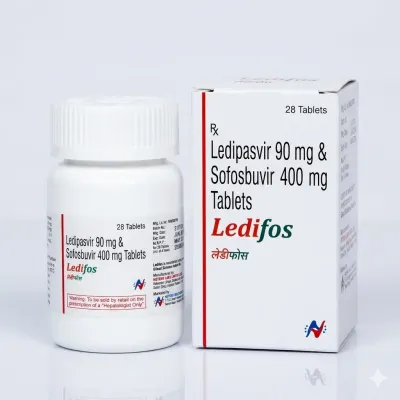
Ledipasvir is almost always administered at a dose of 90 mg as part of a fixed-dose combination (90 mg ledipasvir / 400 mg sofosbuvir).

  • Standard Regimen: one tablet once daily at the same time every day.
  • Administration Rules: the drug can be taken with or without food. The tablet should be swallowed whole due to its bitter taste.
  • Duration of Course: varies from 8 to 12 or 24 weeks depending on prior treatment experience, presence of cirrhosis, and baseline viral load.
  • Drug Interactions: antacids and proton pump inhibitors can decrease ledipasvir absorption; their administration must be strictly timed.
  • Missed Dose: if less than 18 hours have passed, take the tablet immediately. If more than 18 hours, take the next dose as scheduled.

The use of ledipasvir is restricted in the following clinical conditions:

  • Hypersensitivity: known allergy to ledipasvir or any component of the medication.
  • Co-administration with Amiodarone: risk of severe bradycardia (especially when used in combination with sofosbuvir).
  • P-glycoprotein Inducers: concurrent use with rifampin, St. John's wort, or phenytoin is contraindicated (as they lower ledipasvir concentrations).
  • Monotherapy: ledipasvir should not be used as the sole agent for treating hepatitis C.
  • Pediatric Use: not used in children under 3 years of age.

Ledipasvir in combination with sofosbuvir is generally well-tolerated; side effects are most often mild:

  • Neurological Reactions: headache (very common), fatigue, and dizziness.
  • Digestive System: nausea, diarrhea, and occasionally decreased appetite.
  • Psychological Sphere: insomnia and increased irritability.
  • Skin Manifestations: rarely, skin rash or pruritus.
  • Laboratory Parameters: rare cases of elevated lipase levels.

Frequently Asked Questions

Ledipasvir is an inhibitor of the hepatitis C virus (HCV) non-structural protein 5A (NS5A). This protein is essential for both viral RNA replication and the assembly of new HCV virions. By blocking NS5A, ledipasvir disrupts the viral life cycle, preventing the virus from spreading within the body.
Ledipasvir is always used in combination with other antiviral agents (most commonly sofosbuvir). Using a single agent quickly leads to the development of viral drug resistance. Combination therapy targets different stages of the viral replication cycle simultaneously, ensuring the highest possible chance of a complete cure.
The solubility and absorption of ledipasvir are highly dependent on gastric pH. Medications that reduce stomach acid (such as antacids or proton pump inhibitors) can significantly decrease the concentration of ledipasvir in the bloodstream. It is recommended to separate the administration of antacids and ledipasvir by at least 4 hours.
Ledipasvir, as part of combination therapy, requires caution in patients with severe renal impairment. While ledipasvir itself is primarily excreted via the feces, co-administered components (such as sofosbuvir) may require treatment regimen adjustments depending on the patient's glomerular filtration rate (GFR).
Ledipasvir-based therapy is generally very well tolerated. The most frequently reported side effects are headache and fatigue. Unlike older treatment methods (such as those involving interferon), these symptoms are typically mild and rarely require discontinuation of the treatment course.

List of medicines by active substance Ledipasvir

-10%
Ledifos 400 mg + 90 mg Hetero
View
Hetero
400 mg + 90 mg 28 tablets
3955₴ 4395₴
✅ All products loaded (1)

Contact us

Choose a convenient way to contact

We work daily from 9:00 to 20:00