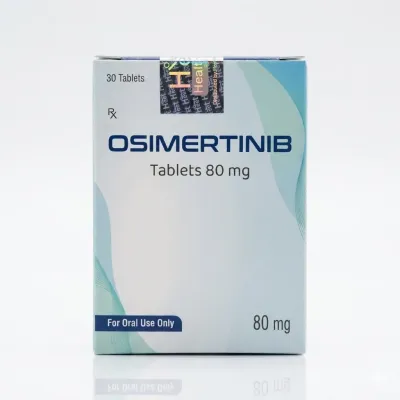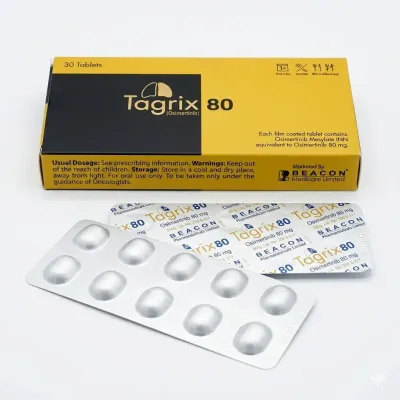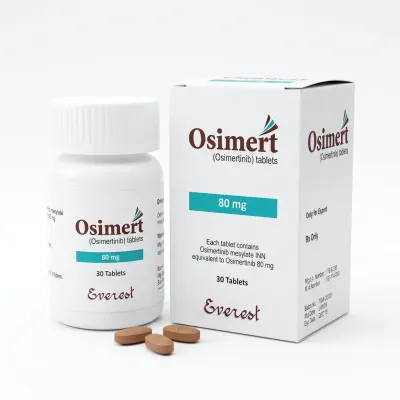
Osimertinib – EGFR Tyrosine Kinase Inhibitor
Known as original brand(s)
Tagrisso
Osimertinib is an innovative targeted anti-cancer medication and a third-generation irreversible tyrosine kinase inhibitor (TKI) of the Epidermal Growth Factor Receptor (EGFR). It was specifically developed to combat the most challenging forms of lung cancer that have developed resistance to previous generations of drug therapy.
The mechanism of action involves the selective and irreversible binding to mutant forms of the EGFR receptor. Unlike earlier inhibitors, osimertinib effectively suppresses not only classical sensitizing mutations (L858R and exon 19 deletion) but also the specific T790M resistance mutation. This mutation often emerges during treatment and blocks the effects of other drugs. Osimertinib halts the signaling pathways that stimulate tumor cell division and survival while exhibiting significantly lower activity against normal (wild-type) EGFR, thereby reducing toxicity to healthy tissues. A major advantage is the drug's high ability to cross the blood-brain barrier, allowing it to act effectively on brain metastases.
The medication is taken orally once daily, providing continuous suppression of tumor cell activity.

Indications
Osimertinib is indicated as monotherapy for the treatment of adult patients in the following clinical scenarios:
- Adjuvant Therapy: following complete tumor resection in patients with non-small cell lung cancer (NSCLC) whose tumors harbor EGFR mutations.
- First-line Therapy: treatment of locally advanced or metastatic NSCLC with EGFR mutations (exon 19 deletion or L858R mutation).
- Resistant Cancer: treatment of locally advanced or metastatic NSCLC in patients with the T790M mutation whose disease has progressed on or after therapy with other EGFR tyrosine kinase inhibitors.
Dosage and administration
The osimertinib dosing regimen requires regularity and the monitoring of certain physiological parameters.
- Standard Dose: 80 mg (one tablet) taken once daily.
- Administration: the tablet should be swallowed whole, with or without food, at the same time each day. For patients with swallowing difficulties, the tablet can be dispersed in 50 mL of non-carbonated water (no other liquids should be used).
- Missed Dose: if a dose is missed, it should be taken only if the next scheduled dose is more than 12 hours away.
- Duration: in the adjuvant setting (after surgery), treatment can continue for up to 3 years; for metastatic disease, it is continued until disease progression.
- Dose Adjustment: in cases of severe adverse reactions, the dose may be reduced to 40 mg once daily or temporarily interrupted.