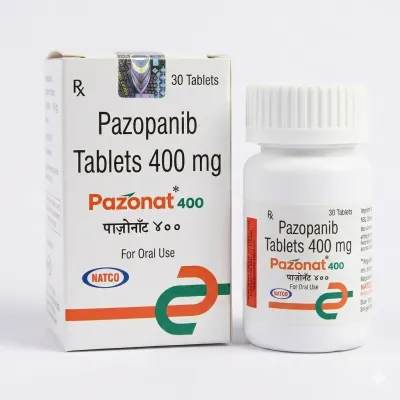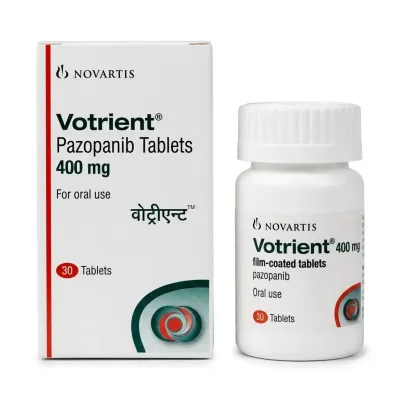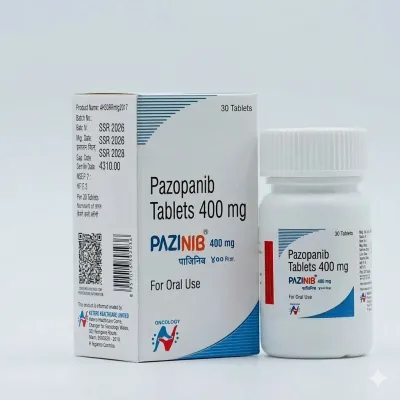
Pazopanib – Targeted Therapy
Known as original brand(s)
Votrient
Pazopanib is a second-generation oral multi-kinase inhibitor designed for the targeted therapy of solid tumors. The drug effectively blocks several types of tyrosine kinase receptors that play a key role in tumor growth and the formation of its vascular network.
The mechanism of action of pazopanib involves inhibiting vascular endothelial growth factor receptors (VEGFR-1, -2, -3), platelet-derived growth factor receptors (PDGFR-α, -β), and the stem cell factor receptor (c-KIT). Blocking these pathways results in a potent anti-angiogenic effect—the tumor is deprived of the ability to create new vessels for its nutrition, which slows its growth and prevents metastasis. Furthermore, direct action on tumor cell receptors inhibits their division and survival.
The drug is available in tablet form for daily administration. It significantly increases progression-free survival in patients with advanced renal cell carcinoma and soft tissue sarcomas.

Indications
Pazopanib is used in oncology for the therapy of the following pathologies:
- Advanced Renal Cell Carcinoma (RCC): as first-line therapy or in patients who have previously received cytokine therapy.
- Soft Tissue Sarcoma (STS): treatment of specific subtypes of advanced sarcomas in patients who have previously received chemotherapy.
- Progressive Forms: the drug is indicated for metastatic processes when surgical intervention is not possible.
Dosage and administration
The pazopanib dosing regimen requires strict adherence to the rules of administration.
- Standard Dose: 800 mg (two 400 mg tablets) once daily.
- Administration Rules: tablets should be taken on an empty stomach—at least 1 hour before or 2 hours after a meal. They must not be crushed or chewed.
- Missed Dose: if there are less than 12 hours remaining until the next dose, the missed dose should not be taken.
- Food Interactions: grapefruit juice and fatty foods can significantly increase the concentration of the drug, increasing the risk of toxicity.
- Dose Adjustment: if side effects occur or liver function is impaired, the physician may reduce the dosage in 200 mg increments.