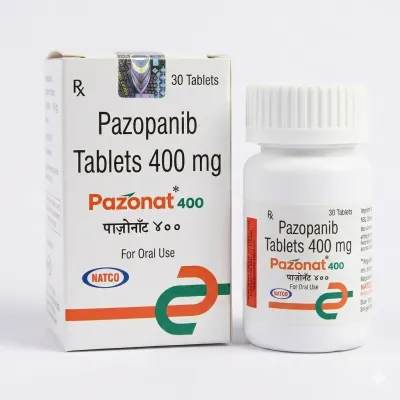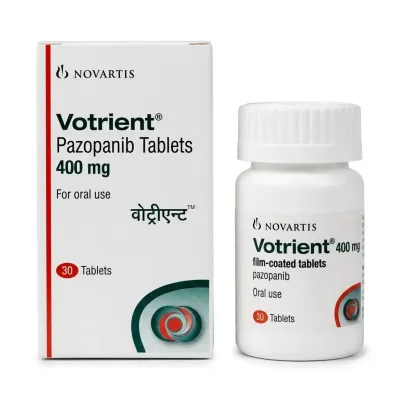
Pazokast 400 — Pazopanib 400 mg, 30 pcs, Aprazer
100% original product

Pazokast 400 — Pazopanib 400 mg

4000 4404 -9%

Pazokast 400 is an innovative targeted antineoplastic medication functioning as a potent oral multi-kinase inhibitor. Its active pharmaceutical ingredient, pazopanib, belongs to the small-molecule class and is developed for the pathogenetic treatment of advanced solid malignancies. The drug's mechanism of action is based on the selective blocking of intracellular tyrosine kinase domains across various receptors, including vascular endothelial growth factor receptors (VEGFR-1, VEGFR-2, VEGFR-3), platelet-derived growth factor receptors (PDGFR-alpha, PDGFR-beta), and the stem cell factor receptor (c-KIT). By inhibiting these critical signaling pathways, Pazokast disrupts tumor neoangiogenesis (the formation of new blood vessels inside the tumor), deprives the malignant growth of essential nutrients and oxygen, suppresses cancer cell proliferation, and triggers apoptotic pathways, effectively delaying disease progression.

Manufacturer: Aprazer Healthcare Pvt. Ltd. under strict licensing and technological control of leading pharmaceutical corporations. The medicine is produced on certified high-tech manufacturing lines in rigorous compliance with international quality standards and Good Manufacturing Practice (GMP) regulations. Pazokast 400 represents a high-quality and affordable targeted analog that demonstrates full bioequivalence to the innovator drug, serving as a core component of modern treatment protocols in uro-oncology and soft tissue sarcoma management.

Key Advantages:

  • Dual Antineoplastic Effect: Simultaneously suppresses tumor angiogenesis (vascular growth) and malignant cell proliferation.
  • Oral Targeted Therapy: Supplied in tablet form, allowing patients to complete a highly effective course of treatment in a comfortable home environment without frequent hospitalizations.
  • Aprazer Quality Standards: Guaranteed chemical purity of the active substance backed by rigorous laboratory testing of every batch.

Pazokast is supplied as film-coated tablets for oral administration. The hermetically sealed container packaging contains:

  • Active Compound (per tablet): Pazopanib hydrochloride, equivalent to 400 mg of pure pazopanib.
  • Tablet Core Excipients: Microcrystalline cellulose, sodium starch glycolate, povidone (K30), magnesium stearate.
  • Film Coating Ingredients: Hypromellose, titanium dioxide, macrogol, iron oxide yellow (as a coloring agent).
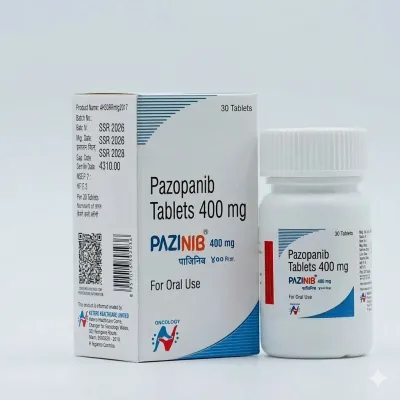
  • Appearance: Yellow, capsule-shaped, film-coated tablets. Supplied in a heavy-duty plastic bottle containing 30 tablets, enclosed in an original outer cardboard carton with a protective hologram and official package leaflet.

Pharmacodynamics: Pazopanib is an oral, small-molecule inhibitor of multiple tyrosine kinases, impeding signaling pathways essential for tumor angiogenesis and cancer cell proliferation. It directly suppresses the autophosphorylation of VEGFR and PDGFR, resulting in the regression of tumor-supporting vasculature and halting cell mitosis within target tissues.

Pharmacokinetics: Following oral administration, pazopanib is absorbed relatively slowly, with peak plasma concentration (Cmax) achieved at a mean time of 2 to 4 hours. Systemic exposure and absorption increase substantially (more than 2-fold) when taken concurrently with food, particularly high-fat meals, which significantly exacerbates the risk of systemic toxicities. Human plasma protein binding is exceptionally high, exceeding 99.6%, and remains constant. Pazopanib undergoes hepatic metabolism primarily mediated by the CYP3A4 isoenzyme, with minor contributions from CYP1A2 and CYP2C8. Elimination occurs predominantly via feces as metabolites and unchanged drug (approximately 82%), with less than 4% excreted renally via urine. The mean terminal elimination half-life (T1/2) at steady-state is approximately 30.9 hours.

Pazokast 400 mg is utilized as monotherapy or within multi-agent treatment regimens as prescribed and regularly monitored by a qualified clinical oncologist for the following conditions:

  • 🔹 Advanced and/or Metastatic Renal Cell Carcinoma (RCC): Indicated as a first-line systemic therapy for patients with advanced kidney cancer, as well as for patients who have progressed on prior cytokine-based therapy.
  • 🔹 Advanced Soft Tissue Sarcoma (STS): Indicated for the treatment of patients with specific histological subtypes of advanced soft tissue sarcoma who have received prior standard chemotherapy regimens (excluding gastrointestinal stromal tumors and liposarcomas).

Dosage calculations, treatment schedules, and clinical monitoring during Pazokast therapy must be managed strictly by a specialized oncologist:

  • Recommended Dosage: The standard therapeutic dose is 800 mg (two 400 mg tablets) taken orally once daily.
  • Administration Rules: Tablets must be taken strictly on an empty stomach—either at least 1 hour before a meal or no sooner than 2 hours after a meal. Tablets must be swallowed whole with a sufficient amount of water and must not be crushed, broken, or chewed (breaking the tablet alters the dissolution profile and significantly escalates systemic toxicity).
  • Duration of Treatment: Treatment is continuous on a daily schedule and should be maintained as long as clinical benefit is observed or until the development of unacceptable or unmanageable toxicity.
  • Missed Dose: If a regular daily dose is missed and the next scheduled dose is less than 12 hours away, the missed dose should be skipped entirely. Resume the normal dosing schedule the following day.
  • Dose Modifications for Toxicity: In the event of moderate to severe adverse drug reactions (e.g., marked hepatotoxicity, severe hypertension), the daily dose should be decreased step-wise: initially to 400 mg daily, and further to 200 mg daily if required. If toxicity recurs or worsens, permanently discontinue the drug.

The initiation and administration of targeted Pazokast 400 tablets are strictly prohibited in the presence of the following clinical factors:

  • Hypersensitivity: Documented individual hypersensitivity or intolerance to pazopanib or any component of the tablet core or film coating.
  • Hepatic Impairment: Severe hepatic dysfunction characterized as Child-Pugh Class C or total bilirubin levels > 3 times the upper limit of normal (ULN).
  • Renal Impairment: Severe renal failure (creatinine clearance < 30 ml/min), due to a lack of clinical safety data in this specific patient population.
  • Age and Safety Parameters: Children and adolescents under 18 years of age (safety and efficacy have not been established), pregnancy, and breastfeeding periods.
  • ⚠️ With Caution: Exercise extreme vigilance in patients with a history of severe cardiovascular disease, poorly controlled hypertension, thromboembolic tendencies, active bleeding disorders, gastrointestinal perforation histories, or thyroid dysfunctions.

Pazopanib possesses a complex metabolic and absorption profile, requiring the strict exclusion of hazardous drug combinations:

  • Strong CYP3A4 Inhibitors: Co-administration with potent CYP3A4 inhibitors (e.g., ketoconazole, itraconazole, clarithromycin, grapefruit juice) significantly elevates pazopanib plasma exposure, increasing the risk of severe adverse reactions. Such combinations must be avoided.
  • Strong CYP3A4 Inducers: Concurrent use with potent CYP3A4 inducers (e.g., rifampicin, carbamazepine, phenobarbital, St. John's wort) accelerates drug clearance, critically reducing pazopanib's antineoplastic efficacy.
  • Gastric pH-Modifying Agents: Concomitant use of antacids, H2-receptor antagonists, and proton pump inhibitors (e.g., omeprazole, esomeprazole) reduces stomach acidity, which severely impairs pazopanib solubility and oral bioavailability. Separate doses appropriately if use is unavoidable.
  • Effects on Transporters: Pazopanib is an inhibitor of P-glycoprotein (P-gp), which may raise the plasma concentrations of co-administered P-gp substrates (such as digoxin).

Pazokast 400 exerts direct destructive effects on reproductive capabilities, fetal development, and fetal vascularization:

  • Fetal Risk: Pazopanib possesses documented teratogenic, mutagenic, and embryotoxic properties. Its use is strictly contraindicated in pregnant women; blocking angiogenesis during embryogenesis causes fetal death or profound congenital malformations. Pregnancy tests are mandatory for females of childbearing potential prior to treatment.
  • Contraceptive Mandate: Both male and female patients of reproductive potential must utilize highly effective barrier and hormonal contraceptive methods throughout the entire duration of therapy and for at least 2 weeks following the final dose of pazopanib.
  • Lactation: Excretion of pazopanib into human breast milk has not been quantified. Due to the high risk of severe adverse reactions in the nursing infant, breastfeeding must be completely discontinued for the duration of Pazokast treatment.
  • Fertility Impact: The drug can cause ovarian cycle disruptions in females and impair spermatogenesis parameters in males, potentially resulting in temporary or permanent infertility.

Multi-kinase inhibition with pazopanib frequently triggers systemic adverse reactions that necessitate strict laboratory monitoring and supportive care:

  • 🟢 Hepatotoxicity (Critical): Marked elevations in serum transaminases (ALT, AST) and bilirubin. Hepatic function profiles must be evaluated every 2 weeks during the first 4 months of treatment.
  • 💡 Cardiovascular System: Significant elevations in blood pressure (arterial hypertension occurs very frequently), reduction in left ventricular ejection fraction, and prolongation of the QT interval on ECG.
  • 🟡 Gastrointestinal Tract: Severe diarrhea, nausea, vomiting, dysgeusia (taste alteration), abdominal pain, and stomatitis.
  • 🟠 Dermatological System: Depigmentation (lightening) of hair and skin, hand-foot syndrome (palmar-plantar erythrodysesthesia causing redness, peeling, and pain on palms and soles), skin rashes, and xeroderma (dry skin).
  • ⚠️ Urgent Clinical Signals: If a sudden severe headache develops alongside a spike in blood pressure, chest pain or shortness of breath occurs, severe unmanageable diarrhea arises, unexplained bleeding develops, or yellowing of the skin/eyes appears, contact the oncologist immediately for emergency intervention.

Reports of acute pazopanib overdose are limited, but exceeding standard therapeutic dose thresholds triggers an accelerated onset of severe systemic toxicity:

  • Core Symptoms: Anticipated manifestations include severe, uncontrolled arterial hypertension, profound physical fatigue, acute drug-induced liver injury (severe hepatotoxicity), and exhausting diarrhea carrying a high risk of dehydration.
  • Immediate First Aid: Promptly discontinue medication intake. If a significant overdose occurred recently, perform gastric lavage and administer activated charcoal.
  • Management: There is no known specific antidote for pazopanib. Treatment is entirely supportive and symptomatic. Aggressive antihypertensive protocols should be initiated to stabilize blood pressure, alongside intravenous fluid/electrolyte replacement and hepatoprotective measures. Hemodialysis is ineffective because pazopanib is extensively bound to plasma proteins.

Strict compliance with the regulated storage instructions of Pazokast 400 tablets is required to preserve the stability of the active ingredient:

  • 🌡️ Temperature Regimen: The tablet bottle must be stored in a dry environment at controlled room temperature between 15°C and 30°C. Do not expose the drug to excessive humidity or direct heat sources.
  • 📦 Environmental Protection: Keep the tablets inside the original heavy-duty plastic bottle with the cap tightly closed (the internal desiccant canister must not be removed) and within the outer cardboard box to protect from ultraviolet degradation.
  • 👶 Safety Precautions: Given its highly potent cytotoxic properties, Pazokast must be kept in a secure, designated area completely out of reach of children, pets, and unauthorized individuals.
  • Shelf Life: The shelf life is 24 months from the manufacturing date printed by Aprazer on the bottle and outer carton. Using the tablets past the expiration date is strictly prohibited.

Notice. The information on this page is for reference only and does not replace medical consultation. Always consult a healthcare professional and read the manufacturer's instructions before using any medicine. Self-medication may be dangerous. Information updated: 14.06.2026
Active ingredient
Dosage form Tablets
Tablets per pack 30
100% original product
Delivery across Ukraine
Customer reviews

What Customers Say

No reviews yet

Your review can be the first!

Contact us

Choose a convenient way to contact

We work daily from 9:00 to 20:00