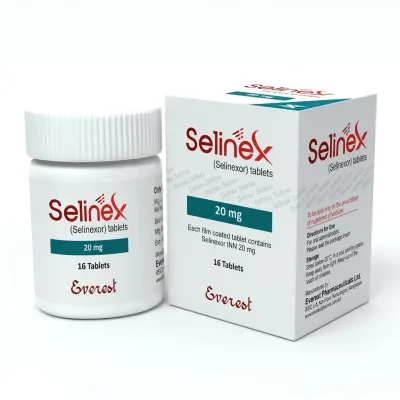
Selinexor – First-in-Class Selective Inhibitor of Nuclear Export
Selinexor is a first-in-class, innovative oral small-molecule Selective Inhibitor of Nuclear Export (SINE). The drug was developed for the targeted therapy of refractory hematologic malignancies, specifically advanced stages of multiple myeloma and diffuse large B-cell lymphoma (DLBCL). Its mechanism of action involves selective binding to and blocking of the exportin-1 protein (XPO1, also known as CRM1). The XPO1 protein is overexpressed in cancer cells, mediating the forced transport of tumor suppressor proteins and growth regulators out of the nucleus into the cytoplasm. Blockade of XPO1 by selinexor leads to the nuclear accumulation of tumor suppressor proteins (such as p53, p21, BRCA1/2, IκB), downregulation of oncoproteins (c-Myc, cyclin D1), and subsequent cell cycle arrest and apoptosis of malignant cells.
The clinical significance of selinexor lies in its capacity to overcome multidrug resistance to standard therapeutic modalities, including proteasome inhibitors, immunomodulatory agents, and anti-CD38 monoclonal antibodies. The accumulation of tumor suppressors within the cell nucleus forces surviving cancer cells to recognize DNA damage and initiate programmed cell death. Due to its unique systemic toxicity profile, selinexor is administered using an intermittent (rest-period) schedule and is typically combined with dexamethasone, bortezomib, or other antineoplastic agents. The drug is rapidly absorbed following oral administration, exhibits a high degree of plasma protein binding, and is metabolized primarily in the liver via glucuronidation.
The drug is administered orally. Active supportive care to prevent nausea and dehydration, along with weekly laboratory monitoring of hematological parameters, is required from the very start of therapy.
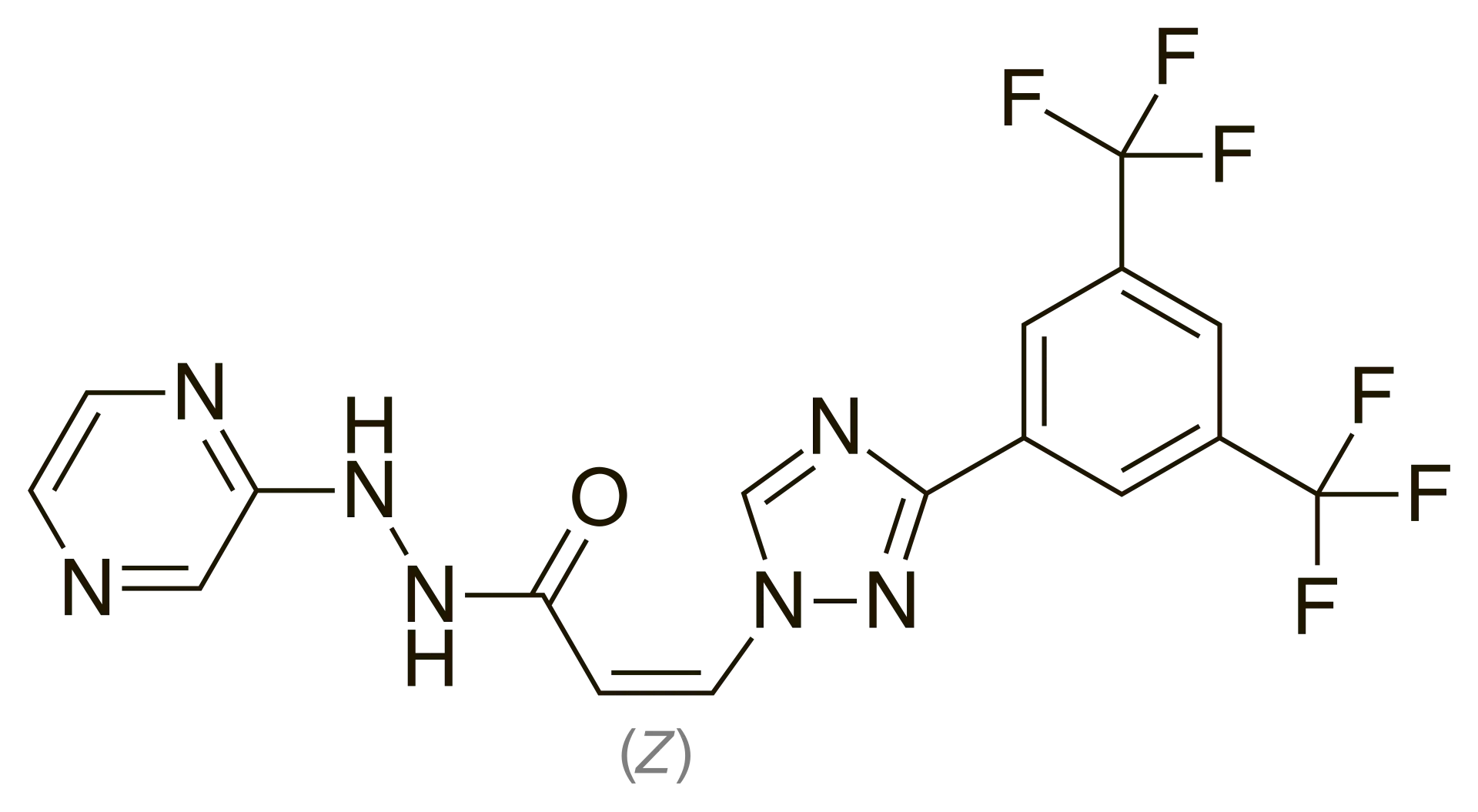
Indications
Selinexor is indicated for the treatment of adult patients with the following hematologic malignancies:
- Multiple Myeloma (MM): in combination with bortezomib and dexamethasone for patients who have received at least one prior line of therapy; or in combination with dexamethasone for the treatment of relapsed/refractory multiple myeloma in patients who have received at least four prior lines of therapy.
- Diffuse Large B-Cell Lymphoma (DLBCL): as monotherapy for relapsed or refractory DLBCL, including lymphoma arising from follicular lymphoma transformation, after at least two lines of systemic therapy.
Dosage and administration
The dosing regimen of selinexor is established strictly individually based on the indication, selected combination regimen, and treatment tolerability.
- In Multiple Myeloma (Combination Regimen): the recommended dose is 100 mg taken orally once weekly (e.g., on Day 1 of each week) administered in combination with dexamethasone and bortezomib.
- In Multiple Myeloma (Penta-refractory form): the recommended dose is 80 mg taken orally twice weekly (e.g., on Days 1 and 3 of each week) administered in combination with dexamethasone.
- In Diffuse Large B-Cell Lymphoma: the recommended therapeutic dose is 60 mg taken orally twice weekly (on Days 1 and 3 of each week).
- Administration Method: tablets are swallowed whole with a full glass of water on the designated days, with or without food. Do not break, crush, or chew the tablets.
- Supportive Care: prophylactic antiemetic medications (such as ondansetron, olanzapine) and maintenance of adequate hydration are mandatory prior to and during therapy.
- Dose Modification: in the event of severe thrombocytopenia, neutropenia, or severe nausea/anorexia, the dose should be temporarily reduced stepwise (by 20 mg) or treatment withheld until laboratory parameters stabilize.