Tretinoin – Acne & Leukemia Treatment

Tretinoin, also known as all-trans retinoic acid (ATRA), is a natural metabolite of Vitamin A (retinoid) that exerts a powerful biological influence on cellular differentiation and proliferation processes. In medicine, the drug is used in two fundamentally different forms: as a systemic agent for the therapy of hematological malignancies and as a topical agent in dermato-cosmetology.

The mechanism of action of tretinoin is based on its ability to bind to specific nuclear retinoic acid receptors (RAR). During systemic administration for acute promyelocytic leukemia (APL), tretinoin induces terminal differentiation of immature promyelocytes, forcing them to transform into mature blood cells, which leads to hematological remission without direct cytotoxic cell destruction.

During topical application, tretinoin stimulates epidermal cell mitosis, enhances the synthesis of collagen and elastin, and normalizes the keratinization process. This prevents the formation of comedones, promotes their dissolution, evens out skin micro-relief, and significantly reduces signs of photoaging through deep regeneration of the dermal matrix.

Wikipedia page
Tretinoin

Indications

Tretinoin has a wide spectrum of applications, categorized by the method of administration:

  • Acute Promyelocytic Leukemia (APL): first-line systemic therapy for induction of remission in patients with confirmed genetic translocation (t15;17).
  • Acne Vulgaris: treatment of comedonal and papulo-pustular forms of acne, as well as prevention of new lesion formation.
  • Photoaging of the skin: correction of hyperpigmentation, deep and fine wrinkles caused by prolonged exposure to ultraviolet radiation.
  • Keratinization Disorders: comprehensive therapy for keratosis follicularis and other hyperkeratotic skin conditions.
  • Lichen Planus: may be applied topically for the treatment of specific forms of mucosal lesions.

Dosage and administration

The tretinoin administration regimen critically depends on the clinical form of the disease and requires strict medical supervision.

  • Systemic Therapy (APL): the standard dose is 45 mg/m² of body surface area per day, divided into two doses. The course continues until complete remission is achieved or for a maximum of 90 days.
  • Topical Application: the drug is applied in a thin layer to clean, dry skin once daily (usually before bedtime). It is recommended to start therapy with low concentrations (0.025%) to allow the skin to adapt.
  • Application Specifics: for topical use, contact with the mucous membranes of the eyes, mouth, and nostrils must be avoided. Exposure to light degrades the active substance; therefore, application is only possible in the evening.
  • Monitoring: during systemic intake, daily monitoring of complete blood counts, coagulation profiles, and plasma lipid levels is essential.
The use of tretinoin is strictly limited in the presence of the following factors:

  • Pregnancy and Planning: the drug has an extremely high teratogenic potential. Systemic intake is absolutely contraindicated; reliable contraception is required for topical application.
  • Lactation Period: breastfeeding must be discontinued during therapy with any form of the drug.
  • Severe Renal or Hepatic Impairment: during systemic intake due to the high risk of toxic metabolite accumulation.
  • Hypervitaminosis A: concomitant use of other retinoids or excessive levels of Vitamin A in the body.
  • Dermatological Restrictions: acute inflammatory processes on the skin, eczema, rosacea, or the presence of sunburns in the application area.

Tretinoin can cause a range of specific reactions that may require adjustments to the treatment course:

  • Differentiation Syndrome (in APL): a life-threatening condition manifested by dyspnea, fever, and pleural effusion (requires immediate administration of dexamethasone).
  • Retinoid Dermatitis: during topical use — dryness, peeling, burning, erythema, and temporary worsening of acne during the first weeks of treatment.
  • Cheilitis and Xerosis: pronounced dryness of the lips and mucous membranes during systemic intake of the drug.
  • Photosensitization: a sharp increase in skin sensitivity to sunlight, requiring mandatory use of SPF protection.
  • Laboratory Shifts: elevation of serum triglycerides, cholesterol, and liver transaminase levels.

Frequently Asked Questions

Tretinoin is a natural metabolite of Vitamin A (retinoic acid). In dermatology, it accelerates skin cell turnover, prevents clogged pores, and stimulates collagen production. In hematology, it forces immature blood cells (blasts) to "mature" into normal healthy cells, effectively halting the disease progression.
These are two distinct therapeutic areas. Topical forms (creams 0.025%, 0.05%, 0.1%, such as Retino-A) are used for acne, photoaging, and pigmentation. Oral capsules (10 mg, such as Vesanoid or Tretiva) are strictly used for the treatment of Acute Promyelocytic Leukemia (APL) under the supervision of a hematologist.
During the first 2–4 weeks of tretinoin use, you may experience redness, peeling, and a temporary increase in breakouts. This is a normal process of skin purging and cellular adaptation. During this period, it is important to use moisturizers (like panthenol) and continue therapy unless severe allergic reactions occur.
The active substance makes the skin highly sensitive to UV rays. Without using an SPF (at least 30–50), there is a high risk of sunburn and long-lasting hyperpigmentation. It is recommended to apply tretinoin only at night, and in the morning, always wash off the residue and apply sunscreen.
No, tretinoin (both in oral and topical forms) is strictly contraindicated during pregnancy and its planning. The substance has teratogenic effects and can cause serious birth defects. Women are advised to use reliable contraception throughout the entire treatment period.

List of medicines by active substance Tretinoin

-18%
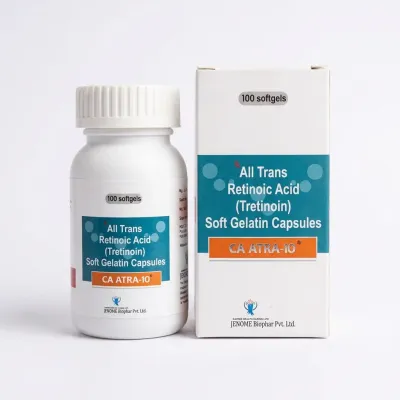
CA ATRA-10 10 mg Jenome Biophar
View
Jenome Biophar
10 mg 100 capsules
3955₴ 4834₴
-10%
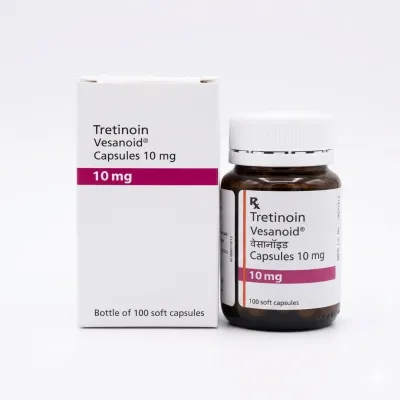
Vesanoid 10 mg Roche
View
Roche
10 mg 100 capsules
8350₴ 9317₴
-18%
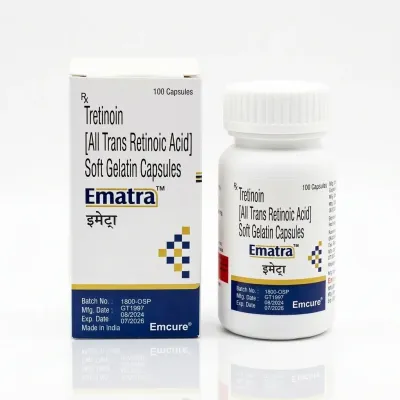
Ematra 10 mg Emcure
View
Emcure
10 mg 100 capsules
3911₴ 4790₴
✅ All products loaded (3)

Contact us

Choose a convenient way to contact

We work daily from 9:00 to 20:00