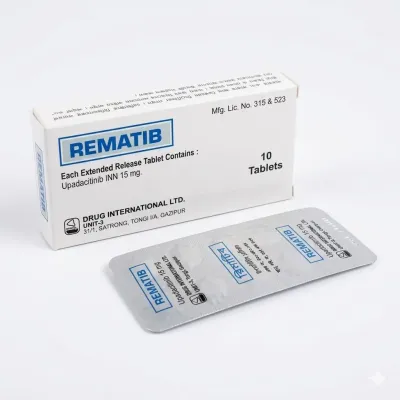
Upadacitinib – Selective JAK1 Inhibitor for Inflammatory Diseases
Known as original brand(s)
Rinvoq
Upadacitinib is a selective and reversible Janus kinase (JAK) inhibitor, belonging to a new generation of targeted oral medications for the treatment of systemic immune-inflammatory diseases. Unlike the first JAK inhibitors, upadacitinib possesses significantly higher selectivity for the JAK1 subtype compared to JAK2, JAK3, and TYK2. This selectivity allows it to effectively block the signaling pathways of key pro-inflammatory cytokines (such as interleukins IL-2, IL-6, IL-7, IL-15, and interferon gamma) while maintaining less impact on hematopoiesis regulated via other Janus kinases.
The mechanism of action of the drug involves interrupting the JAK-STAT signaling cascade within cells, leading to the suppression of the hyperactive immune response that causes tissue damage in rheumatoid arthritis, atopic dermatitis, and ulcerative colitis. Upadacitinib has demonstrated superiority over many biological agents (including TNF inhibitors) in clinical trials, providing rapid reduction in disease activity and achievement of clinical remission. Due to its oral formulation and extended-release tablet technology, the drug maintains a stable therapeutic concentration in the blood with once-daily dosing. This makes it an important alternative to injectable therapy for patients who have not achieved an adequate response to standard baseline drugs.
The drug is taken orally once daily. Before starting and during therapy, monitoring of blood laboratory parameters and screening for latent infections, such as tuberculosis, are necessary.

Indications
Upadacitinib is indicated for the treatment of adult and adolescent patients with the following immune-mediated diseases:
- Rheumatoid Arthritis: moderate to severe when there is an insufficient response or intolerance to methotrexate or other DMARDs.
- Atopic Dermatitis: moderate to severe in adults and children 12 years and older who are candidates for systemic therapy.
- Psoriatic Arthritis: active disease in adult patients.
- Ankylosing Spondylitis: active disease when standard therapy has failed.
- Ulcerative Colitis and Crohn’s Disease: moderate to severe forms in case of failure of standard treatment or biological therapy.
Dosage and administration
The dosage of upadacitinib depends on the specific diagnosis and the patient's individual response to treatment.
- Standard Dose: for most types of arthritis, it is 15 mg once daily.
- Atopic Dermatitis and Colitis: the starting dose may be 30 mg or 45 mg per day (induction phase), followed by a transition to a maintenance dose of 15 mg or 30 mg.
- Administration Method: the tablet is swallowed whole, regardless of food intake. Tablets must not be crushed, broken, or chewed due to the extended-release technology.
- Missed Dose: if a dose is missed, it should be taken as soon as possible if more than 10 hours remain until the next scheduled dose.
- Special Groups: for patients over 65 and individuals with severe renal impairment, minimum effective doses (15 mg) are recommended.