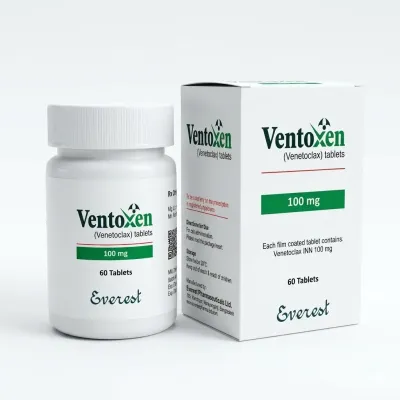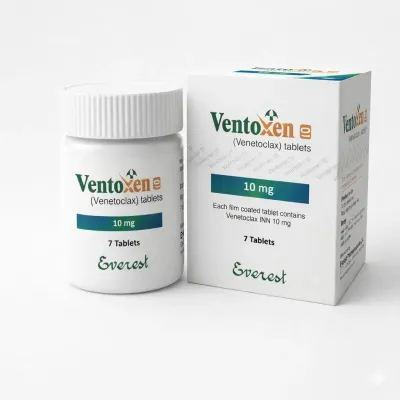
Venetoclax – Selective BCL-2 Inhibitor Targeted Therapy

Venetoclax is a first-in-class, highly selective, and potent oral inhibitor of B-cell lymphoma-2 (Bcl-2) protein. The drug was developed for the targeted therapy of hematologic malignancies, specifically chronic lymphocytic leukemia (CLL) and acute myeloid leukemia (AML). Its mechanism of action involves selective binding to the BH3 domain of the Bcl-2 protein, which is a major suppressor of apoptosis (programmed cell death). By blocking Bcl-2, venetoclax displaces pro-apoptotic proteins (such as BIM), triggering a caspase cascade that results in rapid mitochondrial outer membrane permeabilization and subsequent leukemia cell death.

The specific clinical significance of venetoclax lies in its capacity to restore the natural apoptotic pathway in cancer cells that overexpress Bcl-2 to survive and evade standard chemotherapy. The drug demonstrates high efficacy even in patients with adverse genetic risk factors, such as 17p deletion or TP53 gene mutations, who are traditionally resistant to conventional treatment regimens. Venetoclax can be utilized as monotherapy or in combination with monoclonal antibodies (obinutuzumab, rituximab) or hypomethylating agents. The hallmark of initiating therapy is the risk of Tumor Lysis Syndrome (TLS), driven by the exceptionally rapid destruction of the tumor mass, which necessitates a gradual dose-escalation schedule.

The drug is taken orally once daily. Treatment initiation follows a strict weekly dose-escalation (ramp-up) schedule under mandatory medical supervision.

Wikipedia page
Venetoclax

Indications

Venetoclax is indicated for the treatment of adult patients with the following hematologic conditions:

  • Chronic Lymphocytic Leukemia (CLL): treatment of patients with CLL or small lymphocytic lymphoma (SLL), both previously untreated and with relapsed or refractory disease.
  • Acute Myeloid Leukemia (AML): in combination with azacitidine, decitabine, or low-dose cytarabine for the treatment of newly diagnosed AML in older adults or patients with significant comorbidities that preclude intensive chemotherapy.

Dosage and administration

The dosing regimen of venetoclax requires a strict step-wise titration to minimize the risk of tumor lysis syndrome.

  • CLL Titration (5-Week Schedule): Week 1 — 20 mg/day, Week 2 — 50 mg/day, Week 3 — 100 mg/day, Week 4 — 200 mg/day, Week 5 and beyond (maintenance dose) — 400 mg once daily.
  • AML Titration (4-Day Schedule): Day 1 — 100 mg, Day 2 — 200 mg, Day 3 — 400 mg, Day 4 and beyond — 400 mg or 600 mg daily (depending on the combination regimen).
  • Administration Method: tablets are swallowed whole with a meal at the same time each day, accompanied by a glass of water. Do not break or chew the tablets.
  • Missed Dose: if the delay is less than 8 hours, the missed dose should be taken immediately. If more than 8 hours have passed, skip the dose and resume the regular schedule the next day.
  • TLS Prophylaxis: mandatory adequate hydration and anti-hyperuricemic agents (allopurinol) prior to and during the titration phase.
The use of venetoclax is restricted by several contraindications and requires caution in patients at high risk of metabolic imbalances:

  • Hypersensitivity: known allergy or hypersensitivity to venetoclax or any of the tablet components.
  • Drug Interactions: concomitant use with strong CYP3A inhibitors or strong CYP3A inducers (e.g., ketoconazole, clarithromycin, rifampin) is strictly contraindicated during the initiation and dose-titration phase.
  • Dietary Restrictions: consumption of grapefruit, pomelo, Seville oranges, and their juices is prohibited during treatment, as they significantly increase drug plasma levels.
  • Pregnancy and Lactation: the drug possesses embryotoxic potential. Effective contraception is required during therapy. Breastfeeding is contraindicated.

The side effects of venetoclax include hematologic toxicities and risks associated with rapid tumor mass breakdown:

  • Hematology: severe neutropenia (decreased neutrophil count), anemia, and thrombocytopenia, increasing the susceptibility to infections.
  • Tumor Lysis Syndrome (TLS): an acute metabolic complication (hyperuricemia, hyperkalemia, hyperphosphatemia, and hypocalcemia) that can lead to renal failure.
  • Infections: upper respiratory tract infections, pneumonia, and development of febrile neutropenia.
  • Digestive System: diarrhea, nausea, vomiting, constipation, and decreased appetite.
  • General Symptoms: fatigue, asthenia, headache, and peripheral tissue edema.

Frequently Asked Questions

Venetoclax is a first-in-class, oral targeted therapy that selectively inhibits the BCL-2 (B-cell lymphoma 2) protein. This protein helps cancer cells survive by blocking apoptosis, the body's natural process of programmed cell death. By binding to BCL-2, venetoclax restores the apoptotic signaling pathway, forcing the malignant cells to self-destruct.
The primary indications for venetoclax are chronic lymphocytic leukemia (CLL) and small lymphocytic lymphoma (SLL) in adult patients. Additionally, in combination with hypomethylating agents or low-dose cytarabine, it is widely utilized for the treatment of newly diagnosed acute myeloid leukemia (AML) in older adults or patients with severe comorbidities.
Venetoclax destroys cancer cells so rapidly that the mass breakdown of tumor tissue can release excessive amounts of potassium, phosphorus, and uric acid into the bloodstream, potentially causing kidney failure (known as TLS). To mitigate this complication, treatment begins with a very low initial dose that is gradually stepped up over a 5-week period to the target dose, under strict laboratory monitoring.
The medication is taken once daily, strictly with a meal (preferably with breakfast), and the tablets must be swallowed whole. During the dose-titration phase, it is vital to drink at least 1.5 to 2 liters of water daily, starting two days before the first dose, to support kidney function. During therapy, consuming grapefruit, starfruit, and Seville (bitter) oranges is strictly prohibited.
Venetoclax frequently causes pronounced neutropenia, which is a significant drop in the count of neutrophils (white blood cells that fight infection). Your doctor will order regular complete blood counts. It is critical to contact your healthcare team immediately if you experience any signs of an infection, such as fever over 38°C, chills, sore throat, or a cough.

List of medicines by active substance

-6%
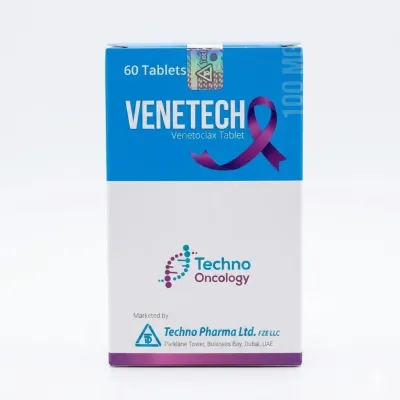
Venetech 100 mg Techno Oncology
View
Techno Oncology
100 mg 60 tablets
20674₴ 22022₴
-7%
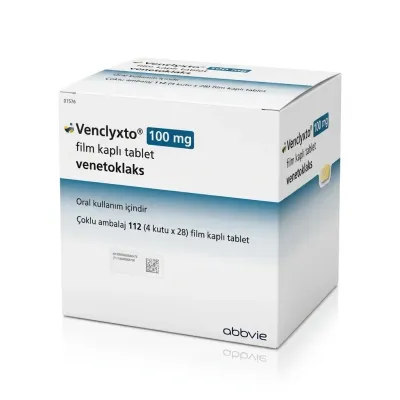
Venclyxto 100 100 mg AbbVie
View
AbbVie
100 mg 112 tablets
112360₴ 121348₴
-13%
Ventoxen 100 100 mg Everest
View
Everest
100 mg 60 tablets
20449₴ 23595₴
-13%
Ventoxen 10 10 mg Everest
View
Everest
10 mg 7 tablets
9438₴ 10787₴
✅ All products loaded (4)

Contact us

Choose a convenient way to contact

We work daily from 9:00 to 20:00