Azashine 300 — Azacitidine 300 mg, 14 pcs, Hetero
100% original product

Azashine 300 — Azacitidine 300 mg, 14 Tablets

12000 12999 -8%

Azashine 300 mg is an advanced hypomethylating antineoplastic agent formulated as oral film-coated tablets containing the active pharmaceutical ingredient Azacitidine. The drug belongs to the class of antimetabolites and pyrimidine nucleoside analogues. It is indicated for oral maintenance therapy in adult patients with acute myeloid leukemia (AML) who achieved first complete remission (CR) or complete remission with incomplete blood count recovery (CRi) following induction chemotherapy and are not candidates for hematopoietic stem cell transplantation. The mechanism of action of azacitidine involves the reversible inhibition of DNA methyltransferase (DNMT) enzymes, leading to DNA hypomethylation, restoration of tumor suppressor gene expression, cellular differentiation, and induction of apoptosis in abnormal blast cells.

Manufacturer: Hetero Healthcare (Hetero Labs Limited), India. Hetero is one of the world's leading pharmaceutical conglomerates specializing in the research, development, and commercialization of complex oncology, antiretroviral, and biotechnology medicines. Hetero's state-of-the-art manufacturing facilities are accredited by top international regulatory authorities, including the US FDA, EMA, and WHO-GMP. Hetero guarantees the highest standards of chemical purity, bioavailability, stability, and therapeutic consistency, making advanced cancer care accessible globally.

Key Advantages and Features of Azashine 300 mg:

  • Convenient Oral Maintenance Regimen: Unlike injectable azacitidine formulations that require subcutaneous or intravenous administration in clinical settings, Azashine 300 is administered orally. This dramatically improves patient compliance and quality of life by enabling long-term outpatient maintenance therapy at home.
  • Proven Overall Survival Benefit: Oral azacitidine at the 300 mg dosage significantly prolongs overall survival (OS) and relapse-free survival (RFS) in patients with AML in remission following intensive chemotherapy.
  • Precision Dosing Pack: Supplied in boxes containing 14 tablets of 300 mg each, perfectly structured for the standard 14-day administration schedule within each 28-day treatment cycle.

Azashine 300 is formulated as film-coated tablets for oral administration. Each tablet contains a precisely controlled therapeutic dose:

  • Active Ingredient: Azacitidine — 300 mg per tablet.
  • Excipients: Mannitol, microcrystalline cellulose (binders and fillers), croscarmellose sodium (disintegrant), magnesium stearate (lubricant for uniform drug dissolution).
  • Film Coating: Opadry (hypromellose, titanium dioxide, polyethylene glycol) providing moisture barrier protection and facilitating easy swallowing.

Pharmacodynamics: Azacitidine is a pyrimidine nucleoside analogue of cytidine exhibiting hypomethylating and antineoplastic cytotoxic activity. Following intracellular uptake, azacitidine is phosphorylated into active triphosphate metabolites (azacitidine triphosphate) and incorporated into DNA and RNA. DNA incorporation leads to reversible binding and inactivation of DNA methyltransferases (DNMT1, DNMT3a, DNMT3b). Inhibiting hypermethylation of gene promoter regions restores normal transcription and expression of tumor suppressor genes controlling cell cycle progression and cell differentiation. RNA incorporation disrupts protein synthesis in malignant bone marrow cells, causing inhibition of cell proliferation and inducing programmed cell death (apoptosis).

Pharmacokinetics: Following oral administration, azacitidine is rapidly absorbed from the gastrointestinal tract. Peak plasma concentration (Cmax) is attained at a median time of 1 hour (range 0.5 to 2.5 hours). Absolute bioavailability of the oral tablet formulation is approximately 11% compared to subcutaneous administration due to extensive presystemic hepatic metabolism; hence, oral and injectable formulations are not bioequivalent or interchangeable. Plasma protein binding is low (6% to 12%). Azacitidine undergoes rapid metabolic deamination mediated by the enzyme cytidine deaminase (CDA) into inactive metabolites. The plasma elimination half-life (T1/2) ranges from 0.5 to 1.5 hours. Excretion is primarily renal (up to 85% recovered in urine as metabolites).

Azashine 300 mg is indicated for adult patients with the following hematologic malignancies:

  • 🔹 Acute Myeloid Leukemia (AML) — Maintenance Therapy: For continued maintenance treatment of adult patients with AML who achieved first complete remission (CR) or complete remission with incomplete blood count recovery (CRi) following induction chemotherapy (with or without consolidation) and who are not eligible for hematopoietic stem cell transplantation (HSCT).
  • 🔹 Myelodysplastic Syndromes (MDS): As part of combination or oral therapeutic protocols for higher-risk MDS and chronic myelomonocytic leukemia (CMML) under strict supervision of a treating hematologist-oncologist.

Treatment with Azashine 300 should be initiated and supervised by a qualified physician experienced in hematologic malignancies. Tablets must be swallowed whole with a full glass of water without chewing, breaking, or crushing. Take orally once daily at approximately the same time each day, with or without food.

  • Standard Dosing Schedule: The recommended starting dose is 300 mg (1 tablet) orally once daily on Days 1 through 14 of each 28-day cycle. Continue treatment until disease progression or unacceptable toxicity.
  • Antiemetic Premedication: Administer a 5-HT3 receptor antagonist (e.g., ondansetron) 30 minutes prior to each Azashine 300 dose during the first 2 treatment cycles to prevent nausea and vomiting.
  • Dose Modifications for Hematologic Toxicity: If absolute neutrophil count (ANC) drops below 0.5 x 10^9/L or platelet count falls below 25 x 10^9/L, delay the next 28-day cycle until recovery. For persistent neutropenia or thrombocytopenia, dosing duration within a cycle may be reduced from 14 days to 7 days.
  • Missed Dose: If a dose is missed or vomiting occurs shortly after taking a dose, do not take an additional tablet on that day. Take the next scheduled dose on the following day at the regular time.

Azashine 300 is contraindicated in patients with the following conditions:

  • Hypersensitivity: Hypersensitivity to azacitidine or any component of the tablet formulation.
  • Pregnancy and Lactation: Strictly contraindicated. Azacitidine causes embryo-fetal lethality and severe teratogenicity. Breastfeeding is contraindicated during therapy.
  • Severe Hepatic Impairment: Advanced malignant hepatic tumors or severe hepatic impairment.
  • Pediatric Population: Safety and efficacy of oral azacitidine in pediatric patients under 18 years of age have not been established.

Azacitidine is primary metabolized via deamination by cytidine deaminase (CDA) without significant involvement of cytochrome P450 (CYP) isoenzymes:

  • ⚠️ CYP450 Inhibitors and Inducers: Clinically meaningful pharmacokinetic interactions with CYP enzyme inhibitors or inducers are not expected, allowing safe co-administration with most concurrent medications.
  • ⚠️ Myelosuppressive Agents: Co-administration with other cytotoxic or bone marrow suppressive drugs increases the risk of severe neutropenia, anemia, and thrombocytopenia, requiring frequent complete blood count monitoring.
  • ⚠️ Nephrotoxic Drugs: Because azacitidine and its metabolites are eliminated primarily by the kidneys, concurrent administration of nephrotoxic agents requires caution and monitoring of renal function.

The use of Azashine 300 during pregnancy and lactation is strictly prohibited due to severe fetal risks:

  • Females of Reproductive Potential: Must undergo pregnancy testing prior to initiating treatment. Female patients must use effective contraception during treatment with Azashine 300 and for at least 6 months after the final dose.
  • Male Patients: Male patients taking azacitidine must use effective contraception during treatment and for at least 3 months after the final dose.
  • Lactation: It is unknown whether azacitidine is excreted in human milk. Breastfeeding must be discontinued during treatment and for 1 week after the final dose.

The most common and clinically significant adverse reactions associated with Azashine 300 include:

  • 🔴 Hematologic Toxicity: Neutropenia (decreased neutrophil count), thrombocytopenia (decreased platelet count, bleeding risk), anemia, and febrile neutropenia requiring urgent antimicrobial intervention.
  • 🟡 Gastrointestinal Tract: Nausea, vomiting, diarrhea, constipation, abdominal pain, decreased appetite, and stomatitis.
  • 🟠 Infectious Complications: Pneumonia, upper respiratory tract infections, urinary tract infections, and neutropenic sepsis.
  • 🟢 General and Systemic Reactions: Fatigue, asthenia, pyrexia (fever), dizziness, arthralgia, myalgia, peripheral edema, and skin dryness.

There is no known specific antidote for azacitidine overdose. Clinical experience with acute overdose is limited:

  • Symptoms: Ingestion of doses higher than recommended results in severe exacerbation of known toxicities, including severe bone marrow suppression (profound pancytopenia), severe nausea, vomiting, and diarrhea.
  • Management: In case of overdose, discontinue Azashine 300 immediately. Provide supportive and symptomatic care, including blood component transfusions (packed red blood cells, platelets), granulocyte colony-stimulating factors (G-CSF), and broad-spectrum antibiotics. Hemodialysis is ineffective.

Storage instructions to maintain chemical integrity and product efficacy:

  • 🌡️ Temperature Control: Store in original container in a dry place protected from direct sunlight at temperatures not exceeding 25 °C.
  • 👶 Safety Precautions: Keep out of reach and sight of children and pets.
  • Expiration Date: Stamped on the outer carton and packaging. Do not use after the expiration date (Exp. Date). Dispose of unused medication according to local hazardous medical waste regulations.

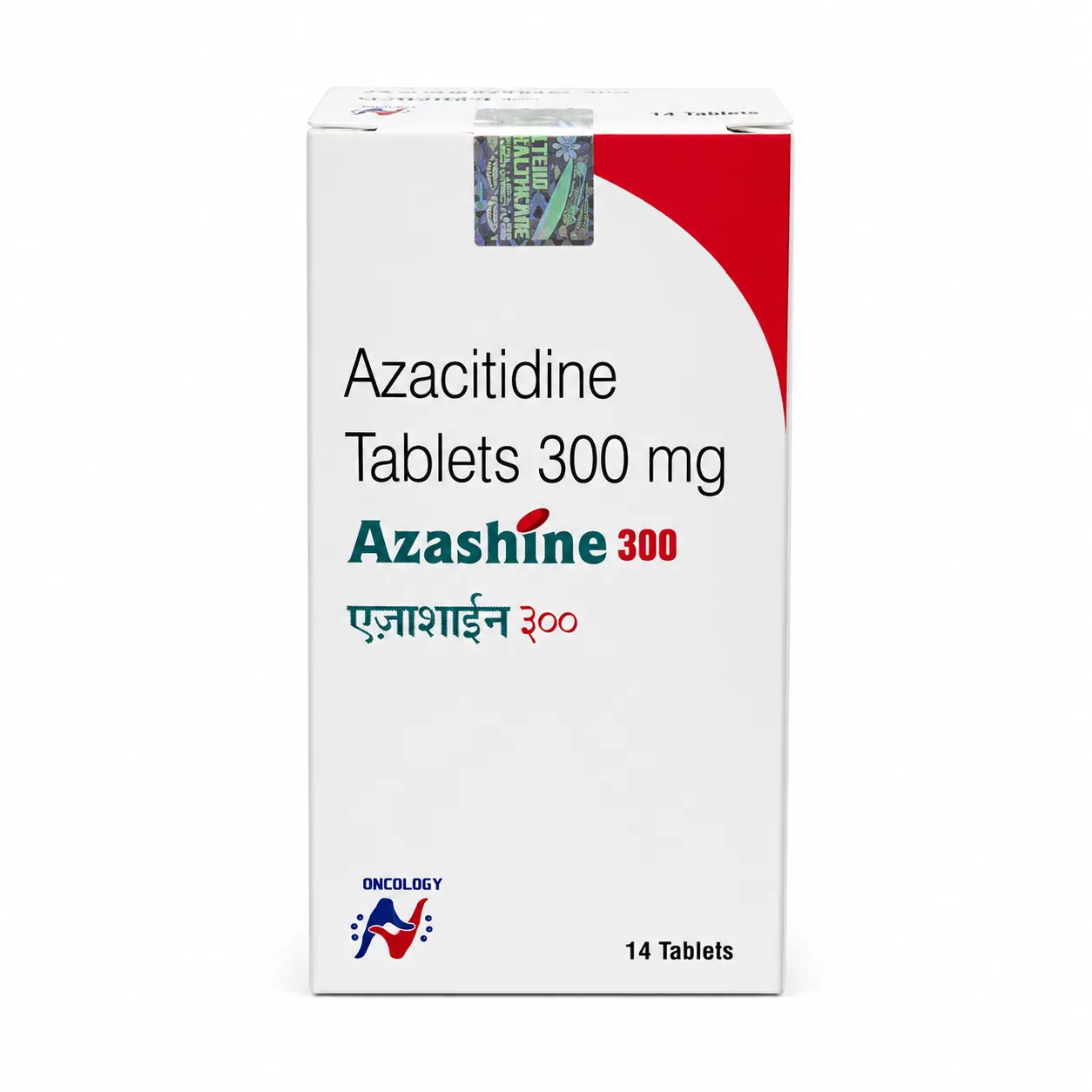
Authentic Azashine 300 mg (14 Tablets) manufactured by Hetero Healthcare features multiple anti-counterfeiting security elements:

  • 🛡️ Holographic Security Seal: The top flap of the outer carton is sealed with an iridescent holographic tamper-evident sticker bearing the printed name «HETERO HEALTHCARE».
  • 🔒 Oncology Division Logo: The bottom left corner of the front box panel displays the blue and red «ONCOLOGY» logo with a stylized «N» symbol and dots.
  • 🔍 Color Palette and Graphic Elements: The top right corner of the package features a distinctive curved bright red accent. The brand name «Azashine» is printed in dark green/navy font with a red dot over the letter «i», while the dosage «300» is highlighted in bold red.
  • 🔢 Hindi Script and Package Count: Directly below the brand name on the front panel, the title is repeated in Hindi script «एज़ाशाइन ३००». The total pack count «14 Tablets» is clearly stated at the bottom right. Side panels display clear printed details for Batch No., Manufacturing Date (Mfg. Date), and Expiration Date (Exp. Date).

Notice. The information on this page is for reference only and does not replace medical consultation. Always consult a healthcare professional and read the manufacturer's instructions before using any medicine. Self-medication may be dangerous. Information updated: 26.07.2026

Active ingredient
Dosage form Tablets
Tablets per pack 14
Packaging Plastic bottle in a box
100% original product
Delivery across Ukraine
1
Alternatives

Similar products

Customer reviews

What Customers Say

No reviews yet

Your review can be the first!

Unifarm

Unifarm app

Safari → Share → Add to Home Screen Firefox: menu ⋮ → Install or Add to Home screen. If missing, open the site in Chrome. Chrome: menu ⋮ → Install app or Add to Home screen.

Contact us

Choose a convenient way to contact

We work daily from 9:00 to 20:00