
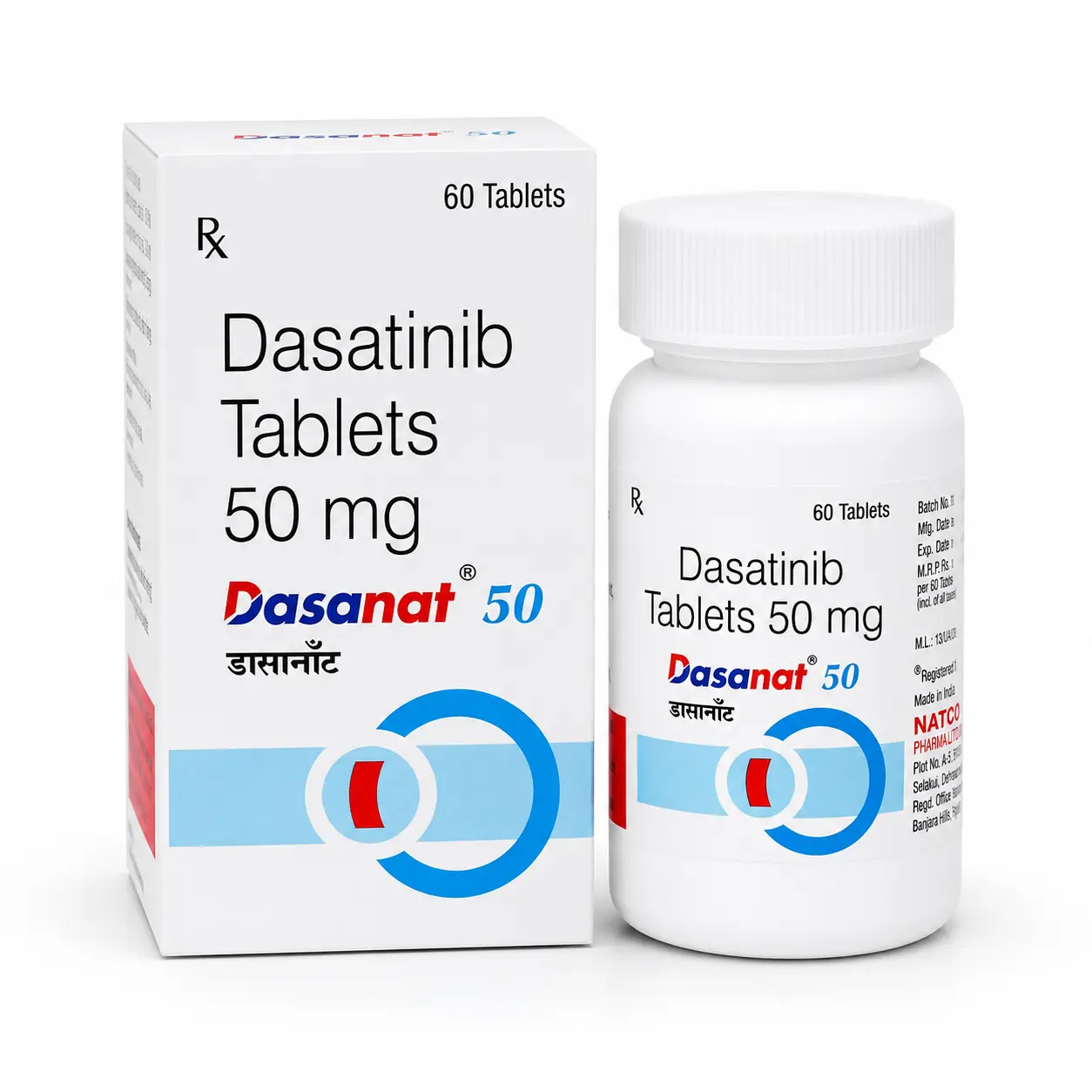
Dasanat 50 — Dasatinib 50 mg, 60 pcs, Natco
100% original product

Dasanat 50 — Dasatinib 50 mg, 60 Tablets

4500 4800 -6%

Dasanat 50 mg is a highly potent antineoplastic targeted medication belonging to the protein tyrosine kinase inhibitor class. The active ingredient, dasatinib, selectively blocks abnormal enzymes that trigger the uncontrolled proliferation and survival of malignant blood cells. Due to its advanced molecular design, the drug demonstrates robust efficacy even in patients exhibiting resistance or intolerance to first-generation tyrosine kinase inhibitors (such as imatinib), driving deep molecular responses and long-term hematological remission.

Manufacturer: Natco Pharma Ltd., India. Natco Pharma is a globally recognized pioneer in developing and manufacturing high-technology generic oncology portfolios. Their advanced production centers strictly satisfy stringent US FDA and international regulatory frameworks, which guarantees absolute compliance with international GMP standards, exceptional purity levels of active raw compounds, verified drug bioavailability, and rigid safety testing parameters.

Key Advantages:

  • Targeted Tyrosine Kinase Inhibition: Specifically binds to the BCR-ABL and Src family kinases, halting the internal oncogenic signaling pathways within leukemia cells.
  • Overcomes Mutational Resistance: Capable of binding to the BCR-ABL kinase domain in both its active and inactive conformations, neutralizing most imatinib-resistant mutations.
  • Optimal Bioavailability: The film-coated oral tablet design supports stable systemic drug exposure with simple once-daily scheduling.

Dasanat is supplied as film-coated tablets optimized for oral administration. The chemical composition includes:

  • Active Substance (per 1 tablet): Dasatinib (as monohydrate) — 50 mg.
  • Excipients: Lactose monohydrate, microcrystalline cellulose, croscarmellose sodium, hydroxypropyl cellulose, and magnesium stearate.
  • Coating: White film coating (Opadry White) protecting the active compound from environmental degradation and ensuring precise gastrointestinal dissolution.

Pharmacodynamics: Dasatinib acts as a powerful inhibitor of BCR-ABL and SRC family tyrosine kinases (including SRC, LCK, YES, FYN). It additionally targets other oncogenic receptor kinases such as c-KIT, ephrin receptor EPHA2, and PDGF-β receptor. By competing directly with ATP for the ATP-binding site of the BCR-ABL enzyme, dasatinib halts substrate phosphorylation, thereby inhibiting cellular proliferation and inducing apoptosis in Philadelphia chromosome-positive (Ph+) chronic myeloid leukemia (CML) and acute lymphoblastic leukemia (ALL) cell lines.

Pharmacokinetics: Following oral ingestion, dasatinib is rapidly absorbed within the gastrointestinal tract, reaching peak plasma concentration (Cmax) between 0.5 to 3 hours. Overall bioavailability is unaffected by food intake. Dasatinib exhibits high plasma protein binding (predominantly to albumin and alpha1-acid glycoprotein) at approximately 96%. Hepatic clearance is driven heavily by the CYP3A4 isoenzyme system, producing both active and inactive metabolites. The terminal plasma elimination half-life (T1/2) ranges between 3 to 5 hours. Excretion occurs primarily via the biliary-fecal route (85%), with only about 4% eliminated through renal clearance.

Dasanat 50 mg tablets are indicated for adults and pediatric patients (aged 1 year and older) in the management of the following hematologic malignancies:

  • 🔹 Newly Diagnosed Chronic Myeloid Leukemia (CML): Treatment of newly diagnosed Philadelphia chromosome-positive (Ph+) CML in the chronic phase.
  • 🔹 Resistant or Intolerant CML: Chronic, accelerated, or blast phase Ph+ CML showing resistance or intolerance to prior therapies, including imatinib.
  • 🔹 Acute Lymphoblastic Leukemia (Ph+ ALL): Management of Philadelphia chromosome-positive acute lymphoblastic leukemia showing resistance or intolerance to prior systemic interventions (administered in combination with chemotherapy for pediatric patients).

Dasanat dosage calculations and regimen updates must be strictly determined and supervised by a qualified hematologist or oncologist based on disease phase and hematological toxicity thresholds:

  • Method of Administration: Tablets must be swallowed whole with water once daily, either in the morning or evening. They should not be crushed, split, or chewed. Can be taken with or without food, but a consistent daily schedule is essential.
  • Standard Adult Dosing: For CML in the chronic phase, the standard initial dose is 100 mg once daily (administered as two 50 mg tablets). For CML in accelerated or blast phases, or for Ph+ ALL, the recommended therapeutic dose is 140 mg once daily. Pediatric dosing is individually titrated based on body weight parameters.
  • Monitoring Framework: Complete blood counts must be checked frequently (especially during the initial months of therapy). If severe neutropenia or thrombocytopenia emerges, therapy should be held until recovery and may be resumed at a lower dosage tier.

The clinical administration of Dasanat is contraindicated or requires extreme caution under the following parameters:

  • Hypersensitivity: Known severe hypersensitivity or systemic allergic reactions to dasatinib or any accompanying core excipient.
  • Pregnancy and Lactation: The drug carries heavy embryotoxic and teratogenic risks. Use during pregnancy or breastfeeding is strictly contraindicated.
  • Pediatric Restrictions: Safe use and clinical exposure standards have not been verified for pediatric patients under 1 year of age.
  • ⚠️ With Extreme Caution: Administer with care to patients presenting with moderate-to-severe hepatic impairment, pre-existing prolonged QT intervals (or risk factors for QT prolongation), lactose intolerance, pre-existing fluid retention tendencies, or active bleeding disorders.

Dasatinib maintains a complex drug interaction profile governed by hepatic clearance paths and gastric pH requirements:

  • Strong CYP3A4 Inhibitors: Concomitant use with strong inhibitors (such as ketoconazole, itraconazole, clarithromycin, ritonavir, or grapefruit juice) significantly raises plasma levels of dasatinib, escalating the risk of severe toxic events. Simultaneous use is contraindicated.
  • Strong CYP3A4 Inducers: Co-administration with inducing agents (such as rifampicin, phenytoin, carbamazepine, or St. John's wort) accelerates dasatinib clearance, causing a drop in plasma concentrations and reducing anti-tumor efficacy.
  • Antacids and Acid-Reducing Agents: Medicines that lower gastric acid production (proton pump inhibitors like omeprazole, H2 blockers like famotidine, or aluminum/magnesium hydroxides) decrease dasatinib absorption. Antacids should be administered at least 2 hours before or 2 hours after Dasanat dosing.
  • Anticoagulants and Antiplatelets: Combined scheduling with warfarin, aspirin, or NSAIDs markedly increases risks for severe gastrointestinal hemorrhage and internal bleeding events.

Reproductive parameters and safety instructions regarding Dasanat exposure:

  • Pregnancy: Dasatinib use during pregnancy is contraindicated due to proven risks of fetal harm, spontaneous abortion, and severe anatomical malformations (including skeletal delays and fetal cytopenias). Female patients of childbearing potential must implement highly effective contraception protocols during treatment and for at least 30 days after the final dose. If a pregnancy occurs, discontinue the drug immediately.
  • Lactation: It is unverified if dasatinib partitions into human breast milk. Due to potential serious adverse reactions in the infant, breastfeeding is strictly prohibited during therapy and for 2 weeks following treatment cessation.
  • Fertility: This medication can reduce male and female fertility parameters. Patients are urged to discuss fertility preservation or cryopreservation with their specialist prior to starting treatment.

Dasanat therapy can induce notable adverse drug reactions that necessitate medical management or dose modification:

  • 🟢 Hematological Toxicities (Very Common): Heavy myelosuppression resulting in profound anemia, neutropenia, leukopenia, and thrombocytopenia, which elevates risks of severe systemic infections and bleeding events.
  • 🟡 Fluid Retention (Edema): A characteristic reaction manifesting as peripheral edema (facial or lower limb swelling). Severe events include pleural effusion (fluid collection around the lungs), pericardial effusion, and superficial pulmonary edema, presenting clinically as dyspnea and dry cough.
  • 🟠 Gastrointestinal Tract: Diarrhea is highly common, alongside nausea, vomiting, abdominal pain, mucosal stomatitis, gastritis, and decreased appetite.
  • 🔵 Neurological and Musculoskeletal Signs: Persistent headache, fatigue, asthenia, dizziness, insomnia, myalgia, arthralgia, and painful muscle spasms.
  • ⚠️ Cardiovascular and Dermatologic Effects: Skin rashes, pruritus, dermatitis; less commonly, QT interval prolongation on ECG, cardiac arrhythmias, congestive heart failure, and pulmonary arterial hypertension (PAH).

Clinical presentation and emergency intervention pathways for high-dose exposure:

  • Symptomatology: Accidental or intentional overdose with Dasanat triggers a severe accentuation of its known toxicological properties. Anticipated manifestations include catastrophic bone marrow suppression (severe pancytopenia), massive systemic fluid retention with acute pleural effusion, intractable diarrhea, and severe gastrointestinal or generalized hemorrhages.
  • Management: No specific pharmacological antidote is available. In cases of overdose, stop the drug immediately. Initiate gastric lavage or administer activated charcoal if caught early. The patient must be hospitalized for intensive supportive care and close clinical monitoring. Track hematological counts, cardiac performance via continuous ECG, and fluid/electrolyte balance. Blood component transfusions or G-CSF may be deployed. Hemodialysis is ineffective due to dasatinib's extensive plasma protein binding.

Storage requirements to ensure the physical stability and chemical safety of Dasanat tablets:

  • 🌡️ Temperature Controls: Store in a dry environment shielded from direct sunlight and moisture at a temperature not exceeding 30 °C. Do not freeze.
  • 👶 Safety Warnings: Keep securely inside the original container, completely out of the reach and sight of children and pets. Because this is a cytotoxic compound, any unused or expired tablets must be handled and disposed of via approved hazardous medical waste disposal protocols.
  • Shelf Life: The shelf life of the sealed tablet bottle is 3 years from the date of manufacture. Do not ingest tablets past the expiration date printed on the packaging.

Notice. The information on this page is for reference only and does not replace medical consultation. Always consult a healthcare professional and read the manufacturer's instructions before using any medicine. Self-medication may be dangerous. Information updated: 13.07.2026

Active ingredient
Dosage form Tablets
Tablets per pack 60
Packaging Plastic bottle in a box
100% original product
Delivery across Ukraine
1
Customer reviews

What Customers Say

No reviews yet

Your review can be the first!

Unifarm

Unifarm app

Safari → Share → Add to Home Screen Firefox: menu ⋮ → Install or Add to Home screen. If missing, open the site in Chrome. Chrome: menu ⋮ → Install app or Add to Home screen.

Contact us

Choose a convenient way to contact

We work daily from 9:00 to 20:00