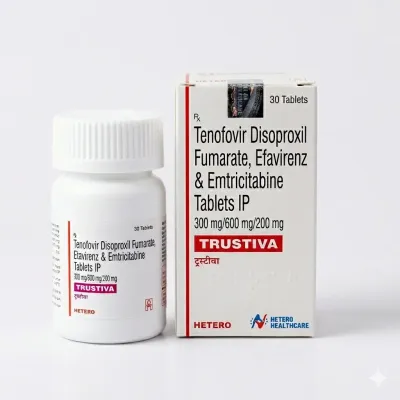
Efavirenz – HIV Antiviral Therapy
Known as original brand(s)
Sustiva, Stocrin
Efavirenz is a potent first-generation non-nucleoside reverse transcriptase inhibitor (NNRTI) that has been a cornerstone of antiretroviral therapy for decades. The drug is well-known for its high virologic efficacy and its ability to penetrate the blood-brain barrier.
The mechanism of action involves direct, non-competitive binding to the HIV-1 reverse transcriptase enzyme. This binding induces conformational changes that block the enzyme's catalytic activity, preventing the conversion of viral RNA into DNA. Unlike nucleoside analogs, efavirenz does not require intracellular phosphorylation to become active. It is highly specific to HIV-1 and does not show activity against HIV-2 or human cellular DNA polymerases.
Due to its long half-life, efavirenz is administered once daily, which significantly supports long-term treatment adherence.

Indications
Efavirenz is indicated for the treatment of HIV-1 infection in adults and pediatric patients:
- Combination Therapy: must always be used in combination with other antiretroviral agents to prevent the emergence of drug resistance.
- Co-infected Patients: often preferred for patients undergoing simultaneous treatment for HIV and tuberculosis (due to manageable interactions with rifampin).
Dosage and administration
Strict adherence to administration rules is essential to minimize the side effects of efavirenz.
- Standard Adult Dose: 600 mg once daily.
- Timing: it is strongly recommended to take the dose at bedtime on an empty stomach.
- Food Effect: taking the drug with a high-fat meal significantly increases blood concentrations, leading to a higher frequency of nervous system side effects.
- Pediatric Dosing: calculated based on body weight (available for children weighing at least 3.5 kg).