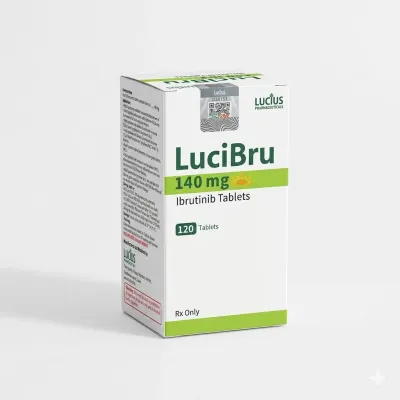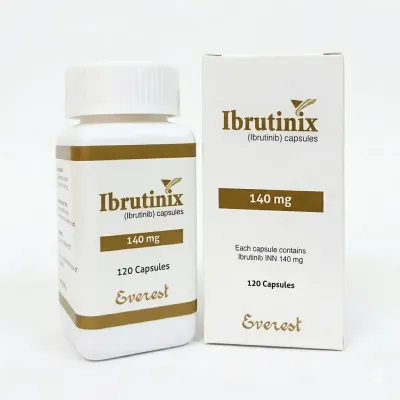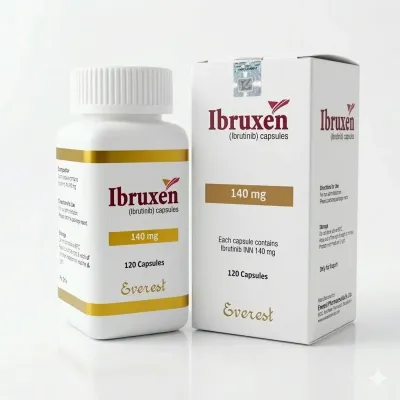
Ibrutinib – Targeted Therapy
Known as original brand(s)
Imbruvica
Ibrutinib is a first-in-class, highly selective oral inhibitor of Bruton's tyrosine kinase (BTK). The drug has revolutionized the therapy of B-cell malignancies by blocking key signaling pathways essential for the survival, proliferation, and migration of abnormal B-lymphocytes.
The mechanism of action of ibrutinib involves the formation of a strong covalent bond with the active site of the BTK enzyme. Bruton's tyrosine kinase plays a critical role in signaling from the B-cell receptor (BCR), which stimulates tumor growth. By blocking BTK, ibrutinib interrupts this signal, leading to the initiation of apoptosis (programmed death) of malignant cells and their displacement from protective niches in the lymph nodes and spleen into the bloodstream, where they become vulnerable to death.
The drug is highly effective and intended for long-term use. Unlike traditional chemotherapy, ibrutinib targets specific tumor mechanisms, significantly extending patient survival even in cases with an unfavorable genetic profile of the disease.

Indications
Ibrutinib is used for the treatment of various lymphoproliferative disorders:
- Chronic Lymphocytic Leukemia (CLL): as monotherapy or combination treatment for adult patients, including those with 17p deletion.
- Mantle Cell Lymphoma (MCL): therapy for patients with relapsed or refractory disease.
- Waldenström’s Macroglobulinemia: treatment for adult patients as first-line therapy or for relapsed cases.
- Marginal Zone Lymphoma: treatment for patients requiring systemic therapy who have received at least one prior line of therapy.
- Chronic Graft-Versus-Host Disease (cGVHD): treatment of patients after the failure of one or more lines of systemic therapy.
Dosage and administration
The ibrutinib dosing regimen depends on the specific diagnosis and the patient's tolerance of the drug.
- Standard Doses: for CLL and Waldenström's — 420 mg once daily; for Mantle Cell Lymphoma — 560 mg once daily.
- Administration Rules: the drug is taken orally once a day at approximately the same time with a glass of water. Capsules or tablets must not be broken or chewed.
- Missed Dose: if a dose is missed, it can be taken as soon as possible on the same day; return to the regular schedule the following day.
- Drug Interactions: co-administration with grapefruit juice and strong CYP3A4 inhibitors should be avoided, as this sharply increases the drug concentration.
- Surgery Adjustments: due to the risk of bleeding, ibrutinib should be suspended 3–7 days before and after surgical procedures.