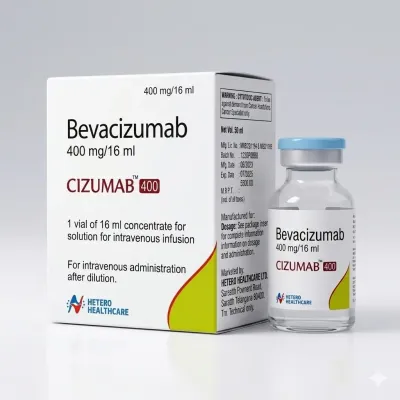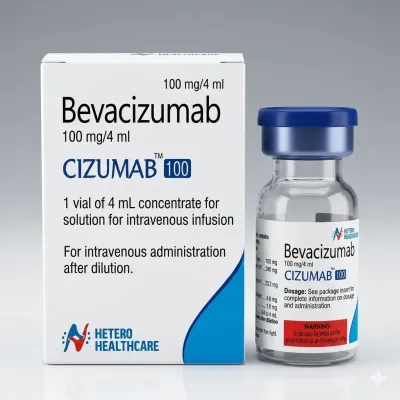
Altuzan 400 — Bevacizumab 400 mg, 1 pcs, Roche
100% original product

Altuzan 400 — Bevacizumab 400 mg/16 ml Cold chain · Storage +2…+8 °C

24538 27041 -9%
Cold chain Storage +2…+8 °C

This medicine requires temperature control. We pack it in a thermal box with cold packs for safe delivery.

Please return the thermal box with cold packs after delivery. An additional charge applies only if you wish to keep the box.

Altuzan 400 mg / 16 ml is a highly effective antineoplastic targeted medication based on monoclonal antibodies, supplied as a concentrate for solution for infusion. Its active substance, bevacizumab, is a recombinant hyperchimeric (humanized) therapeutic monoclonal antibody that selectively binds to the vascular endothelial growth factor (VEGF) and neutralizes its biological activity. The drug's mechanism of action targets the inhibition of VEGF binding to its receptors (Flt-1 and KDR) on the surface of endothelial cells. This results in the potent suppression of neoangiogenesis—the process of formation and growth of new blood vessels within malignant tumor tissues. Consequently, the tumor is deprived of metabolic support, the supply of oxygen and essential nutrients is halted, and interstitial fluid pressure drops, which not only impedes cancer progression and metastasis but also significantly enhances the penetration of concurrent cytostatic drugs directly into the tumor core.

Manufacturer: Roche (F. Hoffmann-La Roche Ltd). The drug is manufactured at leading European pharmaceutical plants of the Roche Group in strict compliance with international GMP standards and under rigorous control of biotechnological processes. Altuzan 400 has proven itself as a key and irreplaceable component of modern combination therapy for a wide spectrum of solid tumors in oncology, ensuring a predictable therapeutic response and improved survival rates.

Key Advantages:

  • Universal Anti-Angiogenic Effect: Effectively "freezes" the tumor's vascular network, stopping its expansion and the spread of metastases.
  • Synergy with Chemotherapy: Normalizes the structure of tumor blood vessels, facilitating the delivery of classic chemotherapeutic drugs directly to cancer cells.
  • Roche Global Standards: Flawless chemical purity of the protein substance and maximum bioavailability achieved through advanced biotechnology.

Altuzan is supplied as a sterile concentrated solution for preparation of infusions. The packaging contains 1 glass vial sealed with a rubber stopper and an aluminum flip-off cap. The composition includes:

  • Active Compound (per vial): Bevacizumab — 400 mg in 16 ml of solution (the concentration is 25 mg/ml).
  • Excipients: Alpha,alpha-trehalose dihydrate, sodium phosphate monobasic monohydrate, sodium phosphate dibasic anhydrous, polysorbate 20, water for injections.
  • Appearance: Clear to slightly opalescent solution, colorless to pale brown. Supplied as 1 vial in an original cardboard box featuring special protective manufacturer elements and the official medical package leaflet.

Pharmacodynamics: Bevacizumab binds the endothelial vascular endothelial growth factor (VEGF), preventing its interaction with VEGFR-1 and VEGFR-2 receptors. This directly represses angiogenesis, reduces tumor vascularization, and halts microvascular permeability, leading to tumor regression.

Pharmacokinetics: Following intravenous drip administration, the pharmacokinetic profile of bevacizumab is characterized by a low volume of distribution (Vd is approximately 2.7–3.3 L), which is typical for IgG molecules. The drug is slowly cleared from systemic circulation; systemic clearance equals roughly 0.188–0.210 L/day depending on the patient's body weight and sex. The terminal elimination half-life (T1/2) is prolonged, averaging 18–20 days (up to 21 days), allowing steady therapeutic concentrations to be maintained when administered once every 2 or 3 weeks. Metabolism occurs via general intermediate protein catabolism in reticuloendothelial system cells, without involving hepatic or renal enzymatic pathways.

Altuzan 400 mg / 16 ml is indicated in combination with chemotherapy or as monotherapy for the treatment of the following oncological diseases:

  • 🔹 Metastatic Colorectal Cancer (mCRC): In combination with fluoropyrimidine-based chemotherapy regimens (e.g., FOLFOX, FOLFIRI) in first and subsequent lines of therapy.
  • 🔹 Advanced, Metastatic, or Recurrent Non-Small Cell Lung Cancer (NSCLC): In first-line therapy combined with platinum-based chemotherapy.
  • 🔹 Metastatic Breast Cancer (mBC): In combination with paclitaxel or capecitabine when other therapeutic regimens have failed.
  • 🔹 Advanced and/or Metastatic Renal Cell Carcinoma (RCC): Combined with interferon alfa-2a as a first-line therapy.
  • 🔹 Glioblastoma (Recurrent): As monotherapy or combined with irinotecan in patients showing progression following prior radiation therapy.
  • 🔹 Ovarian, Fallopian Tube, and Primary Peritoneal Cancer: In first-line management and for the treatment of recurrences.

Dosage calculations, solution preparation, and infusion rates are determined exclusively by the managing clinical oncologist based on the patient's weight, tumor type, and specific treatment protocol:

  • Recommended Doses: Standard dosing varies from 5 mg/kg to 15 mg/kg of the patient's body weight. The drug is administered via intravenous drip once every 2 weeks (14 days) or once every 3 weeks (21 day schedule).
  • Administration Rules: The drug must never be administered via intravenous rapid injection or bolus! The first infusion must be administered over 90 minutes. If well tolerated, the second infusion duration can be reduced to 60 minutes, and subsequent ones to 30 minutes.
  • Solution Preparation: The required volume of Altuzan concentrate is diluted in sterile 0.9% sodium chloride solution for injection to a total volume of 100 ml. The prepared solution must not be shaken, frozen, or mixed with dextrose/glucose solutions.
  • Duration of Course: Treatment is long-term. Infusions are continued until clinical progression of the underlying disease occurs or until unmanageable toxicity develops. Dose reduction of bevacizumab is not recommended; in case of severe toxicity, administration is temporarily suspended or completely discontinued.

The use of Altuzan 400 infusion concentrate is contraindicated in the presence of the following clinical conditions:

  • Hypersensitivity: Documented individual hypersensitivity to bevacizumab, any components of the drug, or to Chinese hamster ovary (CHO) cell products or other recombinant antibodies.
  • Wound Healing Impairments: Presence of major unhealed wounds, deep trophic ulcers, or recent major surgical interventions (administration is permitted no sooner than 28 days following a major operation).
  • Renal Dysfunction: Marked nephrotic syndrome or high-grade proteinuria.
  • Special Groups: Children and adolescents under 18 years of age (safety has not been established), pregnancy, and breastfeeding periods.
  • ⚠️ With Caution: Exercise extreme vigilance in patients with uncontrolled arterial hypertension, a history of arterial thromboembolism, increased risk of bleeding (including pulmonary hemoptysis), active GI ulcerations, or congenital hemorrhagic diathesis.

Pharmaceutical and therapeutic interactions of Altuzan with other medicinal compounds require careful oncological supervision:

  • Dextrose (Glucose) Solutions: Bevacizumab is physically incompatible with glucose solutions. Dilution in such solutions leads to accelerated degradation of the antibody protein molecule, completely nullifying the therapeutic effect.
  • Combination with Sunitinib Malate: When co-administered with sunitinib in patients with renal cell carcinoma, cases of microangiopathic hemolytic anemia (MAHA) have been reported. This combination is strictly contraindicated.
  • Platinum-Based Chemotherapy: Concurrent administration with paclitaxel, carboplatin, or doxorubicin can increase the risk of severe neutropenia, infectious complications, and hand-foot syndrome, requiring regular complete blood count monitoring.
  • Anticoagulants: Combination with therapeutic doses of warfarin or low-molecular-weight heparins can increase the risk of deep hemorrhagic complications (bleeding events).

The anti-angiogenic mechanism of action of Altuzan poses a direct lethal threat to the developing embryo:

  • Fetal Risk: Bevacizumab suppresses fetal angiogenesis, which inevitably leads to severe congenital malformations, intrauterine growth restriction, spontaneous abortions, or intrauterine fetal death. Administration of the drug to pregnant women is strictly prohibited.
  • Contraception Mandate: Females of reproductive potential must use effective methods of contraception during Altuzan therapy and for at least 6 months following the final dose, as the drug circulates in plasma for an extended period.
  • Lactation: Human IgG is known to be excreted in human breast milk. Because bevacizumab can impair infant growth and development, breastfeeding must be completely discontinued during the entire course of treatment and for 6 months after its completion.
  • Fertility Impact: The drug can cause reversible or irreversible suppression of ovarian function in women, leading to amenorrhea and temporary infertility.

Monoclonal antibody therapy can trigger serious systemic adverse reactions that necessitate immediate medical intervention:

  • 🟢 GI Perforations and Fistulas (Critical): Development of perforations in gastrointestinal organs, fistulas, or abdominal abscesses. If perforation is suspected, the drug must be permanently discontinued.
  • 💡 Hemorrhages: Epistaxis (very frequent, typically mild), pulmonary hemorrhage/hemoptysis (especially in patients with lung cancer), gastrointestinal hemorrhages.
  • 🟡 Cardiovascular System: Severe arterial hypertension (requires aggressive antihypertensive management), arterial thromboembolism (stroke, myocardial infarction), congestive heart failure.
  • 🟠 Proteinuria: Appearance of protein in the urine, in rare cases progressing to nephrotic syndrome. Monitoring of urinalysis is mandatory before each administration.
  • ⚠️ Urgent Clinical Signals: If sudden acute abdominal pain occurs, coughing up blood develops, sudden shortness of breath arises, severe lower extremity edema forms, or numbness in facial or limb muscles occurs, contact the oncology service immediately.

Specific clinical data regarding systemic overdose with bevacizumab are limited, but a significant excess over recommended doses sharply escalates vascular toxicity:

  • Core Symptoms: Administration of an excessive dose (e.g., up to 20 mg/kg) can trigger severe migraine attacks, a critical spike in blood pressure (hypertensive crisis), and significantly increase the frequency and severity of proteinuria and hemorrhagic syndrome.
  • Immediate First Aid: Promptly halt the infusion if an excessive volume is accidentally administered.
  • Management: There is no specific antidote available. Symptomatic and supportive treatment is initiated. Strict monitoring of blood pressure, renal function (proteinuria), and coagulation profiles is conducted. Intravenous fluid replacement is provided if necessary. Hemodialysis is entirely ineffective due to the high molecular mass of the antibody.

Violation of the temperature regimen for storing liquid Altuzan concentrate leads to irreversible protein denaturation and loss of activity:

  • 🌡️ Temperature Regimen (Strict): The concentrate vial must be stored in a refrigerator at a stable temperature between 2°C and 8°C. Do not freeze the medicine under any circumstances! Frozen solution loses its structure and must be discarded.
  • 📦 Light and Moisture Protection: The vial must be kept inside its original cardboard box to protect the fragile protein structure from ultraviolet and visible light degradation.
  • 👶 Safety Precautions: The drug belongs to the category of highly potent cytotoxic biotechnological agents. Store strictly out of reach of children, pets, and unauthorized individuals.
  • Shelf Life: The shelf life is 24 months from the manufacturing date. Once diluted in saline solution, the prepared infusion solution remains stable for 24 hours at 2°C to 8°C; however, for microbiological purity reasons, it is highly recommended to administer it immediately.

Notice. The information on this page is for reference only and does not replace medical consultation. Always consult a healthcare professional and read the manufacturer's instructions before using any medicine. Self-medication may be dangerous. Information updated: 17.06.2026

Active ingredient
Storage temperature
Cold chain · Storage +2…+8 °C

Shipped in a thermal box with cold packs
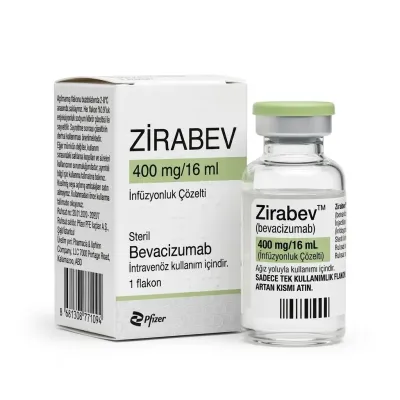
Manufacturer
Roche
Dosage
400 mg
Dosage form Concentrate for solution for infusion
Volume 16 ml
Vials per pack 1
Packaging Glass vial
100% original product
Delivery across Ukraine
Customer reviews

What Customers Say

No reviews yet

Your review can be the first!

Contact us

Choose a convenient way to contact

We work daily from 9:00 to 20:00