
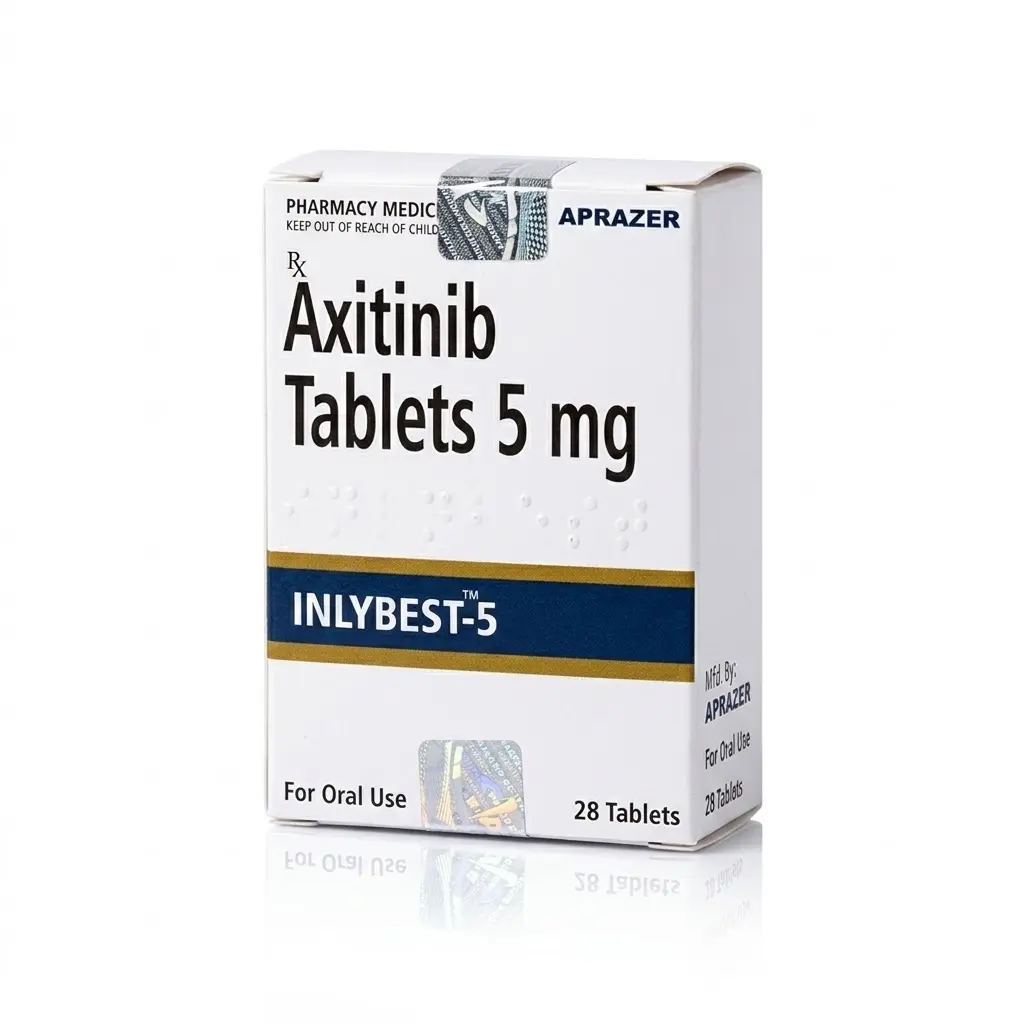
Inlybest — Axitinib 5 mg, 28 pcs, Aprazer
100% original product

Inlybest — Axitinib 5 mg

4584 5393 -15%

Inlybest is an innovative, highly effective targeted antineoplastic medication developed for the pathogenetic treatment of advanced and metastatic renal cell carcinoma (kidney cancer). Its active pharmaceutical ingredient, axitinib, belongs to the class of potent and selective tyrosine kinase inhibitors targetting vascular endothelial growth factor receptors (VEGFR-1, VEGFR-2, and VEGFR-3). The drug's mechanism of action is based on the precise blockade of the catalytic activity of these receptors, which play a key role in tumor angiogenesis—the formation of new blood vessels that feed the neoplasm. By suppressing this critical signaling cascade, Inlybest effectively restricts the blood supply to the tumor, cutting off oxygen and nutrients to malignant cells, which results in a sustained inhibition of cell division, induction of apoptosis, and prevention of further metastasis to other organs and tissues.

Manufacturer: Aprazer Healthcare Private Limited. The medication is manufactured under strict technological supervision by a leading Indian pharmaceutical corporation in full compliance with international quality standards and Good Manufacturing Practice (GMP) guidelines. Inlybest is a high-tech analog of the original drug, demonstrating full therapeutic bioequivalence. It is recognized as an essential component of modern second-line therapy protocols for renal cell carcinoma (RCC) following the failure or progression of the disease after prior systemic treatment with cytokines or other tyrosine kinase inhibitors.

Key Advantages:

  • High Selectivity: Exhibits significantly more potent and selective inhibitory action against VEGFR receptors compared to first-generation multikinase inhibitors.
  • Delaying Progression: Clinically proven to prolong progression-free survival (PFS) in patients with resistant and advanced forms of renal cell carcinoma.
  • Dosing Flexibility: The pharmacokinetic profile of the drug allows for timely adjustments and titration of the dose based on individual tolerability and clinical response.

Inlybest is supplied in the form of film-coated tablets for oral administration. Each unit contains a fixed therapeutic dose:

  • Active Compound: Axitinib — 5 mg per tablet.
  • Excipients: Microcrystalline cellulose, lactose monohydrate, croscarmellose sodium, magnesium stearate, hypromellose; film coating composition: purified talc, titanium dioxide, macrogol (polyethylene glycol), iron oxide colorants.
  • Appearance: Oblong, coated tablets designed to facilitate swallowing and optimize bioavailability. Supplied in high-density plastic bottles containing 28 tablets, fitted with a child-resistant cap, complete with a cardboard box and a patient information leaflet.

Pharmacodynamics: Axitinib is an oral tyrosine kinase inhibitor. It selectively inhibits VEGFR receptor phosphorylation induced by vascular endothelial growth factor. The drug reduces tumor cell viability and effectively blocks angiogenesis and the growth of renal cell carcinoma xenografts in clinical models.

Pharmacokinetics: Following oral administration, axitinib is rapidly absorbed, reaching peak plasma concentration within 30–60 minutes. High-fat meals moderately affect bioavailability. Plasma protein binding is exceptionally high (over 99%, primarily to albumin). It is primarily metabolized in the liver by CYP3A4/5 isoenzymes, and to a lesser extent by CYP1A2, CYP2C19, and UGT1A1. Approximately 30–60% of the administered dose is excreted in feces and about 23% is eliminated via the kidneys in urine (mostly as metabolites).

Inlybest 5 mg tablets are utilized as monotherapy or within combined targeted oncology regimens as prescribed by a treating oncologist for the following conditions:

  • 🔹 Advanced Renal Cell Carcinoma: Therapy for advanced and late-stage renal cell carcinoma following the failure or progression of the disease after one prior systemic treatment course.
  • 🔹 Metastatic Kidney Cancer: Treatment of patients with renal malignancies that have developed distant metastases in other organs and tissue structures.

The dosing regimen, individual titration (dose increase or reduction), and toxicity monitoring must be managed exclusively by an oncologist based on the patient's clinical response:

  • Recommended Dosage: The standard initial therapeutic dose is 5 mg (1 tablet) taken twice daily, with dosing intervals of approximately 12 hours.
  • Dose Titration: If the initial dose is well-tolerated and blood pressure does not consistently exceed 150/90 mmHg, the dose may be increased by the doctor to 7 mg twice daily, and subsequently up to a maximum of 10 mg twice daily. In cases of managed toxicity, the dose can be decreased to 3 mg, and then to 2 mg twice daily.
  • Method of Administration: Tablets are swallowed whole with a sufficient amount of clean water, with or without food. Tablets must not be broken, crushed, split, or chewed.
  • Missed Dose: If a patient vomits after taking a dose or misses a dose altogether, an additional tablet should not be taken. The next dose should be taken at the standard regularly scheduled time.
  • Duration of Treatment: Treatment with Inlybest should be continued continuously as long as clinical benefit is observed (absence of radiological tumor progression) or until the development of unacceptable toxicities.

The initiation and administration of Inlybest tablets are strictly restricted in the presence of the following clinical factors:

  • Hypersensitivity: Individual intolerance or known hypersensitivity to axitinib or any of the excipients contained within the formulation.
  • Organ Impairment: Severe hepatic impairment (Child-Pugh Class C), end-stage renal disease (ESRD).
  • Special Conditions: Pregnancy, lactation, children and adolescents under 18 years of age (safety and efficacy have not been established in these populations).
  • Associated Risks: Uncontrolled or medically unmanageable arterial hypertension; recent history of severe hemorrhage or thromboembolic events.

Axitinib is extensively metabolized in the liver, which leads to pronounced interactions with several medicinal products:

  • CYP3A4/5 Inhibitors (e.g., Ketoconazole, Clarithromycin): Strong inhibitors can significantly increase axitinib plasma exposure, raising the risk of severe side effects. Avoid these combinations or reduce the Inlybest dose. Consuming grapefruit, starfruit, or their juices is strictly prohibited.
  • CYP3A4/5 Inducers (e.g., Rifampicin, Phenytoin, St. John's Wort): Potent inducers decrease plasma concentrations of axitinib, potentially minimizing its therapeutic antitumor efficacy.
  • Effect on Other Enzymes: Axitinib may potentially inhibit breast cancer resistance protein (BCRP) in the gastrointestinal tract; caution is advised when co-administering with BCRP substrates (such as sulfasalazine).

Inlybest therapy carries high reproductive toxicity risks, necessitating strict adherence to precautionary measures:

  • Fetal Risks: Axitinib can cause fetal harm, embryotoxic effects, or teratogenicity. Its use during pregnancy is absolutely contraindicated as it can cause fetal death or severe congenital malformations.
  • Contraception: Women of childbearing potential and male patients undergoing treatment must use reliable barrier methods of contraception (such as condoms combined with spermicides or hormonal contraceptives) throughout the entire treatment course and for at least 1 month after the final dose.
  • Breastfeeding: Breastfeeding is strictly contraindicated during treatment with Inlybest due to the high risk of the toxic active substance passing into breast milk.

The antitumor action of angiogenesis inhibitors is frequently accompanied by systemic adverse reactions that require continuous medical monitoring:

  • 🟢 Cardiovascular System (Very Common): Arterial hypertension (elevated blood pressure); less frequently, venous and arterial thromboembolic events.
  • 🟡 Gastrointestinal Tract: Diarrhea, nausea, vomiting, stomatitis (inflammation of the oral mucosa), decreased appetite, taste perversion (dysgeusia), constipation.
  • 🟡 General and Neurological Symptoms: Severe fatigue, pronounced asthenia, headache, dysphonia (hoarseness or voice changes).
  • 🟠 Dermatological Reactions: Palmar-plantar erythrodysesthesia syndrome (hand-foot syndrome—characterized by redness, swelling, tingling, or peeling skin on palms and soles), dry skin, skin rash.
  • 🟠 Laboratory Parameters: Hypothyroidism (elevated TSH levels), proteinuria (protein in urine), increased liver transaminases (ALT, AST), anemia.
  • ⚠️ Urgent Medical Attention: If a sudden severe blood pressure spike occurs accompanied by headache or vision changes, or if signs of hemorrhage (black stools, coughing up blood), pain and swelling in limbs, or severe skin peeling with blisters develop, discontinue the medication and seek immediate help from your oncologist.

Instances of acute overdose with axitinib have been documented in clinical practice, but no specific antidotes exist:

  • Main Manifestations: Intake of doses significantly exceeding the therapeutic range results in a sharp escalation of toxicity symptoms: severe unmanageable hypertension, seizures, severe diarrhea, pulmonary or gastrointestinal hemorrhage.
  • First Aid: Immediate discontinuation of the drug, gastric lavage, and administration of activated charcoal.
  • Treatment: Supportive, symptomatic, and intensive antihypertensive therapy is performed. There is no specific antidote. Hemodialysis is ineffective as axitinib is almost completely bound to plasma proteins.

Adherence to specified storage criteria ensures the stability of the physical, chemical, and therapeutic properties of this targeted drug throughout its shelf life:

  • 🌡️ Temperature Regimen: Store in the original, tightly closed bottle in a dry place at an ambient temperature not exceeding 25°C. Do not freeze.
  • 📦 Environmental Protection: Protect from excessive humidity and direct sunlight exposure. Keep the bottle inside its original outer cardboard carton.
  • 👶 Accessibility: As a highly toxic cytotoxic antineoplastic agent, this medicinal product must be stored in a secure area completely out of reach of children and domestic animals.
  • Special Instructions: Do not use the tablets after the expiration date (24 months) printed by Aprazer on the packaging. Expired medication must be disposed of via specialized medical waste procedures.

Notice. The information on this page is for reference only and does not replace medical consultation. Always consult a healthcare professional and read the manufacturer's instructions before using any medicine. Self-medication may be dangerous. Information updated: 24.05.2026
Active ingredient
Dosage form Tablets
Tablets per pack 28
100% original product
Delivery across Ukraine
Customer reviews

What Customers Say

No reviews yet

Your review can be the first!

Contact us

Choose a convenient way to contact

We work daily from 9:00 to 20:00